
Call us now :07971671031
 Send Inquiry
 Send Inquiry
Young's Modulus Of Wire Apparatus
Young's Modulus Of Wire Apparatus Specification
- Capacity
- Up to 2 kg (maximum weight capacity for loading)
- Feature
- High stability, easy scale reading, precise measurement, spirit level adjustment
- Automation Grade
- Manual
- Temperature Range
- Ambient laboratory conditions
- Accuracy
- Up to 0.01 mm (micrometer pitch)
- Power Source
- None (manual operation)
- Core Components
- Base, wire clamps, spirit level, micrometer screw, scale, loading hanger
- Measurement Range
- Elongation measurement up to 25 mm
- Equipment Materials
- Heavy cast iron base, metallic scale, stainless steel wire
- Type
- Physics laboratory apparatus
- Usage
- To determine Youngs modulus of a wire by Searles method
- Dimension (L*W*H)
- Approx. 400 mm x 150 mm x 100 mm
- Scale Graduations
- Least count 1 mm
- Suitable For
- School and college laboratories
- Packing
- Box packed with foam cushioning
- Micrometer Type
- Screw gauge with lock arrangement
- Number of Wires
- 2 (control and experimental)
- Finish
- Anticorrosive paint finish
- Wire Length Range
- 1 m to 1.5 m (recommended)
- Material Compatibility
- Copper, steel, brass wires
About Young's Modulus Of Wire Apparatus
Young's Searle's Pattern. Sprit Level mounted in two rectangular cast iron frame with one end resting on point of micrometer screw,fitted in one frame, the second end of sprit level pivoted in the second frame. The micrometer is provided with vertical scale 10 mm, on either sides of the zero and vernier reading 0.01 mm. complete with ceiling bracket having two self centering chucks and tension weight. supplied in case.
High-Precision Measurements for Accurate Results
Equipped with a micrometer screw gauge featuring a lock arrangement and a least count of 1 mm, this apparatus allows for highly precise elongation measurements up to 25 mm, ensuring accurate calculation of Youngs modulus. The inclusion of a spirit level provides easy and reliable adjustments for dependable results every time.
Versatile Material Compatibility & Robust Build
Designed to accommodate copper, steel, and brass wires, the apparatus is constructed with a heavy cast iron base and stainless steel wires, finished with anticorrosive paint for long-lasting durability. Its suitable for regular use in demanding laboratory environments, providing both stability and precision.
Ready-to-Use and Safe for Education
Manual operation with no power source required makes the apparatus simple and safe for handling by students. Box packing with foam cushioning protects the equipment during transport, while the devices high stability and easy scale reading make it an excellent choice for both schools and colleges in India.
FAQs of Youngs Modulus Of Wire Apparatus:
Q: How does the Youngs Modulus of Wire Apparatus determine Youngs modulus?
A: The apparatus measures the elongation of a test wire (copper, steel, or brass) under varying loads using a secure micrometer screw gauge. By comparing these measurements against the known force and original length, you can calculate Youngs modulus using Searles method.Q: What is the recommended range for the length of wire used in this apparatus?
A: The apparatus is designed for wire lengths ranging from 1 meter to 1.5 meters, which are optimal for accurate results as recommended.Q: When should you use the control and experimental wires?
A: The control wire serves as a reference to compensate for any external factors or apparatus deformation, while the experimental wire is subjected to varying loads to measure elongation. Both wires should be installed simultaneously for correct experimental outcomes.Q: Where is this apparatus best suited for use?
A: This equipment is particularly suitable for school and college physics laboratories that follow the Searles method for determining Youngs modulus, and is commonly distributed, exported, or supplied throughout India.Q: What materials are compatible with this Youngs modulus testing apparatus?
A: You can use copper, steel, or brass wires with this device, making it versatile for different experimental requirements and material studies.Q: What are the benefits of using this apparatus in laboratory experiments?
A: The apparatus provides stable, precise measurements with its sturdy construction and fine micrometer screw gauge. It simplifies the observation and analysis process, is easy to read and adjust, and is built to last with an anticorrosive paint finish.Q: How does the spirit level and locking micrometer enhance the experiment process?
A: The spirit level ensures the device is perfectly aligned for accurate measurements, while the locking micrometer prevents measurement drift during reading or loading, improving reliability and repeatability.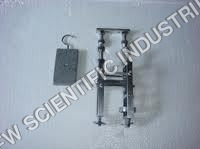
Tell us about your requirement

Price:
Quantity
Select Unit
- 50
- 100
- 200
- 250
- 500
- 1000+
Additional detail
Mobile number
Email

More Products in Physics instruments Category
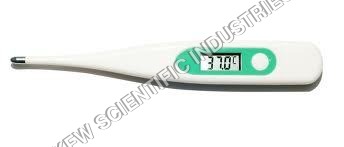
Clinical Digital Thermometer
Feature : Auto Power Off, Beeper Alert, Memory Recall
Dimension (L*W*H) : 130mm x 20mm x 10mm
Core Components : LCD Display, Battery, Temperature Sensor
Accuracy : 0.1C
Automation Grade : Manual
Equipment Materials : Plastic Body with Stainless Steel Probe
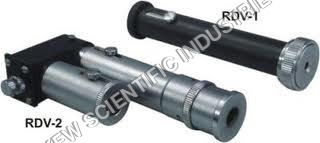
Direct Vision Spectroscope
Feature : Portable, lightweight, handheld, easy to use
Dimension (L*W*H) : Approx. 100mm (L) x 25mm (D)
Core Components : Prisms, Lenses, Eyepiece, External body casing
Accuracy : Spectral lines observed with high clarity
Automation Grade : Manual
Equipment Materials : Metal body with glass prisms and lenses
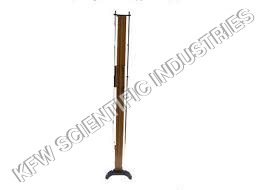
Boy's law apparatus
Feature : Direct visual reading, adjustable pressure, clear markings, stable base
Dimension (L*W*H) : Approx. 38 cm 16 cm 8 cm
Core Components : Graduated glass tube, pressure chamber, scale, mercury/piston, frame support
Accuracy : 1 ml (volume), 2 mm (pressure scale)
Automation Grade : Manual
Equipment Materials : Borosilicate glass tube, metallic frame, rubber tubing, mercury column, plastic or metal scale
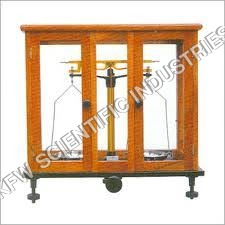
Physical Balance
Feature : High Precision, Durable
Dimension (L*W*H) : 345 x 110 x 150 mm
Core Components : Pans, Beam, Knife Edges
Accuracy : 0.01 g
Automation Grade : Manual
Equipment Materials : Cast Iron, Stainless Steel

 Send Inquiry


Our Products
- Slit Lamp Ophthalmic Equipment
- Slit Lamp
- Surgical Equipments
- Laboratories Instruments Equipment
- Microscopes
- Scientific Instruments
- ENT Equipment
- Pharmacy instrument equipment
- Pathological Equipment
- Physics Lab Equipments
- Physics instruments
- Laboratory Glassware
- Digital Polarimeter
- Microprocessor Viscometer
- Double Beam UV-VIS Spectrophotometer
- Single Beam UV-Vis Spectrophotometer
- Kitchen equipments
- Dental Equipment
- Chapati Making Machines
- Water Heating System OR Hamam
- High Performance Liquid Chromatography Systems
- Chemistry
- Equipment Accessories
- Gynecology Equipment


B.O : 5430/3, Anaj Mandi, Science Market, Near Nigar Cinema,
R.O : 102-B Ram Nagar,Ambala Cantt - 133001, Haryana, India

Mr VISHAL KUMAR
(Managing Director)
Mobile :07971671031
 Send Inquiry
Developed and Managed by Infocom Network Private Limited.
