
Call us now :07971671031
 Send Inquiry
 Send Inquiry
Bell In Vaccum
Bell In Vaccum Specification
- Accuracy
- High vacuum retention
- Feature
- Transparent, Durable, Leakproof
- Core Components
- Bell Jar, Vacuum Pump Adapter, Stopcock, Gasket
- Frequency
- 50 Hz
- Capacity
- 150 mm / Customizable
- Power Source
- Manual (for vacuum generation); Battery/AC (for included bell mechanism, if applicable)
- Voltage
- 220V (if equipped with electric bell)
- Temperature Range
- Up to 80C
- Automation Grade
- Manual
- Equipment Materials
- Borosilicate Glass, Stainless Steel Base
- Type
- Laboratory Bell Jar in Vacuum
- Usage
- Demonstration of sound transmission in vacuum, laboratory experiments
- Dimension (L*W*H)
- Standard: 150 mm diameter x 220 mm height / Custom sizes available
- Glass Type
- High Borosilicate Glass
- Finishing
- Polished/Transparent
- Bell Sound Mechanism
- Available with or without bell mechanism
- Noise Level
- Silent operation (without bell)
- Maintenance
- Easy to clean and maintain
- Export Quality
- Yes
- Packaging
- Shockproof safe packaging
- Pressure Gauge
- Included on request
- Gasket Material
- Silicone/Neoprene
- Pump Compatibility
- Compatible with rotary and diaphragm vacuum pumps
- Base Material
- Stainless Steel/Aluminum
About Bell In Vaccum
For use on pump plate not less than 15 cm. dia. Electric Bell operating on 4-6 volts AC/DC, suspended on rubber cord in bell jar. Fine coiled wire connections to terminals mounted in rubber bung sealing the jar.
Reliable Design for Laboratory Demonstrations
This vacuum bell jar is engineered specifically for laboratory settings, offering flexibility for scientific demonstrations and experimental work. The use of high borosilicate glass ensures both durability and chemical resistance, while the polished and transparent finish enables unobstructed views of internal experiments. With a secure, leakproof seal guaranteed by either silicone or neoprene gaskets, researchers can trust in high vacuum retention and silent operation when no bell is present.
Customizable and Export-Ready Equipment
Offering standard (150 mm diameter, 220 mm height) and customizable sizes, the bell jar caters to varying experimental needs. Shockproof packaging ensures safety during transport, making it suitable for global export. The equipment is easy to maintain, simplifying cleaning routines in busy laboratory environments. Its compatibility with both manual and electrically powered setups broadens its application in education and research settings.
FAQs of Bell In Vaccum:
Q: How do I use the Bell In Vacuum with Pressure Gauge in laboratory experiments?
A: To use, place the items or bell mechanism inside the high borosilicate glass jar, secure the base and gasket (choose from silicone or neoprene), connect the vacuum pump (compatible with rotary or diaphragm types) to the adapter, and create a vacuum. The included pressure gauge (if requested) allows you to monitor the vacuum level precisely. For sound transmission demonstrations, optionally use the built-in bell mechanism.Q: What are the benefits of choosing a high borosilicate glass bell jar for vacuum experiments?
A: High borosilicate glass is highly durable, resistant to thermal shock, and chemically stable. This makes the bell jar suitable for repeated laboratory use and high-clarity viewing of scientific demonstrations, such as sound transmission in vacuum conditions.Q: When should I request a pressure gauge to be included with my vacuum bell jar?
A: A pressure gauge should be requested if your experiments require accurate measurement or monitoring of vacuum levels. This feature is particularly beneficial for scientific protocols demanding consistent and reproducible results.Q: Where can I use this laboratory bell jar and who can benefit from it?
A: This bell jar is ideal for use in educational laboratories, research institutions, and any setting where sound properties or vacuum conditions are studied. Distributors, exporters, manufacturers, suppliers, and traders across India and globally can benefit from its export-quality design and shockproof packaging.Q: What is the process for cleaning and maintaining the bell jar and its components?
A: The jar, base, and gaskets are designed for easy cleaning. Simply disassemble after use, wash with mild detergent and water, and ensure all components are dry before reassembly. Avoid harsh scrubbing to maintain the polished and transparent finish.Q: Is the bell jar compatible with automated vacuum systems or electric bell mechanisms?
A: The default system is manual for vacuum generation, but if equipped with an electric bell, it operates at 220V with a 50 Hz frequency, powered by either battery or AC. This allows for both traditional and automated laboratory experiment setups.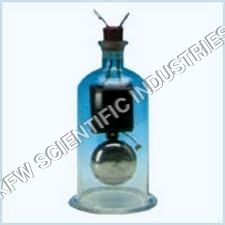
Tell us about your requirement

Price:
Quantity
Select Unit
- 50
- 100
- 200
- 250
- 500
- 1000+
Additional detail
Mobile number
Email

More Products in Physics instruments Category
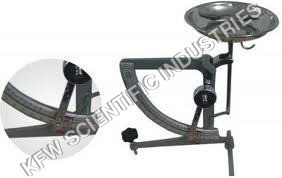
Balance Lever
Accuracy : 0.1 g (Depending on Model)
Dimension (L*W*H) : 350 mm x 100 mm x 170 mm (Approx.)
Measurement Range : Up to 5 kg
Automation Grade : Manual
Type : Mechanical Balance Lever
Power Source : Not Required (Mechanical)
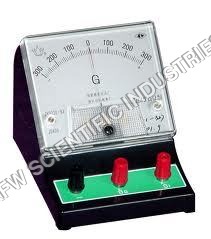
Galvanometer
Accuracy : 2% of Full Scale
Dimension (L*W*H) : 120mm x 85mm x 80mm
Measurement Range : 030 microampere
Automation Grade : Manual
Type : Moving Coil Galvanometer
Power Source : Manual (No External Power Required)
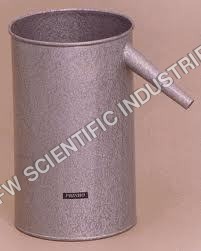
Displacement Vessel
Accuracy : 2 ml
Dimension (L*W*H) : Approx. 200 mm x 60 mm x 60 mm
Measurement Range : Up to 500 ml
Automation Grade : Manual
Type : Laboratory Displacement Vessel
Power Source : None (manual operation)
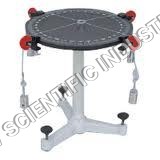
Force Table
Accuracy : High precision, typically 1 on scale
Dimension (L*W*H) : Approx. 40 cm diameter platform, 20 cm height
Measurement Range : 010 N (using supplied weights)
Automation Grade : Manual
Type : Mechanical apparatus
Power Source : Manual; no electrical power required

 Send Inquiry


Our Products
- Slit Lamp Ophthalmic Equipment
- Slit Lamp
- Surgical Equipments
- Laboratories Instruments Equipment
- Microscopes
- Scientific Instruments
- ENT Equipment
- Pharmacy instrument equipment
- Pathological Equipment
- Physics Lab Equipments
- Physics instruments
- Laboratory Glassware
- Digital Polarimeter
- Microprocessor Viscometer
- Double Beam UV-VIS Spectrophotometer
- Single Beam UV-Vis Spectrophotometer
- Kitchen equipments
- Dental Equipment
- Chapati Making Machines
- Water Heating System OR Hamam
- High Performance Liquid Chromatography Systems
- Chemistry
- Equipment Accessories
- Gynecology Equipment


B.O : 5430/3, Anaj Mandi, Science Market, Near Nigar Cinema,
R.O : 102-B Ram Nagar,Ambala Cantt - 133001, Haryana, India

Mr VISHAL KUMAR
(Managing Director)
Mobile :07971671031
 Send Inquiry
Developed and Managed by Infocom Network Private Limited.
