
Call us now :07971671031
 Send Inquiry
 Send Inquiry
Bio-Chemistry Analyzer
Bio-Chemistry Analyzer Specification
- Power Source
- AC Power
- Temperature Range
- 10C to 35C
- Core Components
- Optical System, Photometer, Sample Probe
- Voltage
- 220-240 V
- Model No
- LabQ 300
- Accuracy
- 2% CV
- Automation Grade
- Fully Automatic
- Frequency
- 50/60 Hz
- Feature
- User-friendly software, High throughput, Bar code reader compatible
- Capacity
- Up to 300 tests/hour
- Measurement Range
- 0.01 999 U/L
- Equipment Materials
- ABS Plastic, Stainless Steel
- Type
- Fully Automated Bio-Chemistry Analyzer
- Usage
- Quantitative determination of clinical chemistry analytes
- Display Type
- 7-inch TFT LCD Touchscreen
- Dimension (L*W*H)
- 860 x 600 x 420 mm
- Weight
- 32 kg
- Wavelength Range
- 340 - 800 nm
- Sample Type
- Serum, Plasma, Urine
- Light Source
- Halogen Lamp, 12V/20W
- Number of Reaction Cuvettes
- 80
- Languages Supported
- English, customizable
- Water Consumption
- 5L/hour
- Printer Interface
- Built-in Thermal Printer/External Printer option
- Reaction Volume
- 150 - 500 L (programmable)
- Memory
- 10,000 Test Results Storage
- Reagent Positions
- 40 (Refrigerated)
- Sample Positions
- 60
- Sample Throughput
- Up to 300 tests/hour (bi-directional LIS compatible)
- Alarm System
- Automatic error, absence and clog alert
- Test Principle
- Colorimetric, Turbidimetric, Enzymatic methodologies
- Data Connectivity
- USB, RS232
About Bio-Chemistry Analyzer
Bio-Chemistry Analyzer
The Bio-Chemistry Analyzer is mainly used for the quantitative analysis of the clinical bio-chemical items; it applies the lamber- beer law: A=kbc=lg(i0/i).
Among them:a: absorbency, k: aspirated index, b: liquid layers thickness, c: solutions consistency, i0: incident lights strength, i: transmit lights strength.
According to the above formulas, under the condition of the certain liquid layers thickness and incident lights strength, as long as test the strength of transmit light which goes through the liquid, so we can calculate the consistency of the solution.
Technical parameters condition for operation
- Temperature: 10C-35C
- Relative humidity: 20 90 %.
- Power: 85-264V
Conserved Transportation Condition:
- Temperature: 0C-40C
- Relative humidity: 10%-90 %.
Technical Parameters:
- Method: kinetic.
- End-point, linearity, plus time, non linearity plus time, absorbency, sample blank, multi-standard, velocity, calculation, two-point, double wavelength etc.
7 wavelengths optic system avoiding outer disturbance.
Wavelength range: 340-700nm
Quality control: quality control for all tests, statistic and print quality control parameters automatically with QC curves. Every test can do high medium low three groups quality control.
Program: add or delete test items easily according to the condition. Modify the test parameters. Display dynamic curves at real time.
- The print content includes comprehensive hospital's name and sample' materials. Dormant automatically for the lamp to prolong it's life span/input
- 8 standard curves at most in testing with multi standard method.
- Test items: 200filter
- Wavelengths: 340. 380. 405. 505. 546. 578. 620nm, 1 empty position wavelength
- Precision: 2NM.
- Photometric range: -0. 2 2. 3 abs.
- Flow cell: quartz .
- Measure volume 32ULL
- lamp: quartz-halogen lamp, 6V 10W.
- Liquid thickness: 10mm.
- Screen: 240128 dots graphic LCD.
- Output: inner thermal printer or external parallel printer optional Out-printer: print A4 paper result report. Thermal paper dimension: diameter 35mm,width: 78mm(3inches)aspirating samples
- Volume: 500UL,
- Adjustable memory: 500 samples or quality controls. 30 tests per sample.
- Communications connector: RS-232 serial.
- Dimension: 33cm in length35. 5cm in width12. 59cm in height
- weight: 8kg.
Advanced Performance and Versatility
The LabQ 300 stands out with its innovative detection methods, including colorimetric, turbidimetric, and enzymatic testing. This robust system accommodates multiple sample typesserum, plasma, and urinegranting diagnostic versatility. With up to 300 tests per hour and 80 reaction cuvettes, laboratories benefit from exceptional throughput and reliability, bolstered by 40 refrigerated reagent slots for consistent reagent integrity.
Seamless Operation and User-Friendly Features
Featuring a 7-inch TFT LCD touchscreen and intuitive software, the LabQ 300 streamlines workflow and ensures easy navigation for users. Automated error and absence alerts enhance safety and precision, while bi-directional LIS compatibility enables smooth data management. The built-in or external printer support and immense result storage offer both flexibility and convenience in busy clinical environments.
FAQs of Bio-Chemistry Analyzer:
Q: How does the LabQ 300 Bio-Chemistry Analyzer process samples?
A: The analyzer employs colorimetric, turbidimetric, and enzymatic methodologies to quantitatively analyze clinical chemistry analytes in serum, plasma, and urine. Users simply load samples into one of the 60 available positions, after which the system automates dispensing, incubation, reaction, and result reporting.Q: What sample types are compatible with the LabQ 300?
A: This analyzer supports serum, plasma, and urine samples, making it suitable for a wide range of clinical chemistry tests to meet diverse laboratory requirements.Q: What is the throughput and sample capacity of the analyzer?
A: The LabQ 300 can process up to 300 tests per hour, aided by 80 reaction cuvettes, 40 reagent positions, and 60 sample slotsenabling high-volume laboratories to function efficiently.Q: When should I use the refrigerated reagent positions?
A: Refrigerated reagent positions are essential for preserving reagent stability and preventing degradation, particularly during extended operation hours or when handling heat-sensitive chemistry reagents.Q: Where can the test results be stored and accessed?
A: Test results can be stored in the analyzers internal memory (up to 10,000 results) and accessed through its touchscreen or exported via USB or RS232 connections for integration with external systems or laboratory information systems (LIS).Q: What are the main benefits of using the LabQ 300?
A: Key benefits include high sample throughput, robust error and absence alert systems, user-friendly software interface, large storage capacity, and flexible connectivityall of which contribute to dependable and efficient laboratory workflow.Q: How does the analyzer ensure accuracy and reduce errors?
A: The system incorporates automatic alarm alerts for errors, reagent absence, and probe clogs. With less than 2% coefficient of variation (CV) in accuracy, as well as bar code reader compatibility, it ensures sample tracking, consistent results, and reduced manual errors.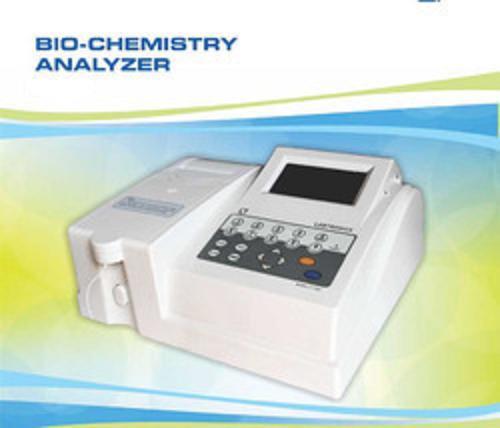
Tell us about your requirement

Price:
Quantity
Select Unit
- 50
- 100
- 200
- 250
- 500
- 1000+
Additional detail
Mobile number
Email

More Products in Laboratories Instruments Equipment Category
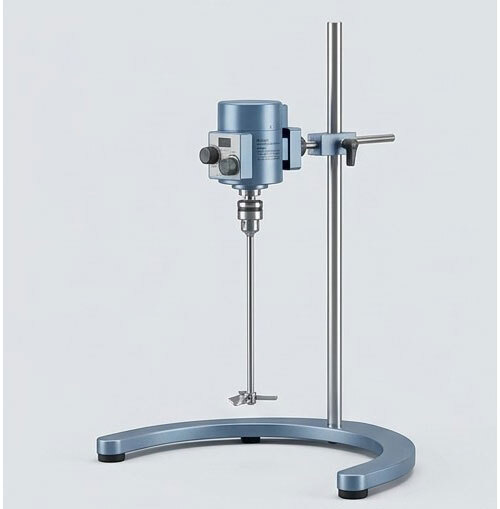
Laboratory Stirrer
Power Source : Electric
Usage : Laboratory Mixing & Stirring
Voltage : 220 Volt (v)
Feature : Variable Speed Control, Corrosion Resistant, Quiet Operation
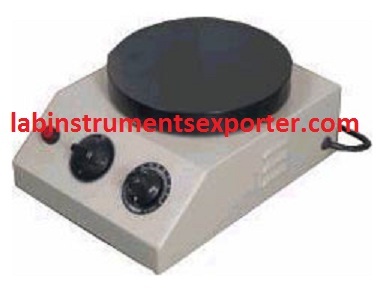
HOT PLATES
Power Source : Electric
Usage : Laboratory and Industrial Heating
Voltage : 220240 V AC
Feature : Uniform surface heating, corrosionresistant top
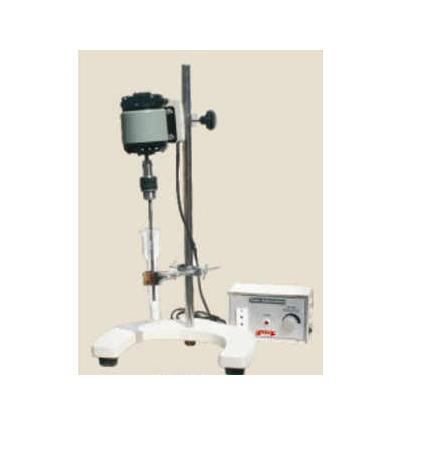
Tissue Homogeniser
Power Source : Electric
Usage : Laboratory Tissue Homogenization
Voltage : 230 V AC
Feature : Easy Sample Processing, High Shear Rate
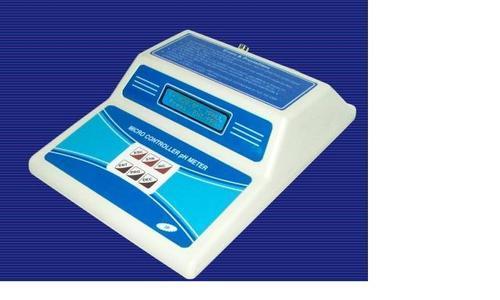
PH Meter
Power Source : Electric
Usage : Laboratory, Industrial, Water Testing
Voltage : 220 V
Feature : Portable, High Precision, Auto Calibration

 Send Inquiry


Our Products
- Slit Lamp Ophthalmic Equipment
- Slit Lamp
- Surgical Equipments
- Laboratories Instruments Equipment
- Microscopes
- Scientific Instruments
- ENT Equipment
- Pharmacy instrument equipment
- Pathological Equipment
- Physics Lab Equipments
- Physics instruments
- Laboratory Glassware
- Digital Polarimeter
- Microprocessor Viscometer
- Double Beam UV-VIS Spectrophotometer
- Single Beam UV-Vis Spectrophotometer
- Kitchen equipments
- Dental Equipment
- Chapati Making Machines
- Water Heating System OR Hamam
- High Performance Liquid Chromatography Systems
- Chemistry
- Equipment Accessories
- Gynecology Equipment


B.O : 5430/3, Anaj Mandi, Science Market, Near Nigar Cinema,
R.O : 102-B Ram Nagar,Ambala Cantt - 133001, Haryana, India

Mr VISHAL KUMAR
(Managing Director)
Mobile :07971671031
 Send Inquiry
Developed and Managed by Infocom Network Private Limited.
