
Call us now :07971671031
 Send Inquiry
 Send Inquiry
Flame Photometer
Flame Photometer Specification
- Power Source
- 230V AC mains
- Feature
- Direct and accurate digital readout, Easy aspiration, Stable flame
- Capacity
- 2 channels (Na & K), Up to 4 elements with optional filters
- Voltage
- 230 V AC
- Automation Grade
- Semi-Automatic
- Frequency
- 50 Hz
- Accuracy
- Better than 2%
- Model No
- Standard (as per image, may be FPL-1 or equivalent)
- Measurement Range
- Na: 0-100 ppm, K: 0-100 ppm
- Temperature Range
- Ambient
- Core Components
- Flame, Burner, Photodetector, Atomizer, Filters
- Equipment Materials
- Stainless steel burner, corrosion-resistant body
- Type
- Laboratory Flame Photometer
- Usage
- Measurement of Sodium and Potassium in solutions
- Display Type
- Digital LED display
- Dimension (L*W*H)
- 400 300 220 mm
- Weight
- 7 kg (Approx.)
- Reproducibility
- 1% for Na & K
- Filter System
- Interchangeable optical filters for Na & K
- Aspiration Rate
- Optimum at 4-6 ml/min
- Accessories Included
- Compressor, Nebulizer, Standard solutions
- Flame Type
- LPG/Air flame
- Safety
- Flame failure protection and overheat cut-off
- Sample Volume Requirement
- 3 - 5 ml
- Sensitivity
- Na: 0.5 ppm, K: 0.5 ppm
- Operating Humidity
- Up to 80% RH
- Calibration
- 2-point calibration system
- Response Time
- <10 seconds
About Flame Photometer
We are a reckoned enterprise, which is engaged in delivering Photometer to the clients. The offered range is made utilizing optimum grade raw material and innovative technology in strict conformation with the international quality norms and standards. Along with this, the offered range is suitably checked on different characteristics to maintain its authenticity throughout the designing process.
Features:
- High performance
- Durable
- Superior efficiency
- Reliable operations
LT-65 | Digital Flame Photometer | With fitted (Na & K) 3½ digit LED display (ppm) along with compressor and other accessories Ca & Li filter can be provided on request. |
LT-66 | Digital Clinical Flame Photometer | Dual channel single aspiration with filter (Na & k) for medical use. Final result in meq/L 2½ digit dual LED display for simultaneous results along with compressor & accessories . |
LT-67 | Microprocessor flame photometer
| With Sodium (Na) and Potassium (K) filters, upto 5 points calibration, direct readout in pp, & meq/l, auto filter selection, auto ignition, 24 x 4 line LCD display, Single Aspiration, RS232 interface, printer attachments facility, with compressor and other accessories for lab & medical use. Ca & Li Fileres and optional at extra cost.
|
Efficient Sodium and Potassium Detection
This flame photometer is engineered for efficient and reliable analysis of sodium and potassium levels, ideal for laboratories seeking rapid and reproducible results. Its optimized aspiration rate and two-point calibration system ensure precision, while the stable LPG/air flame delivers consistent readings even in demanding conditions. The system supports up to four elements with optional filters, providing flexibility for diverse sample analysis.
User-Friendly Digital Interface
Equipped with a bright digital LED display, the flame photometer offers users a straightforward experience with immediate and accurate readouts. The sample volume requirement of just 3-5 ml, fast response time under 10 seconds, and easy aspiration mechanism make it suitable for high-throughput laboratory environments. Maintenance is simplified thanks to its corrosion-resistant and durable design.
Enhanced Safety and Durability Features
Safety is prioritized through built-in flame failure protection and overheat cut-off mechanisms, ensuring secure operation at all times. The stainless steel burner and corrosion-resistant body contribute to a long service life, making this photometer a dependable investment. Its compact design and included high-quality accessories support convenient use and transport in laboratory settings.
FAQ's of Flame Photometer:
Q: How does the flame photometer ensure accurate measurement of sodium and potassium?
A: The instrument uses a two-point calibration system, interchangeable optical filters, and an optimized aspiration rate to deliver high accuracy. Its digital LED display provides direct and precise readouts, with sensitivity down to 0.5 ppm for both sodium and potassium.Q: What is the recommended process for calibrating this flame photometer?
A: Begin by using the supplied standard solutions for sodium and potassium. Perform the two-point calibration as per the manual, ensuring the aspiration rate is between 4-6 ml/min for optimal accuracy and reproducibility before measuring samples.Q: When should I use this photometer in laboratory applications?
A: This device is ideal for routine analysis wherever determination of sodium and potassium in liquid samples is required, such as in chemical laboratories, quality control environments, or water analysis labs.Q: Where can the instrument be safely operated?
A: The flame photometer can be operated in laboratory environments within an ambient temperature range and up to 80% relative humidity. Its sturdy design and safety features allow operation across diverse settings in distributor, exporter, and manufacturing labs.Q: What benefits do the included accessories provide?
A: The provided compressor and nebulizer ensure stable flame and consistent sample aspiration. The standard solutions simplify calibration, while safety mechanisms like flame failure protection and overheat cut-off enhance operational security.Q: How is the sample introduced for measurement?
A: Samples are introduced through an easy aspiration process, requiring only 3 to 5 ml per analysis, making the operation straightforward and minimizing reagent consumption without compromising measurement quality.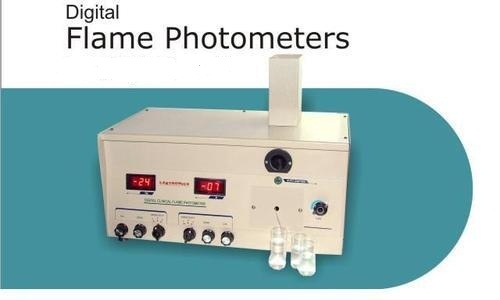
Tell us about your requirement

Price:
Quantity
Select Unit
- 50
- 100
- 200
- 250
- 500
- 1000+
Additional detail
Mobile number
Email

More Products in Scientific Instruments Category
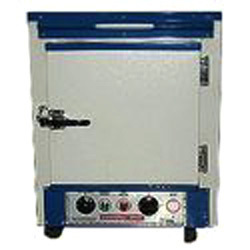
Hot Air Oven
Temperature Range : 50°C to 250°C
Usage : Laboratory, Medical, Industrial use
Core Components : Heating Elements, Thermostat, Fan, Chamber
Accuracy : ±2°C
Type : Laboratory Hot Air Oven
Model No : HAO45
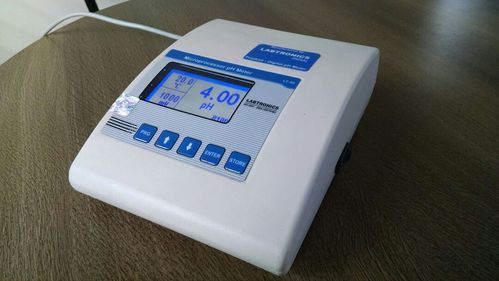
Microprocessor Based Ph/temp/mv Meter (graphical Display)
Temperature Range : 0°C to 100°C
Usage : Laboratory, Industrial
Core Components : Microprocessor, Graphical Display, Sensors
Accuracy : ±0.01 pH, ±1 mV, ±0.2°C
Type : Microprocessor Based Meter
Model No : PHT/MV2024GL
FTIR Spectrometer
Temperature Range : Ambient
Usage : Laboratory, Research, Chemical Analysis
Core Components : Optical System, Detector, Source, Sample Chamber
Accuracy : ±0.5 cm⁻¹
Type : FTIR Spectrometer
Model No : FTIR2404
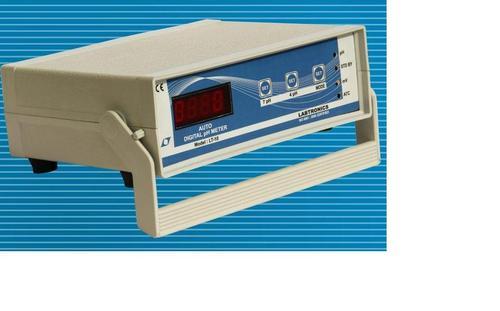
Digital PH Meters
Temperature Range : 0C to 100C
Usage : Laboratory, Industrial, Soil, Water Quality Testing
Core Components : Electrode, Microprocessor, Display Unit
Accuracy : 0.01 pH
Type : Benchtop/Portable Digital PH Meter
Model No : DPM100X

 Send Inquiry


Our Products
- Slit Lamp Ophthalmic Equipment
- Slit Lamp
- Surgical Equipments
- Laboratories Instruments Equipment
- Microscopes
- Scientific Instruments
- ENT Equipment
- Pharmacy instrument equipment
- Pathological Equipment
- Physics Lab Equipments
- Physics instruments
- Laboratory Glassware
- Digital Polarimeter
- Microprocessor Viscometer
- Double Beam UV-VIS Spectrophotometer
- Single Beam UV-Vis Spectrophotometer
- Kitchen equipments
- Dental Equipment
- Chapati Making Machines
- Water Heating System OR Hamam
- High Performance Liquid Chromatography Systems
- Chemistry
- Equipment Accessories
- Gynecology Equipment


B.O : 5430/3, Anaj Mandi, Science Market, Near Nigar Cinema,
R.O : 102-B Ram Nagar,Ambala Cantt - 133001, Haryana, India

Mr VISHAL KUMAR
(Managing Director)
Mobile :07971671031
 Send Inquiry
Developed and Managed by Infocom Network Private Limited.
