
Call us now :07971671031
 Send Inquiry
 Send Inquiry
Fluid Pressure Apparatus
Fluid Pressure Apparatus Specification
- Frequency
- 50 Hz
- Temperature Range
- Ambient to 100C
- Measurement Range
- 0 to 2 Bar
- Core Components
- Manometer, Pressure Cylinder, Piping, Water Reservoir
- Feature
- Corrosion Resistant, Leak Proof Construction
- Accuracy
- 1% of Full Scale
- Automation Grade
- Manual
- Power Source
- Manual
- Capacity
- 12 Liters
- Equipment Materials
- Borosilicate Glass, Mild Steel, Brass Valves
- Type
- Fluid Pressure Apparatus
- Dimension (L*W*H)
- 450 mm x 300 mm x 600 mm
- Weight
- Approx 15 kg
- Test Medium
- Water/Air
- Connections
- Brass Fittings with Hose Connectors
- Finish
- Powder Coated
- Reservoir Capacity
- Over 10 Liters
- Operation Method
- Hand Operated
- Drain Valve
- Provided
About Fluid Pressure Apparatus
With the strong support of our experienced professionals, we have been able to manufacture, export and supply a comprehensive array of Fluid Pressure Apparatus. Offered apparatus is best suited for research and demonstration purposes in laboratories. Also, this apparatus is used to demonstrate the transmissibility of liquid pressure. To ensure its optimal performance, this apparatus is manufactured with the use of high quality raw material. Moreover, provided Fluid Pressure Apparatus can be obtained in varied specifications and at marginal rate.
Features:
-
Robust design
-
Dimensional accuracy
-
Minimum maintenance
-
Easy to use
Durable and Reliable Construction
Crafted with a combination of borosilicate glass, mild steel, and brass valves, this apparatus is built for durability and longevity. Its powder-coated finish and corrosion-resistant properties ensure seamless operation even in demanding laboratory or industrial environments.
Versatile Testing Capability
The device supports both water and air as test mediums, accommodating a variety of experimental and procedural requirements. With a measurement range of 0 to 2 bar and accuracy within 1% of full scale, it guarantees precise and repeatable results.
User-Friendly Manual Operation
The hand-operated design allows direct control during experiments, eliminating the need for external power sources. Simplified by brass hose connectors, a drain valve, and easy-to-read manometers, users can conduct fluid pressure testing with minimal complexity.
FAQs of Fluid Pressure Apparatus:
Q: How does the hand-operated Fluid Pressure Apparatus function during experiments?
A: This apparatus operates manually by using hand-applied force to pressurize the fluid in the pressure cylinder. The connected manometer indicates the generated pressure, allowing you to observe and record measurements up to 2 bar with high precision.Q: What is the ideal application for this Fluid Pressure Apparatus?
A: It is best suited for laboratory demonstrations, educational training, and research requiring controlled fluid pressure testing with water or air within the 0 to 2 bar range. Its robust construction makes it a reliable tool for both academic and industrial usage.Q: When should the drain valve be used during operation?
A: The drain valve is typically used after completing an experiment or test procedure to safely remove residual water or air from the system, ensuring the apparatus is clean and ready for the next use or for storage.Q: Where can the Fluid Pressure Apparatus be installed?
A: Due to its compact dimensions (450 mm x 300 mm x 600 mm) and manual operation, this apparatus is suitable for installation in laboratories, classrooms, or local industrial testing areas where access to external power may be limited.Q: What process should be followed for safe operation of the apparatus?
A: Begin by securely connecting the inlet and outlet hoses using the brass fittings. Gradually apply manual pressure while monitoring the pressure level on the manometer. After testing, use the drain valve to release any remaining test medium.Q: How does this apparatus ensure corrosion resistance and leak-proof operation?
A: The use of a powder-coated mild steel body, borosilicate glass, and precision brass fittings prevents corrosion and promotes longevity. Its construction ensures a leak-proof seal at all connection points, enhancing safety and reliability.Q: What are the benefits of manual operation and powder-coated finish in this Fluid Pressure Apparatus?
A: Manual operation offers independence from electrical power sources, making the unit versatile and portable. The powder-coated finish significantly improves durability, preventing rust and other damage even under frequent use or exposure to humid environments.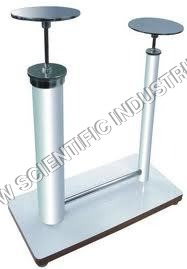
Tell us about your requirement

Price:
Quantity
Select Unit
- 50
- 100
- 200
- 250
- 500
- 1000+
Additional detail
Mobile number
Email

More Products in Physics instruments Category
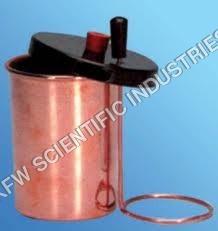
Calorimeter
Equipment Materials : Stainless Steel Inner Vessel, Outer Case Aluminum
Dimension (L*W*H) : 18x12x24 cm
Automation Grade : Manual
Type : Jacketed Calorimeter
Core Components : Thermometer, Stirrer, Jacketed Vessel
Accuracy : 0.1C
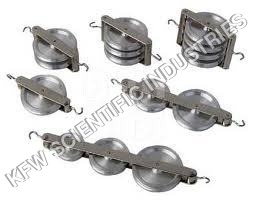
Pulleys
Equipment Materials : Cast Iron, Mild Steel, Aluminum, Stainless Steel
Dimension (L*W*H) : Varies as per specific design (e.g. 100mm x 30mm x 100mm)
Automation Grade : Manual/Automatic (varies by system)
Type : VBelt Pulley, Flat Belt Pulley, Timing Pulley, etc.
Core Components : Pulley Body, Hub, Groove, Bush
Accuracy : Machined to DIN/ISO standards
Bar Breaking Apparatus
Equipment Materials : Mild Steel, Stainless Steel (specimen holders), Powder coated finish
Dimension (L*W*H) : 1000 mm x 250 mm x 250 mm
Automation Grade : Manual
Type : Mechanical Strength Testing Apparatus
Core Components : Loading Frame, Hydraulic Jack, Measuring Gauge, Test Bar Supports
Accuracy : 1% of full scale
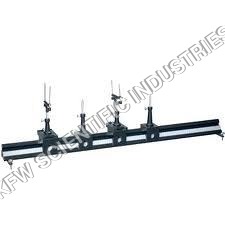
Optical Bench
Equipment Materials : Stainless Steel scale, metallic supports, wooden/metal base
Dimension (L*W*H) : Approx. 1050 x 150 x 150 mm
Automation Grade : Manual
Type : Optical Bench with Accessories
Core Components : Rods, supports, scale, lens holders, accessories
Accuracy : Marked scale with millimeter division

 Send Inquiry


Our Products
- Slit Lamp Ophthalmic Equipment
- Slit Lamp
- Surgical Equipments
- Laboratories Instruments Equipment
- Microscopes
- Scientific Instruments
- ENT Equipment
- Pharmacy instrument equipment
- Pathological Equipment
- Physics Lab Equipments
- Physics instruments
- Laboratory Glassware
- Digital Polarimeter
- Microprocessor Viscometer
- Double Beam UV-VIS Spectrophotometer
- Single Beam UV-Vis Spectrophotometer
- Kitchen equipments
- Dental Equipment
- Chapati Making Machines
- Water Heating System OR Hamam
- High Performance Liquid Chromatography Systems
- Chemistry
- Equipment Accessories
- Gynecology Equipment


B.O : 5430/3, Anaj Mandi, Science Market, Near Nigar Cinema,
R.O : 102-B Ram Nagar,Ambala Cantt - 133001, Haryana, India

Mr VISHAL KUMAR
(Managing Director)
Mobile :07971671031
 Send Inquiry
Developed and Managed by Infocom Network Private Limited.
