
Call us now :07971671031
 Send Inquiry
 Send Inquiry
Optical Bench
Optical Bench Specification
- Measurement Range
- 0-1000 mm
- Feature
- Adjustable, sturdy, precise scale, movable riders
- Model No
- OB-1000 or as specified by supplier
- Automation Grade
- Manual
- Core Components
- Rods, supports, scale, lens holders, accessories
- Accuracy
- Marked scale with millimeter division
- Temperature Range
- Ambient
- Capacity
- 1 meter (1000 mm) scale length
- Equipment Materials
- Stainless Steel scale, metallic supports, wooden/metal base
- Type
- Optical Bench with Accessories
- Usage
- Physics laboratory, optical experiments
- Dimension (L*W*H)
- Approx. 1050 x 150 x 150 mm
- Weight
- Approximately 7-10 kg
- Maximum Load
- Can hold common experimental lenses/mirrors
- Color
- Silver (scale), black/wood (base and accessories)
- Bench Material Finish
- Anti-corrosive, powder coated/varnished
- Application
- Educational, experimental studies in optics
- Accessories Included
- Lens holders, screens, pin holders, mirrors (as per kit)
- Scale Graduation
- Millimeter
- Number of Riders
- 3 riders with movable lens holders
- Adjustment Method
- Screw and clamp mechanism
- Base Type
- Heavy wooden or metallic base for stability
About Optical Bench
Comprising a wooden baseboard 1.1mx115mm. with a 1m scale divided in millimeters and figured every centimeters, fixed along the front edge and complete with the following accessories:
2 White-face object & receiving screens each comprising a white card having an aperture and index, in a black metal frame 150x100mm with an index mark at the end.
1 plane mirror 150x100mm mounted on a wooden base as above.
4 Lens holders, each comprising a wooden upright with
a" shaped slot to hold lenses up to 75mm, diameter, mounted on a wooden base 100x50mm with an index line at the end.
1 Needle mounted vertically in a short wooden rod in the center of a wooden base 100x50mm.
1 candle holder.
The optical center height of all the components is 100 mm above the base board.
Precision and Flexibility
With a 1-meter scale marked in millimeters and three movable lens holders, the optical bench offers fine adjustment and accurate readings. Its screw and clamp system allows users to position lenses, mirrors, and other accessories with precision, supporting a variety of experimental setups. This adaptability benefits both instructional and research environments by accommodating different optical components and experimental requirements.
Robust Construction for Laboratory Use
Constructed from a combination of stainless steel, durable metals, and heavy wooden or metallic bases, the bench is meticulously finished with an anti-corrosive, powder-coated or varnished surface. This sturdy build ensures long-term reliability and stability during experiments, making it ideal for repeat use in educational settings and minimizing maintenance costs.
FAQ's of Optical Bench:
Q: How do you set up the Optical Bench for an experiment?
A: To set up the Optical Bench, secure the bench on a stable surface using its heavy wooden or metallic base. Attach the three movable riders-each with lens holders, mirrors, or screens as required for your experiment-by loosening the clamp screws, sliding them to the desired position along the scale, and tightening them securely. Accessories are installed as per the kit's guidelines.Q: What types of experiments can be performed with this Optical Bench?
A: This Optical Bench is suitable for a wide range of optics experiments, including focal length measurements, lens and mirror investigations, and light path studies. Its design supports educational and experimental studies in physics, helping students and researchers explore principles of reflection, refraction, and image formation.Q: When should I use the screw and clamp mechanism provided?
A: Use the screw and clamp mechanism whenever you need to position or align any optical component-such as lens holders, screens, or mirrors-precisely along the bench. This ensures stability and repeatability in measurements, vital for accurate experimental results.Q: Where should the Optical Bench be placed for optimal use?
A: For best performance, place the Optical Bench on a flat, stable laboratory table, ideally in a designated physics lab environment. This prevents vibrations or movement during experiments and allows for consistent, precise readings.Q: What is the maximum length that can be measured on this bench?
A: The Optical Bench features a 1-meter (1000 mm) scale, clearly marked in millimeter divisions, allowing users to conduct experiments requiring precise distance measurements within this range.Q: How does the anti-corrosive finish benefit the Optical Bench?
A: The anti-corrosive, powder-coated or varnished finish enhances the durability and lifespan of the bench by preventing rust and wear, especially in laboratory environments where spills and humidity are common. This finish ensures a long-lasting, professional appearance.Q: What are the main advantages of using this Optical Bench in educational settings?
A: Key advantages include precise measurement capability, robust construction for long-term use, flexibility in experimental setup with movable riders, and complete accessories for hands-on optical studies-making it a reliable and effective teaching tool in physics laboratories.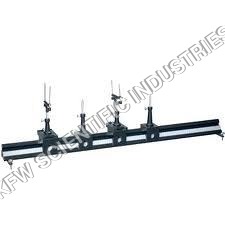
Tell us about your requirement

Price:
Quantity
Select Unit
- 50
- 100
- 200
- 250
- 500
- 1000+
Additional detail
Mobile number
Email

More Products in Physics instruments Category
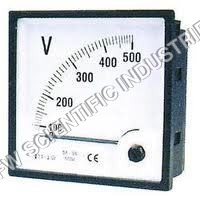
Ammeter
Equipment Materials : ABS Plastic, Glass Front
Automation Grade : Manual
Power Source : Electrical (SelfPowered via Measurement Circuit)
Dimension (L*W*H) : 96mm x 96mm x 50mm
Core Components : Coil, Magnet, Scale, Pointer
Accuracy : Class 1.5

Force Pump On Stand
Equipment Materials : Cast Iron/Steel
Automation Grade : Manual
Power Source : Manual
Dimension (L*W*H) : 60 x 40 x 110 cm
Core Components : Piston, Cylinder, Stand, Handle
Accuracy : High Precision
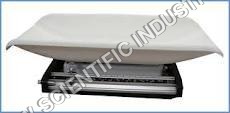
Baby Weighing Balance
Equipment Materials : ABS Plastic Tray with Metal Base
Automation Grade : Manual
Power Source : Manual/Mechanical No Power Required
Dimension (L*W*H) : 58 x 27 x 13 cm
Core Components : Main Body, Tray, Dial
Accuracy : 50 g
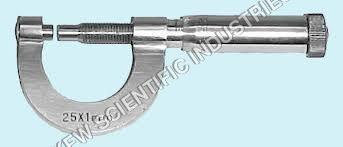
Micrometer (Screw Gauge)
Equipment Materials : Hardened Steel Frame with Satin Chrome Finish
Automation Grade : Manual
Power Source : Manual
Dimension (L*W*H) : Approx. 130mm x 45mm x 20mm
Core Components : Spindle, Anvil, Sleeve, Thimble, Ratchet Stop
Accuracy : 0.01 mm

 Send Inquiry


Our Products
- Slit Lamp Ophthalmic Equipment
- Slit Lamp
- Surgical Equipments
- Laboratories Instruments Equipment
- Microscopes
- Scientific Instruments
- ENT Equipment
- Pharmacy instrument equipment
- Pathological Equipment
- Physics Lab Equipments
- Physics instruments
- Laboratory Glassware
- Digital Polarimeter
- Microprocessor Viscometer
- Double Beam UV-VIS Spectrophotometer
- Single Beam UV-Vis Spectrophotometer
- Kitchen equipments
- Dental Equipment
- Chapati Making Machines
- Water Heating System OR Hamam
- High Performance Liquid Chromatography Systems
- Chemistry
- Equipment Accessories
- Gynecology Equipment


B.O : 5430/3, Anaj Mandi, Science Market, Near Nigar Cinema,
R.O : 102-B Ram Nagar,Ambala Cantt - 133001, Haryana, India

Mr VISHAL KUMAR
(Managing Director)
Mobile :07971671031
 Send Inquiry
Developed and Managed by Infocom Network Private Limited.
