
Call us now :07971671031
 Send Inquiry
 Send Inquiry
Atomic Absorption Spectrophotometer
Atomic Absorption Spectrophotometer Specification
- Capacity
- Single, Double & Four Burner (Optional)
- Model No
- AAS-4
- Feature
- Auto-ignition, Safety Interlock, Computer Interface, Adjustable Flame
- Voltage
- 220 V
- Temperature Range
- Up to 2400C (with furnace accessory)
- Accuracy
- Better than 0.5% (readouts)
- Automation Grade
- Semi-automatic (Manual & PC Control)
- Frequency
- 50/60 Hz
- Measurement Range
- 0.01 ppm - 200 ppm
- Power Source
- 220V AC, Mains Power Supply
- Core Components
- Burner Head, Nebulizer, Hollow Cathode Lamp, Photomultiplier Detector
- Equipment Materials
- Corrosion-resistant, Stainless Steel Housing
- Type
- Atomic Absorption Spectrophotometer
- Usage
- Elemental Analysis in Laboratories
- Display Type
- Digital LCD Display
- Dimension (L*W*H)
- 680 x 540 x 470 mm
- Weight
- Approx. 45 kg
- Readout System
- Integrated Printer and RS232 interface for Data Output
- Lamp Housing
- 4 Lamp Turret
- Safety Features
- Automatic Fuel Cutoff, Burner Lift-Off Detection
- Baseline Stability
- <0.004 Abs/30 min
- Sample Introduction
- Micro-flow Nebulizer
- Flame Type
- Air-Acetylene, Nitrous Oxide-Acetylene
- Wavelength Range
- 190 to 900 nm
- Lamp Current Adjustment
- 0-10 mA (Adjustable)
- Fuel Flow Control
- Automatic Digital Control
- Resolution
- Better than 0.2 nm
- Software Compatibility
- Windows-based Analytical Software
About Atomic Absorption Spectrophotometer
Features:
Innovated rich oxygen air-acetylene flame analysis technique:
The patented flame analysis technique adopting rich oxygen air-acetylene flame as the substitution for nitrous oxide-acetylene flame for high temperate element analysis, such as Ca, Al, Ba, W, Mo, Ti, V etc. Flame Temperature is continuously adjustable between 2300-2950 ºC, which makes it possible to choose the best atomization temperature for different elements. It features easy operation, low analysis cost and wide flame AAS analytical range. Rich oxygen flame will not pollute the environment and is not harmful to human bodies. It’s a break through in flame AAS analysis.
Integrated flame/graphite furnace atomization system, changeable with flame emission burner:
- Automatically controlled changeover of the Integrated flame and graphite furnace automizer featuring easy operation and time saving eliminated human labor.
- A flame emission burner head can be installed to perform flame emission analysis to Alkali metals as K, Na etc.
Accurate fully Automated Control System:
- Automatic 6 lamp turret, automatic adjustment of lamp current and optimization of light beam position.
- Automatic wavelength scanning and peak picking.
- Automatic special spectral bandwidth changing.
- Automatic changeover between flame and graphite furnace operation, automatic optimization of position parameters automatic ignition and automatic gas flow setting.
Advanced User-Friendly Operation
With a digital LCD display and Windows-based analytical software, the AAS-4 provides intuitive controls and swift data interpretation. The single, double, or four burner capacity positions this instrument as a versatile choice for diverse elemental analysis tasks in modern laboratories. The integrated printer and RS232 interface facilitate seamless data recording and transfer.
Superior Analytical Performance
Achieve exceptional resolution-better than 0.2 nm-across a broad wavelength range of 190 to 900 nm. With a baseline stability under 0.004 Abs/30 min and accuracy better than 0.5%, every analysis remains dependable. Features like adjustable lamp current and automatic fuel control further support precision and reproducibility.
Built-in Safety and Reliability
Operational safety is ensured with automatic fuel cutoff, burner lift-off detection, and a safety interlock system. The AAS-4's corrosion-resistant stainless steel housing not only ensures longevity but also provides additional protection in harsh laboratory environments. The auto-ignition and adjustable flame options support both convenience and operator protection.
FAQ's of Atomic Absorption Spectrophotometer:
Q: How does the Atomic Absorption Spectrophotometer (AAS-4) ensure accurate elemental analysis?
A: The AAS-4 achieves high accuracy through its micro-flow nebulizer, adjustable lamp current, superior resolution (better than 0.2 nm), and stable baseline (<0.004 Abs/30 min). Automatic digital fuel control and precise burner systems further enhance analysis reliability.Q: What is the typical process for operating this spectrophotometer in a laboratory?
A: Users select the appropriate burner and lamp, introduce samples with the micro-flow nebulizer, and manage parameters via either manual controls or Windows-based software. Data is displayed on the digital LCD and can be output through the integrated printer or RS232 interface.Q: When should laboratories opt for single, double, or four burner configurations?
A: Choice of burner capacity depends on sample throughput and analysis scope. Single burner suits routine, low-volume analysis, while double or four burner options are ideal for higher throughput environments or when multiple methods are required.Q: Where can this instrument be used most effectively?
A: The AAS-4 is designed for elemental analysis in research, industrial QC, and educational laboratories. Its versatile design and robust safety features make it suitable for various lab environments requiring reliable quantitative analysis of trace elements.Q: What are the main benefits of automatic safety features like fuel cutoff and burner lift-off detection?
A: These safety mechanisms protect users and equipment from risks associated with fuel leaks or operational errors by automatically shutting down the system in unsafe conditions, enhancing overall laboratory safety.Q: How does the data output system enhance workflow efficiency?
A: Data can be printed directly from the integrated printer or exported digitally via RS232, enabling efficient result documentation and further analysis. The Windows software ensures smooth data handling and integration with laboratory information systems.Q: What maintenance is required for optimal performance of the AAS-4?
A: Routine cleaning of burner heads and nebulizer, periodic checking of fuel lines, and software updates are recommended. The corrosion-resistant housing minimizes maintenance related to environmental wear, ensuring reliability over prolonged use.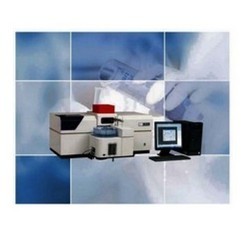
Tell us about your requirement

Price:
Quantity
Select Unit
- 50
- 100
- 200
- 250
- 500
- 1000+
Additional detail
Mobile number
Email

More Products in Scientific Instruments Category
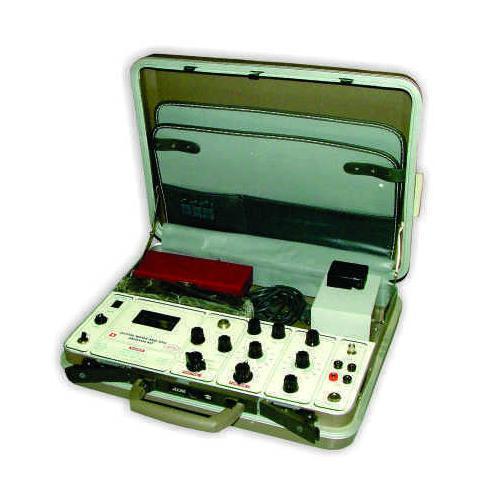
Water Testing Kit
Usage : Testing water for common contaminants and parameters like pH, chlorine, iron, nitrate, hardness etc.
Model No : WTK2024
Capacity : Single kit, suitable for multiple tests (up to 300 tests)
Equipment Materials : Plastic, Glass, Chemical Reagents
Feature : Onsite rapid water quality analysis
Weight : Approx. 500 g
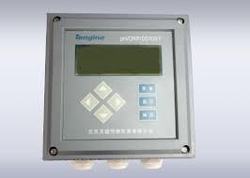
Digital Dissolved Oxygen Analyzer
Usage : Water Quality Analysis
Model No : DO900 Series
Capacity : 1 mg/L to 20 mg/L
Equipment Materials : ABS/Polycarbonate Body
Feature : Automatic Temperature Compensation, High Sensitivity
Weight : Approx. 1.5 kg
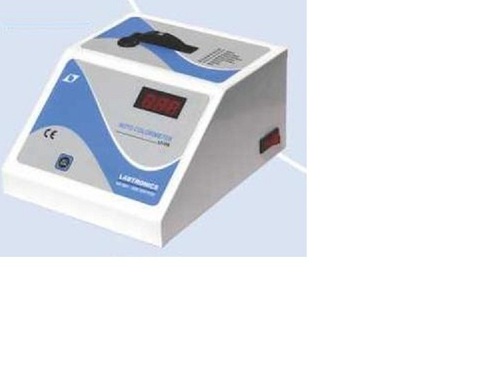
Digital Photocolorimeter
Usage : Clinical Laboratory, Chemical Analysis, Water Testing
Model No : DigitalPhoto01
Capacity : 1 ml to 10 ml sample size
Equipment Materials : Highgrade ABS plastic body
Feature : Accurate and reliable photometric readings, Easy calibration, Compact size
Weight : 2.5 kg (approx)
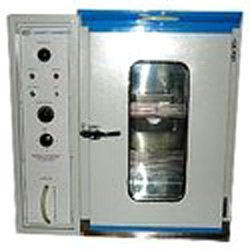
Humidity Chamber
Usage : Industrial, Laboratory Testing
Model No : HC9002
Capacity : 90 liters
Equipment Materials : Stainless Steel Interior, Powder Coated Exterior
Feature : Adjustable Shelves, PID Control
Weight : 45 kg

 Send Inquiry


Our Products
- Slit Lamp Ophthalmic Equipment
- Slit Lamp
- Surgical Equipments
- Laboratories Instruments Equipment
- Microscopes
- Scientific Instruments
- ENT Equipment
- Pharmacy instrument equipment
- Pathological Equipment
- Physics Lab Equipments
- Physics instruments
- Laboratory Glassware
- Digital Polarimeter
- Microprocessor Viscometer
- Double Beam UV-VIS Spectrophotometer
- Single Beam UV-Vis Spectrophotometer
- Kitchen equipments
- Dental Equipment
- Chapati Making Machines
- Water Heating System OR Hamam
- High Performance Liquid Chromatography Systems
- Chemistry
- Equipment Accessories
- Gynecology Equipment


B.O : 5430/3, Anaj Mandi, Science Market, Near Nigar Cinema,
R.O : 102-B Ram Nagar,Ambala Cantt - 133001, Haryana, India

Mr VISHAL KUMAR
(Managing Director)
Mobile :07971671031
 Send Inquiry
Developed and Managed by Infocom Network Private Limited.
