
Call us now :07971671031
 Send Inquiry
 Send Inquiry
Bifilar Pendulum (Iron)
Bifilar Pendulum (Iron) Specification
- Power Source
- Manual (no power required)
- Core Components
- Iron Bar, supporting frame, bifilar suspension threads
- Accuracy
- High precision for academic experiments
- Feature
- Robust construction, high accuracy, easy setup
- Temperature Range
- Suitable for normal laboratory environments (0C to 50C)
- Capacity
- Designed to withstand repeated experimental use
- Automation Grade
- Manual operation
- Frequency
- Depends on length and mass; typically in the range of seconds per oscillation
- Model No
- BP-IRON-3255
- Measurement Range
- Suitable for measuring time period of bifilar oscillations
- Equipment Materials
- Iron (main pendulum body), Mild steel (stand), Durable thread
- Type
- Physics Laboratory Apparatus
- Usage
- Measurement of moment of inertia and oscillation studies
- Display Type
- Analog scale measurement
- Dimension (L*W*H)
- Approx. 30 cm x 10 cm x 12 cm
- Weight
- Approximately 5001000 grams
- Adjustment Mechanism
- Thread Length and Distance Adjustable
- Pendulum Rod Diameter
- Approx. 8 mm
- Pendulum Rod Length
- Approx. 20 cm
- Accessories Included
- Suspending Threads, Instruction Manual
- Colour
- Iron Grey/Silver
- Base Type
- Heavy Square Base for Stability
- Finish
- Anti-rust Coated Iron Body
- Application
- Experimental Study of Rotational Motion and Moment of Inertia
- Packaging
- Strong Cardboard Box, Foam Lining
- Suspension Type
- Bifilar, Double Threaded Suspension
About Bifilar Pendulum (Iron)
KFW Bifilar Pendulum (Iron)
- Consists of a heavy cast iron rectangular plate of dimension 15 x 10 x 1.5 cm.
- The plate is suspended by two strings of equal lengths from a rigid support (T shaped Clamp)
Precision Engineering for Accurate Experiments
The Bifilar Pendulum (Iron) boasts an anti-rust iron body and a heavy square base, ensuring stability for precise rotational motion and moment of inertia studies. With easily adjustable suspension threads and analog scale measurement, it is tailored for academic experiments demanding reliable accuracy and repeatability.
User-Friendly and Durable Design
Assembly and experiment setup is straightforward, thanks to an included instruction manual and adjustable thread mechanism. The device is constructed from robust iron and mild steel, paired with strong threads, enabling it to withstand frequent laboratory use while maintaining consistent performance.
Comprehensive Accessories and Safe Packaging
Each pendulum is supplied with durable suspending threads and a detailed instruction manual. The strong cardboard box with foam lining provides excellent protection during transport and storage, guaranteeing product integrity on delivery and between uses.
FAQs of Bifilar Pendulum (Iron):
Q: How do I assemble and set up the Bifilar Pendulum (Iron) for experiments?
A: Assembly is straightforward: attach the iron pendulum rod using the provided bifilar (double threaded) suspension threads to the supporting frame, ensuring the threads are secured and their length and distance are properly adjusted according to your experimental requirements. Refer to the included instruction manual for detailed guidance.Q: What applications does this pendulum serve in a laboratory environment?
A: The Bifilar Pendulum (Iron) is designed primarily for the experimental study of rotational motion and to measure the moment of inertia. It is particularly useful in physics labs for oscillation studies and for demonstrating principles of rotational dynamics.Q: When should I adjust the thread length or distance in my experiment?
A: Adjust the thread length or distance whenever you need to vary the time period or frequency of oscillations for your experiment. Different measurements of period and moment of inertia can be obtained by altering these parameters, allowing versatile investigation of rotational properties.Q: Where is the optimal place to use and store the pendulum apparatus?
A: The pendulum should be used and stored in a standard laboratory environment with temperatures between 0C and 50C. Store it in the provided foam-lined, strong cardboard box to protect it from physical damage and corrosion when not in use.Q: What is the process for measuring the moment of inertia using this bifilar pendulum?
A: Suspend the iron bar using the bifilar threads, slightly displace the pendulum from equilibrium, and allow it to oscillate. Use the analog scale to time several oscillations, then apply the experimental formula (included in the manual) to calculate the moment of inertia based on the period, length, thread separation, and mass of the bar.Q: How does the robust construction benefit frequent experimental use?
A: The anti-rust coated iron body and heavy square base ensure long-term durability, resisting wear from repeated adjustments or usage. The high-quality threads and precise adjustment mechanisms maintain stability and accuracy across many experimental sessions.Q: What accessories are included to facilitate experimentation?
A: Each set includes durable suspending threads and a comprehensive instruction manual. These accessories, along with the robust packaging, ensure you can set up experiments quickly and maintain the apparatus in excellent condition.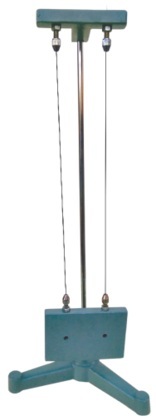
Tell us about your requirement

Price:
Quantity
Select Unit
- 50
- 100
- 200
- 250
- 500
- 1000+
Additional detail
Mobile number
Email

More Products in Physics Lab Equipments Category
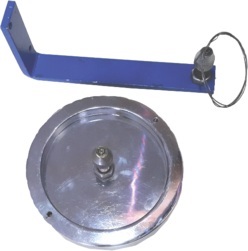
Torsion Pendulum
Price 1200 INR / Piece
Minimum Order Quantity : 1 Piece
Core Components : Torsion wire, Cylinder, Stand, Scale, Pointer
Dimension (L*W*H) : Approx. 300 mm x 150 mm x 350 mm
Power Source : Manual
Accuracy : High (up to 0.01 gcm)
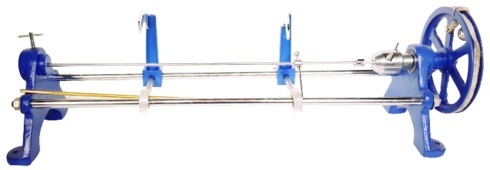
Torsion Apparatus Horizontal
Price 1400 INR / Piece
Minimum Order Quantity : 1400 Pieces
Core Components : Base, restoring couple arm, graduated scale, specimen holders, test rod
Dimension (L*W*H) : Approx. 700 x 120 x 150 mm
Power Source : Not required (manual/mechanical)
Accuracy : 1% of reading
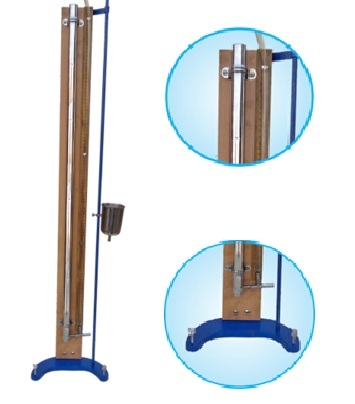
Resonance Apparatus
Price 1200 INR / Piece
Minimum Order Quantity : 1 Piece
Core Components : Resonance tube, water reservoir, adjustable outer tube, tuning forks
Dimension (L*W*H) : Resonance tube: ~1 m length, set up 100 x 20 x 15 cm
Power Source : Manual (tuning fork excitation; no electrical source required)
Accuracy : Millimeter scale on tube for precise resonance point
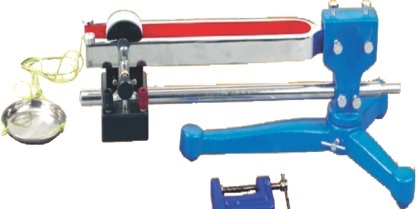
Melde's Apparatus ( OSAW Pattern)
Core Components : Heavy cast iron base, vertical metal rod, pulley with clamp, scale, string, pan, tuning fork holder
Dimension (L*W*H) : Base size approx. 40 x 7 x 4 cm
Power Source : Manual and tuning fork vibration (no electrical input required)
Accuracy : Depends on calibration, suitable for educational demonstration

 Send Inquiry


Our Products
- Slit Lamp Ophthalmic Equipment
- Slit Lamp
- Surgical Equipments
- Laboratories Instruments Equipment
- Microscopes
- Scientific Instruments
- ENT Equipment
- Pharmacy instrument equipment
- Pathological Equipment
- Physics Lab Equipments
- Physics instruments
- Laboratory Glassware
- Digital Polarimeter
- Microprocessor Viscometer
- Double Beam UV-VIS Spectrophotometer
- Single Beam UV-Vis Spectrophotometer
- Kitchen equipments
- Dental Equipment
- Chapati Making Machines
- Water Heating System OR Hamam
- High Performance Liquid Chromatography Systems
- Chemistry
- Equipment Accessories
- Gynecology Equipment


B.O : 5430/3, Anaj Mandi, Science Market, Near Nigar Cinema,
R.O : 102-B Ram Nagar,Ambala Cantt - 133001, Haryana, India

Mr VISHAL KUMAR
(Managing Director)
Mobile :07971671031
 Send Inquiry
Developed and Managed by Infocom Network Private Limited.
