
Call us now :07971671031
 Send Inquiry
 Send Inquiry
Katers Pendulum
Katers Pendulum Specification
- Measurement Range
- Period measurements typically between 1 and 3 seconds
- Capacity
- 50-70 cm adjustable length
- Temperature Range
- Ambient laboratory temperatures
- Feature
- Knife edge reversible, high precision, adjustable bob positions
- Frequency
- Suitable for frequencies corresponding to seconds pendulum
- Power Source
- Not required (manual operation)
- Accuracy
- Up to 0.001 s timing precision, 0.1 cm length adjustment
- Automation Grade
- Manual
- Core Components
- Metallic pendulum rod, adjustable knife edges, weights, rigid stand
- Model No
- KP-112
- Equipment Materials
- Brass and steel (pendulum rod and knife edges); cast iron (stand)
- Type
- Physics Laboratory Instrument
- Usage
- Measurement of gravitational acceleration; educational and laboratory experiments
- Display Type
- Not applicable (manual/physical measurement)
- Dimension (L*W*H)
- Stand: approx. 60 cm height; Rod: 100 cm length
- Weight
- Approximately 1.5 to 2 kg
- Application
- Determination of acceleration due to gravity (g)
- Maintenance
- No calibration required, periodic cleaning suggested
- Pendulum Length Adjustment
- Graduated scale for precise positioning
- Finish
- Polished and lacquer coated
- Timing Method
- Compatible with stop watch or electronic timer
- Stand Construction
- Powder-coated cast iron for stability
- Installation
- Tabletop or laboratory bench
- Packaging
- Foam and box packing for safe delivery
- Knife Edges Material
- Tempered steel for minimal friction
- Bob Material
- Brass or steel cylindrical mass
About Katers Pendulum
KFW Katers Pendulum (Iron)
KFW-A Katers Pendulum (Brass)
- Consist of a rod of 120cm long 10cm. dia with two adjustable knife edges.
- Two metal weight Cast Iron, Two wooden weights
Precision Measurements for Physics Labs
Katers Pendulum is engineered to provide accurate and repeatable gravitational acceleration measurements. With high precision in timing (up to 0.001 s) and length adjustments, this device is fundamental for academic experiments and demonstrations in physics. Its robust build, graduated scale, and adjustable configurations enable users to explore key physical principles with confidence.
Durable Construction for Consistent Results
Constructed with a powder-coated cast iron stand and metallic components, Katers Pendulum is both stable and resilient. The tempered steel knife edges minimize energy loss due to friction, and all parts are designed for longevity. Suitable for use on laboratory benches or tables, it withstands frequent use in busy educational or research environments.
FAQs of Katers Pendulum:
Q: How do I adjust the pendulum length accurately?
A: The pendulum length can be precisely adjusted using the graduated scale on the rod. Simply move the bob to the desired position between 50 and 70 cm, ensuring precise alignment for reliable experimental results.Q: What process should I follow to measure acceleration due to gravity using this apparatus?
A: Set the pendulum rod with the knife edges on the supports, position the adjustable bob, and use a stopwatch or electronic timer to record the time for multiple oscillations. Analyze the period measurements and pendulum length to calculate gravitational acceleration.Q: When is calibration required for Katers Pendulum?
A: No calibration is necessary for this apparatus. For optimal accuracy, periodic cleaning and inspection of knife edges and moving parts are recommended.Q: Where should the Katers Pendulum be installed for best results?
A: Install the pendulum on a stable tabletop or laboratory bench in a location free from drafts and vibrations to ensure consistent and accurate measurements.Q: What are the benefits of the reversible knife edge feature?
A: The reversible knife edge allows measurements from both directions, reducing systematic errors and enhancing the reliability of gravitational acceleration experiments.Q: How do I maintain the instrument for long-term use?
A: Regularly clean the knife edges, rod, and stand with a soft, dry cloth. Store it safely in its foam and box packaging when not in use to protect components and extend the instruments operational life.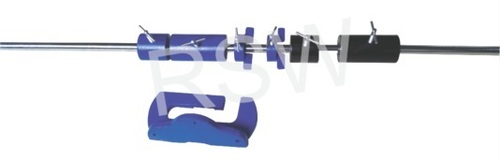
Tell us about your requirement

Price:
Quantity
Select Unit
- 50
- 100
- 200
- 250
- 500
- 1000+
Additional detail
Mobile number
Email

More Products in Physics Lab Equipments Category
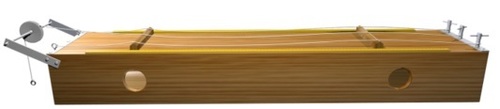
Sono Meter
Measurement Range : 0.2 to 20 m/s
Capacity : 10 Litres
Temperature Range : Room Temperature upto 60C
Feature : High Accuracy, Portable, UserFriendly Interface
Type : Ultrasonic Flow Meter
Display Type : Digital
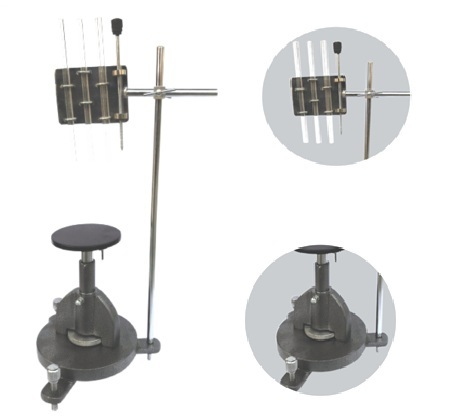
Rising Table with Capalary
Measurement Range : 0 to 250 mm
Capacity : 6 Liters
Temperature Range : Ambient to 99C
Feature : Corrosion resistant, Precise scale markings, Easy to clean
Type : Rising Table with Capalary
Display Type : Analog
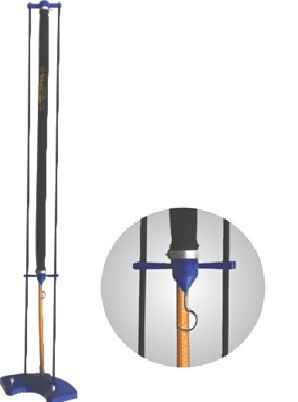
Poisson Ratio of Rubber Tube Apparatus
Measurement Range : 025 mm elongation
Capacity : Standard up to 5 kg load
Temperature Range : Ambient to 50C
Feature : Easy observation of longitudinal and lateral changes, durable and portable design
Type : Laboratory Testing Apparatus
Display Type : Analog Scale
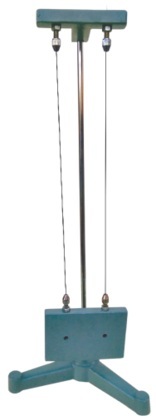
Bifilar Pendulum (Iron)
Measurement Range : Suitable for measuring time period of bifilar oscillations
Capacity : Designed to withstand repeated experimental use
Temperature Range : Suitable for normal laboratory environments (0C to 50C)
Feature : Robust construction, high accuracy, easy setup
Type : Physics Laboratory Apparatus
Display Type : Analog scale measurement

 Send Inquiry


Our Products
- Slit Lamp Ophthalmic Equipment
- Slit Lamp
- Surgical Equipments
- Laboratories Instruments Equipment
- Microscopes
- Scientific Instruments
- ENT Equipment
- Pharmacy instrument equipment
- Pathological Equipment
- Physics Lab Equipments
- Physics instruments
- Laboratory Glassware
- Digital Polarimeter
- Microprocessor Viscometer
- Double Beam UV-VIS Spectrophotometer
- Single Beam UV-Vis Spectrophotometer
- Kitchen equipments
- Dental Equipment
- Chapati Making Machines
- Water Heating System OR Hamam
- High Performance Liquid Chromatography Systems
- Chemistry
- Equipment Accessories
- Gynecology Equipment


B.O : 5430/3, Anaj Mandi, Science Market, Near Nigar Cinema,
R.O : 102-B Ram Nagar,Ambala Cantt - 133001, Haryana, India

Mr VISHAL KUMAR
(Managing Director)
Mobile :07971671031
 Send Inquiry
Developed and Managed by Infocom Network Private Limited.
