
Call us now :07971671031
 Send Inquiry
 Send Inquiry
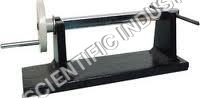
Laboratory Sonometer
Laboratory Sonometer Specification
- Accuracy
- High precision for academic laboratory use
- Feature
- Uniform wooden box, marked scale, dual wires for varied experiments, attached pulley system
- Model No
- Varies by manufacturer
- Measurement Range
- Depends on the length and tension of the wire used
- Temperature Range
- Ambient
- Core Components
- Wooden base, wire support bridges, graduated scale, pulley, tension hanger, tuning fork (not included)
- Automation Grade
- Manual
- Frequency
- Variable (Depends on wire tension and length)
- Type
- Physics Laboratory Instrument
- Usage
- Measurement of frequency, laws of vibrating strings, acoustics experiments in laboratory
- Dimension (L*W*H)
- Approx. 110 cm x 12 cm x 10 cm
- Resonance Box Design
- Hollow, amplifies string vibrations
- Included Accessories
- Wire tension weights, hanger, bridge pieces
- Safety Features
- Smoothened edges, secured wire mounting
- No. of Wires
- Two parallel wires
- Box Construction
- Seamless wooden construction with end supports
- Finish
- Polished, lacquer coated
- Hanger Capacity
- Up to 1 kg
- Wire Material
- High carbon steel
- Graduated Scale Length
- Approx. 1 meter
- Tuning Fork Compatibility
- Suitable for all laboratory standard tuning forks
About Laboratory Sonometer
Comprising a seasoned wood resonance box 45"x4"x4" with meter scales one meter long sub-divided in millimeters. One each brass and steel wires of S.W.G. 26 and 24 respectively, attached to a fixed bridge and tensioned by fine adjustment pegs; two moveable bridges, pulley and fixed screw to enable a third wire to be fixed for tensioning by weights.
Enhanced Acoustic Learning Tool
This laboratory sonometer is engineered to deliver precise measurement of frequency and in-depth exploration of vibrating string laws. The dual high carbon steel parallel wires and hollow resonance box maximize sound amplification, making observations clear for classroom demonstrations and individual experiments.
User-Friendly and Safe Construction
Benefiting from a seamless wooden box with secure, smooth-finished edges, the sonometer prioritizes safety and durability. The polished lacquer coating ensures longevity, while the included accessories like tension weights and hangers make setup straightforward for manual operation.
Adaptable for Varied Laboratory Experiments
With a graduated scale of approximately 1 meter and dual wires, this instrument supports a broad range of physics experiments. Its compatibility with standard tuning forks (not included) adds flexibility, allowing educators and students to explore different frequencies and acoustic principles with high precision.
FAQs of Laboratory Sonometer:
Q: How is the laboratory sonometer used to measure the frequency of a vibrating wire?
A: The sonometer measures frequency by stretching a high carbon steel wire between the end supports, altering the tension with weights, and changing its vibrating length using adjustable bridges. A tuning fork of known frequency is struck and placed near the wire. Resonance is achieved when the wire vibrates in unison, and the frequency is calculated using the tension, length, and mass per unit length of the wire.Q: What experiments can be conducted with this sonometer in a physics laboratory?
A: This sonometer is ideal for experiments exploring the laws of vibrating strings, such as studying the relationship between frequency, tension, length, and mass per unit length. It can be used for acoustics experiments, demonstrating resonance, harmonics, and the effect of tension and length on pitch, making it valuable for both teaching and research purposes.Q: When should you use different wires on the sonometer?
A: Different wires can be selected based on the specific experiment requirements, such as comparing the vibrational properties of wires with varying diameters or materials. Using two parallel wires allows simultaneous comparative studies under identical conditions, enhancing understanding of physical principles.Q: Where should the laboratory sonometer be set up for optimal use?
A: The sonometer should be set up on a stable, flat surface within a physics laboratory or educational space free from excessive vibration or noise. This ensures accurate measurements and audible resonance when performing frequency-related experiments.Q: What is the process for adjusting wire tension on the sonometer?
A: Wire tension is adjusted by hanging known weights (up to 1 kg per provided specifications) from the tension hanger attached to the wire. The included pulley system helps to keep tension uniform. Precision adjustment ensures reproducibility and accuracy in experimental results.Q: What are the main benefits of using a lacquer coated, seamless wooden sonometer box?
A: The lacquer coated, seamless wooden construction not only enhances durability and longevity by protecting against wear and moisture but also improves acoustic resonance, delivering clearer amplification of string vibrations. The seamless design adds aesthetic appeal and ensures structural integrity during repeated laboratory usage.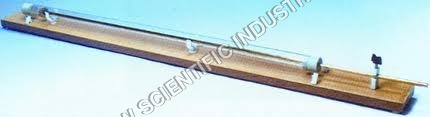
Tell us about your requirement

Price:
Quantity
Select Unit
- 50
- 100
- 200
- 250
- 500
- 1000+
Additional detail
Mobile number
Email

More Products in Physics instruments Category
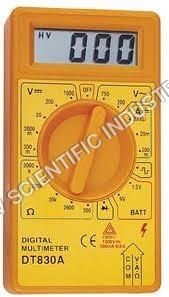
Digital-Multimeter-Model
Automation Grade : Manual
Weight : Approx. 350g
Dimension (L*W*H) : 185mm x 89mm x 45mm
Type : Handheld Digital Multimeter
Capacity : 6000 Counts
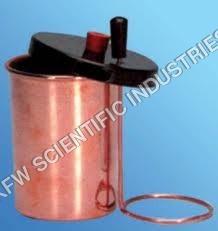
Calorimeter
Automation Grade : Manual
Weight : Approx. 2.5 kg
Dimension (L*W*H) : 18x12x24 cm
Type : Jacketed Calorimeter
Capacity : 300 ml
Temperature Range : Ambient to 80C
Glass Slabs
Automation Grade : Manual
Weight : Varies with dimension and thickness (typically 5 to 80 kg)
Dimension (L*W*H) : Standard and custom sizes, e.g., 300 x 300 x 10 mm
Type : Flat Glass Slab
Capacity : 200 Kg max load for standard slab
Temperature Range : 0C to 400C continuous service
Bar Breaking Apparatus
Automation Grade : Manual
Weight : Approximate 40 kg
Dimension (L*W*H) : 1000 mm x 250 mm x 250 mm
Type : Mechanical Strength Testing Apparatus
Capacity : 10 kN (standard), Customizable up to 50 kN
Temperature Range : Ambient to 50C

 Send Inquiry


Our Products
- Slit Lamp Ophthalmic Equipment
- Slit Lamp
- Surgical Equipments
- Laboratories Instruments Equipment
- Microscopes
- Scientific Instruments
- ENT Equipment
- Pharmacy instrument equipment
- Pathological Equipment
- Physics Lab Equipments
- Physics instruments
- Laboratory Glassware
- Digital Polarimeter
- Microprocessor Viscometer
- Double Beam UV-VIS Spectrophotometer
- Single Beam UV-Vis Spectrophotometer
- Kitchen equipments
- Dental Equipment
- Chapati Making Machines
- Water Heating System OR Hamam
- High Performance Liquid Chromatography Systems
- Chemistry
- Equipment Accessories
- Gynecology Equipment


B.O : 5430/3, Anaj Mandi, Science Market, Near Nigar Cinema,
R.O : 102-B Ram Nagar,Ambala Cantt - 133001, Haryana, India

Mr VISHAL KUMAR
(Managing Director)
Mobile :07971671031
 Send Inquiry
Developed and Managed by Infocom Network Private Limited.
