
Call us now :07971671031
 Send Inquiry
 Send Inquiry
Laboratory Spherometer
Laboratory Spherometer Specification
- Accuracy
- 0.01 mm
- Core Components
- Precise screw, scale, three fixed legs, base plate
- Automation Grade
- Manual
- Power Source
- Manual
- Temperature Range
- Ambient Laboratory Conditions
- Equipment Materials
- Brass, Stainless Steel, Mild Steel, Plastic Knob
- Type
- Laboratory Spherometer
- Usage
- Measuring radius of curvature of spherical surfaces
- Dimension (L*W*H)
- Base diameter approx. 50 mm; adjustable leg height
- Weight
- Approx. 150 g
- Number of Legs
- 3 fixed with 1 central adjustable screw
- Base Shape
- Circular Platform
- Central Screw
- Hardened steel, finely threaded
- Leg Material
- Stainless Steel/Brass
- Scale Graduation
- 0.01 mm
- Knob Type
- Plastic or Bakelite
About Laboratory Spherometer
For accurate measurement of the radius of curvature of spherical lenses. Three pronged brass table with three pointed legs carries a vertical main scale from 10-0-10 mm on one of the prongs, and a micrometer scale on an brass disc with 100 divions. The table has a screw at its centre with a pitch of 1mm. Giving a least count of .01mm.
Precision Measuring for Laboratory Applications
This spherometer ensures accurate measurement of spherical surfaces, essential for laboratory experiments and quality checks. Its manual operation and 0.01 mm accuracy make it reliable for students, researchers, and professionals. The device is engineered to maintain precision under standard laboratory temperatures, offering consistent results every time.
Durable and User-Friendly Design
Constructed from high-quality materials such as brass, stainless steel, and mild steel, this spherometer is built to last. The smooth-operating plastic or Bakelite knob and finely threaded central screw allow precise adjustments. Its compact size and lightweight build add to user comfort and ease of operation during frequent handling.
FAQs of Laboratory Spherometer:
Q: How does a laboratory spherometer measure the radius of curvature?
A: A laboratory spherometer measures the radius of curvature by resting its three fixed legs on the spherical surface and adjusting the central screw until it touches the surface. The distance measured by the screw, combined with the known base diameter, is used to calculate the radius accurately.Q: What materials are used in the construction of this spherometer?
A: This spherometer is made from a combination of brass, stainless steel, mild steel for the legs and base, and a plastic or Bakelite knob. The central adjustable screw is crafted from hardened, finely threaded steel for precise measurements.Q: When is it appropriate to use this spherometer in the lab?
A: The spherometer is ideally used when there is a need to determine or verify the radius of curvature of spherical surfaces, such as lenses or mirrors, during experiments, research, or quality assurance processes in laboratory settings.Q: Where can this laboratory spherometer be used effectively?
A: This instrument is best utilized in laboratories, academic institutions, research centers, and quality control departments in industries requiring accurate curvature measurements of spherical surfaces.Q: What is the process for using the laboratory spherometer?
A: To use the spherometer, place it with its three legs on the spherical surface. Turn the central screw until its tip just touches the surface. Read the scale (graduated to 0.01 mm) and use this value in the standard radius of curvature formula for your calculation.Q: What are the main benefits of using this laboratory spherometer?
A: The main benefits include highly precise curvature measurements (accuracy of 0.01 mm), sturdy construction for long-term use, and a user-friendly design that allows for easy handling and reliable results in a manual, cost-effective format.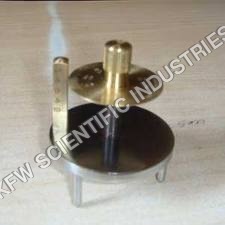
Tell us about your requirement

Price:
Quantity
Select Unit
- 50
- 100
- 200
- 250
- 500
- 1000+
Additional detail
Mobile number
Email

More Products in Physics instruments Category
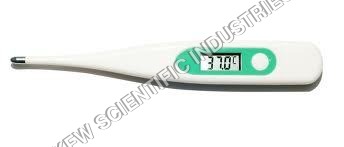
Clinical Digital Thermometer
Automation Grade : Manual
Dimension (L*W*H) : 130mm x 20mm x 10mm
Core Components : LCD Display, Battery, Temperature Sensor
Usage : Body Temperature Measurement
Type : Clinical Digital Thermometer
Accuracy : 0.1C
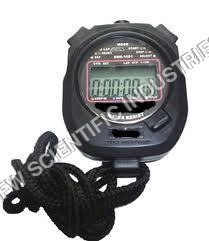
Digital Stop watch
Automation Grade : Manual
Dimension (L*W*H) : 80mm x 62mm x 20mm
Core Components : Electronic Quartz Movement, LCD Display
Usage : Sports, Laboratory, Educational, Industrial
Type : Handheld Digital Stopwatch
Accuracy : 0.01 seconds
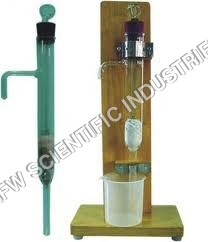
Force Pump On Stand
Automation Grade : Manual
Dimension (L*W*H) : 60 x 40 x 110 cm
Core Components : Piston, Cylinder, Stand, Handle
Usage : Laboratory/Industrial Water Transfer
Type : Hand Operated Force Pump
Accuracy : High Precision
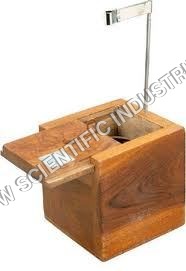
Calorimeter With Wooden Box
Automation Grade : Manual
Dimension (L*W*H) : Box size approx. 13cm x 13cm x 20cm
Core Components : Copper vessel, Wooden Box, Stirrer, Thermometer, Insulating Lid
Usage : Measurement of specific heat capacity and enthalpy of fusion/vaporization in laboratory experiments
Type : Water Calorimeter
Accuracy : 1C (Depends on thermometer used)

 Send Inquiry


Our Products
- Slit Lamp Ophthalmic Equipment
- Slit Lamp
- Surgical Equipments
- Laboratories Instruments Equipment
- Microscopes
- Scientific Instruments
- ENT Equipment
- Pharmacy instrument equipment
- Pathological Equipment
- Physics Lab Equipments
- Physics instruments
- Laboratory Glassware
- Digital Polarimeter
- Microprocessor Viscometer
- Double Beam UV-VIS Spectrophotometer
- Single Beam UV-Vis Spectrophotometer
- Kitchen equipments
- Dental Equipment
- Chapati Making Machines
- Water Heating System OR Hamam
- High Performance Liquid Chromatography Systems
- Chemistry
- Equipment Accessories
- Gynecology Equipment


B.O : 5430/3, Anaj Mandi, Science Market, Near Nigar Cinema,
R.O : 102-B Ram Nagar,Ambala Cantt - 133001, Haryana, India

Mr VISHAL KUMAR
(Managing Director)
Mobile :07971671031
 Send Inquiry
Developed and Managed by Infocom Network Private Limited.
