
Call us now :07971671031
 Send Inquiry
 Send Inquiry
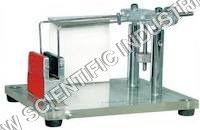
Linear Expansion Apparatus
Linear Expansion Apparatus Specification
- Frequency
- 50 Hz
- Accuracy
- 0.01 mm (using dial gauge)
- Automation Grade
- Manual
- Power Source
- Electric heating element
- Capacity
- Up to 500 mm test rod length
- Core Components
- Test rod, heating tube, dial gauge, support stand
- Temperature Range
- Room temperature up to 100C
- Measurement Range
- 0 to 10 mm expansion (by dial indicator)
- Feature
- Interchangeable rods, water jacket for uniform heating
- Equipment Materials
- Stainless steel tube, brass, aluminium
- Type
- Laboratory Instrument
- Usage
- Measurement of linear expansion of rods
- Dimension (L*W*H)
- 600 mm x 120 mm x 180 mm
- Weight
- Approx. 3 kg
- Rod Materials Provided
- Brass, Aluminium, Steel
- Packing Type
- Corrugated box
- Insulation
- Fiber sheet enclosure
- Sample Holder
- Adjustable clamps
- Heating Method
- Immersion electric heater
- Cooling Arrangement
- Water inlet and outlet
- Dial Indicator Type
- 0.01 mm least count
- Heater Power
- 250 W
About Linear Expansion Apparatus
We are one of the distinct manufacturers, exporters and suppliers of a broad range of Linear Expansion Apparatus. This efficient apparatus is highly demanded in college, schools and research laboratories for testing and measuring the coefficient of different metals. Offered apparatus is manufactured by our trained professionals with the help of modern technology. Additionally, the entire range of apparatus is checked stringently on numerous parameters assuring its durability and accuracy. Further, our clients can get this Linear Expansion Apparatus from us at marginal rates.
Features:
-
Low maintenance
-
Anti-corrosive
-
Compact design
-
Easy to use
High Precision Measurement
Utilize the Linear Expansion Apparatus to achieve accurate measurements, thanks to a high-sensitivity dial indicator (0.01 mm least count). This allows for detection of minute changes in rod length during thermal expansion experiments, supporting robust scientific research and reliable educational demonstrations.
Versatile Rod Compatibility
The apparatus supports brass, aluminium, and steel rods of up to 500 mm in length, facilitated by its adjustable clamps and robust stainless steel tube construction. Interchangeability between rod materials offers a practical way to compare thermal properties across different metals.
Efficient Thermal Control System
A built-in 250 W immersion electric heater and water jacket provide uniform heating and rapid cooling of rods. The fiber sheet enclosure serves to insulate the system, maintaining stable temperatures up to 100C, so experimental conditions closely match intended parameters.
FAQs of Linear Expansion Apparatus:
Q: How does the Linear Expansion Apparatus measure expansion accurately?
A: The apparatus uses a dial indicator with a sensitivity of 0.01 mm to precisely register the change in rod length caused by temperature fluctuations. The manual operation allows stepwise heating and gradual cooling for accurate readings.Q: What process should be followed for using the apparatus?
A: Start by securing a brass, aluminium, or steel rod in the adjustable clamps. Initiate heating using the 250 W immersion electric heater and record readings as the rod expands. Cool the rod through the water inlet and outlet system to observe contraction, tracking all changes using the dial indicator.Q: When is water cooling necessary in the experiment?
A: Water cooling is necessary after the rod has been heated to the desired temperature, typically up to 100C. The water inlet and outlet are used to pass water through the jacket, enabling controlled cooling and accurate measurement of contraction phases.Q: Where can the Linear Expansion Apparatus be used?
A: This apparatus is suitable for school, college, or research laboratories. Its durable design and manual operation make it versatile for standard experiments involving measurement of thermal expansion in metals.Q: What are the benefits of interchangeable rods in this apparatus?
A: Interchangeable rods allow users to measure and compare the expansion rates of different metals, such as brass, aluminium, and steel, under similar conditions. This enhances the educational value and flexibility of experiments.Q: How does insulation improve experimental results?
A: The fiber sheet enclosure reduces heat loss to the surroundings, maintaining a consistent temperature gradient along the rod. This insulation ensures that the measurement reflects only the thermal expansion of the rod itself, improving data reliability.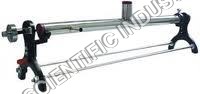
Tell us about your requirement

Price:
Quantity
Select Unit
- 50
- 100
- 200
- 250
- 500
- 1000+
Additional detail
Mobile number
Email

More Products in Physics instruments Category
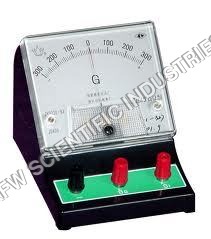
Galvanometer
Type : Moving Coil Galvanometer
Feature : High Sensitivity, Zero Adjustment, Sturdy Construction, Portable
Dimension (L*W*H) : 120mm x 85mm x 80mm
Core Components : Coil, Magnet, Spring, Pointer, Scale
Automation Grade : Manual
Measurement Range : 030 microampere
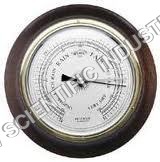
Aneroid Barometer
Type : Aneroid Barometer
Feature : Portable, no power required
Dimension (L*W*H) : Approx. 130 mm x 40 mm
Core Components : Diaphragm, pointer, dial
Automation Grade : Manual
Measurement Range : 960 to 1060 hPa
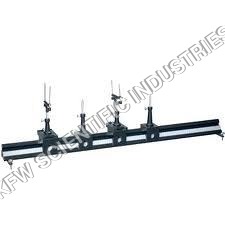
Optical Bench
Type : Optical Bench with Accessories
Feature : Adjustable, sturdy, precise scale, movable riders
Dimension (L*W*H) : Approx. 1050 x 150 x 150 mm
Core Components : Rods, supports, scale, lens holders, accessories
Automation Grade : Manual
Measurement Range : 01000 mm
Apparatus To Show On Conductor In A Magnetic Field
Type : Physics Laboratory Apparatus
Feature : Demonstrates the force on a conductor in a magnetic field (Motor Principle)
Dimension (L*W*H) : Approx. 180 x 90 x 60 mm
Core Components : Conductor Bar, Magnet Holders, Base Stand, Connectors
Automation Grade : Manual
Measurement Range : Qualitative: Visual Observation Only

 Send Inquiry


Our Products
- Slit Lamp Ophthalmic Equipment
- Slit Lamp
- Surgical Equipments
- Laboratories Instruments Equipment
- Microscopes
- Scientific Instruments
- ENT Equipment
- Pharmacy instrument equipment
- Pathological Equipment
- Physics Lab Equipments
- Physics instruments
- Laboratory Glassware
- Digital Polarimeter
- Microprocessor Viscometer
- Double Beam UV-VIS Spectrophotometer
- Single Beam UV-Vis Spectrophotometer
- Kitchen equipments
- Dental Equipment
- Chapati Making Machines
- Water Heating System OR Hamam
- High Performance Liquid Chromatography Systems
- Chemistry
- Equipment Accessories
- Gynecology Equipment


B.O : 5430/3, Anaj Mandi, Science Market, Near Nigar Cinema,
R.O : 102-B Ram Nagar,Ambala Cantt - 133001, Haryana, India

Mr VISHAL KUMAR
(Managing Director)
Mobile :07971671031
 Send Inquiry
Developed and Managed by Infocom Network Private Limited.
