
Call us now :07971671031
 Send Inquiry
 Send Inquiry
Magnetic Stirrer With Hot plate Laboratory Magneti
Magnetic Stirrer With Hot plate Laboratory Magneti Specification
- Humidity
- Up to 80% RH
- Mounting Type
- Table Top
- Application
- Laboratory mixing and heating
- Features
- Magnetic stirring; Uniform heating; Speed control; Chemical-resistant body
- Max Height
- 140 mm
- Power Supply
- 220V AC 50/60Hz
- Automation Grade
- Manual
- Equipment Type
- Magnetic Stirrer With Hot Plate
- Usage
- Mixing and heating laboratory samples
- Test Speed
- Max 1200 rpm
- Control Mode
- Analog Control
- Safety Indicator
- Power/Heating/Ready LEDs
- Stir Bar Included
- Yes
- Plate Material
- Ceramic coated
- Heating Power
- 500W
- Speed Control
- Variable (Knob)
- Overheat Protection
- Yes
- External Dimensions (WxDxH)
- 190 x 160 x 140 mm
- Hotplate Paint
- Chemical-resistant epoxy
- Top Plate Dimensions
- 150 mm diameter
About Magnetic Stirrer With Hot plate Laboratory Magneti
MagneticStirrer with hotPlate Laboratory Magnetic stirrers are used in labs110 v KFW :
Compact stirring device utilizing a rotating magnetic field applied from below the container. The stirring is accomplished by a taflon rotor placed in the liquid to be stirred. Complete with pilot lamp, plug cord, continuously variable speed regulator The body is made of mild steel duly finished in stoving enamel and mounted with a stainless steel top which serves as a hot plate. Stirring and heating units are properly insulated. In model with heating system temp. is controlled by an energy regulator. An electronic speed controller is also provided. The equipment works on 220V AC 50 HZ single phase.
i) Magnetic stirrer with hot plate cap. liter, 2liter
ii) Magnetic stirrer with hot plate & energy regulator 1lliter , 2liter
Complete with taflon coated magnet.
Advanced Performance for Laboratory Precision
This magnetic stirrer delivers both robust mixing and accurate temperature control, essential for reliable laboratory outcomes. With a variable analog speed control and ceramic-coated hot plate, users experience precise adjustments for diverse experimental needs. Its chemical-resistant construction ensures longevity, even under demanding conditions.
Safety and User-Focused Features
Safety is integral to this device, with built-in overheat protection and LED indicators for each operational mode. These features, together with a stable design and clear control layout, enable researchers to concentrate on results with peace of mind. The units rapid heating minimizes downtime between experiments.
Versatile Applications Across Laboratories
Ideal for mixing and heating various laboratory samples, the equipment suits applications in scientific research, industrial labs, and educational settings. The ergonomic table-top mounting, anti-corrosive build, and intuitive analog controls streamline daily laboratory workflows.
FAQs of Magnetic Stirrer With Hot plate Laboratory Magneti:
Q: How does the magnetic stirrer with hot plate operate during laboratory experiments?
A: The device uses a magnetic field to rotate the included stir bar inside your sample container, ensuring uniform mixing. Simultaneously, the ceramic-coated hot plate provides even heating, controllable via an analog knob for both stirring speed and temperature.Q: What safety features are included in this laboratory magnetic stirrer with hot plate?
A: This unit features overheat protection to prevent excessive temperatures, chemical-resistant epoxy paint to safeguard against spills, and LED indicators to signal power, heating, and ready states for operator assurance.Q: When should I use this magnetic stirrer with hot plate in my laboratory setting?
A: It is best utilized when precise heating and consistent stirring are required, such as dissolving solids, preparing buffer solutions, or conducting chemical reactions needing uniform heat distribution and controlled mixing.Q: Where is this equipment typically mounted or positioned?
A: This magnetic stirrer with hot plate is designed for table-top use, allowing stable placement on laboratory benches for optimal accessibility during experimental procedures.Q: What is the process for setting the speed and temperature on this device?
A: Speed and temperature are adjusted via analog control knobs. Users can gradually turn the knobs to their desired stirring speed (up to 1200 rpm) and temperature (ambient to 340C), with real-time feedback provided by the LED safety indicators.Q: How does the ceramic-coated plate benefit laboratory users?
A: The ceramic-coated plate ensures excellent heat uniformity and resists chemical corrosion, enhancing durability and minimizing contamination risks during prolonged laboratory use.Q: What advantages does this magnetic stirrer offer over traditional stirrers?
A: Compared to conventional devices, this stirrer delivers rapid, uniform heating, precise variable speed control, chemical resistance, safety LEDs, and overheat protectionmaking it ideal for sensitive laboratory tasks and reducing operational hazards.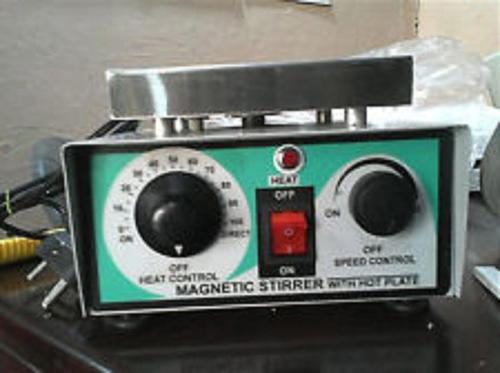
Tell us about your requirement

Price:
Quantity
Select Unit
- 50
- 100
- 200
- 250
- 500
- 1000+
Additional detail
Mobile number
Email

More Products in Laboratory Glassware Category
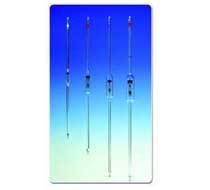
Pipettes
Automation Grade : Manual or Semiautomatic
Usage : Laboratory liquid handling
Application : Used for liquid transfer, measurement, analytical, and biological laboratory applications
Features : Autoclavable, UVResistant, Ergonomic Design, Volume Lock (varies by model)
Control Mode : Manual, Thumboperated or Electronic (depending on model)
Equipment Type : Micropipette / Laboratory Pipette
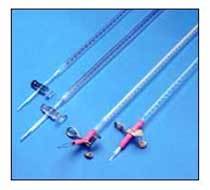
Volumetric Burette
Automation Grade : Manual
Usage : Quantitative Chemical Analysis
Application : Laboratory Liquid Measurement, Titration
Features : Clear Calibrations, PTFE Stopcock, Durable Glass Construction, Chemical Resistant
Control Mode : Manual
Equipment Type : Volumetric Burette
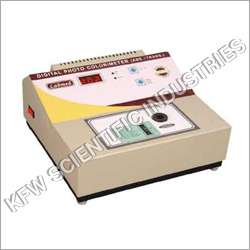
Digital Photo Colorimeter Micro Controller
Features : Micro controller based system, highly stable, accurate
Control Mode : Micro controller based
Equipment Type : Digital Photo Colorimeter (Micro Controller)
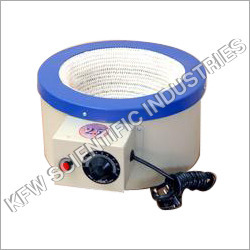
Heating Mental
Automation Grade : Manual
Usage : Laboratory heating of liquids
Application : Laboratory heating, chemical analysis, pharmaceutical research
Features : Uniform heating, chemical resistance, energy efficient, overheat protection
Control Mode : Manual
Equipment Type : Laboratory Heating Mantle

 Send Inquiry


Our Products
- Slit Lamp Ophthalmic Equipment
- Slit Lamp
- Surgical Equipments
- Laboratories Instruments Equipment
- Microscopes
- Scientific Instruments
- ENT Equipment
- Pharmacy instrument equipment
- Pathological Equipment
- Physics Lab Equipments
- Physics instruments
- Laboratory Glassware
- Digital Polarimeter
- Microprocessor Viscometer
- Double Beam UV-VIS Spectrophotometer
- Single Beam UV-Vis Spectrophotometer
- Kitchen equipments
- Dental Equipment
- Chapati Making Machines
- Water Heating System OR Hamam
- High Performance Liquid Chromatography Systems
- Chemistry
- Equipment Accessories
- Gynecology Equipment


B.O : 5430/3, Anaj Mandi, Science Market, Near Nigar Cinema,
R.O : 102-B Ram Nagar,Ambala Cantt - 133001, Haryana, India

Mr VISHAL KUMAR
(Managing Director)
Mobile :07971671031
 Send Inquiry
Developed and Managed by Infocom Network Private Limited.
