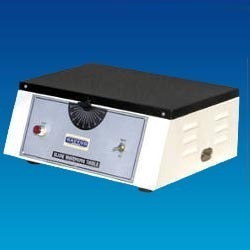
About Microprocessor Visible Spectrophotometer
Microprocessor Visible Spectrophotometeroffered features single beam, grating 1200 lines/mm optical system that comes with spectral bandwidth of 5 nm, wavelength range of 325 ~ 1000 nm and wavelength accuracy of + 2.0 nm. These advanced technology based spectrophotometers also feature wavelength reproducibility of 1 nm, photometric accuracy of + % T, photometric reproducibility of < 0.5 % T, Tungsten halogen lamp 6V/10Wbased light source and 4 LED digital display support. Offering stable & accurate functionality support, these deliver high VIS performance between 325 to 1000 nm and RS232C communication support.
Technical Specifications :-
Optical System | Single Beam, Grating 1200 lines/mm |
Spectral bandwidth | 5 nm |
Wavelength Range | 325 ~ 1000 nm |
Wavelength Accuracy | + 2.0 nm |
Wavelength reproducibility | 1 nm |
Photometric Accuracy | + % T |
Photometric reproducibility | < 0.5 % T |
Stray Light | < 0.5 % T, - 0.097-2.000A, 0~1999 C |
Light Source | Tungsten halogen lamp 6V/10W |
Display | 4 LED digital display |
Data Output | RS 232C |
Power | 220V, 50 Hz. |
Salient Features:
- Highly Stable & Accurate
- High VIS performance between 325 to 1000 nm
- Automatic 0 % T, and 100 % T Calibration
- RS232C communication
- 4 position sample holder (10 to 50 mm cuvettes)
- Standard curve through software.
Engineered with a built-in microprocessor, the spectrophotometer automates wavelength selection and data processing. This enables rapid, consistent readings with minimal manual intervention, supporting high-throughput laboratories and repeat analysis requirements. Auto zero and memory functions further streamline workflow efficiency.
Precision Measurement and ReliabilityDelivering wavelength accuracy of 2 nm and repeatability of 1 nm, the instrument ensures trustworthy results for both absorbance (0.02.5 A) and transmittance (0100% T) ranges. Baseline stability (0.002 A/h at 500 nm) is maintained, minimizing drift during long experiments. Durable ABS plastic and quality optics guarantee lasting performance.
User-Friendly Design and Data ManagementWith a large digital LED display and simple interface, users can easily configure measurements. The RS-232 output facilitates simple data export to external devices, while on-board storage retains up to 100 assay results. Routine maintenance is straightforward, thanks to the easily accessible cuvette holder and included accessories.
FAQs of Microprocessor Visible Spectrophotometer:
Q: How can I store and export measurement results from the spectrophotometer?
A: The spectrophotometer is equipped with a microprocessor-based memory that stores up to 100 measurement results. To export data, simply connect the RS-232 serial port to a compatible computer or printerthis allows seamless transfer of results for further processing or record-keeping.
Q: What sample types and holders are compatible with this instrument?
A: The unit supports standard 10 mm path length optical glass cuvettes, which are included with the instrument. It can also accommodate test tubes up to 25 mm in diameter, giving users flexibility in sample preparation for a variety of laboratory tests.
Q: When is it necessary to perform auto-zero before taking measurements?
A: Executing auto-zero is recommended before each measurement session or when changing samples. This process calibrates the baseline, ensuring accuracy by compensating for any minor fluctuations in lamp intensity or optical alignment.
Q: Where is the spectrophotometer suitable for use, and what are the ideal operating conditions?
A: This bench-top instrument is ideal for laboratory and analytical settings. Optimal performance is achieved in environments with a temperature between 5C and 35C and relative humidity below 80%. Operating outside these parameters is not recommended, as it may compromise measurement stability and accuracy.
Q: What benefits does the microprocessor system provide compared to manual spectrophotometers?
A: The integrated microprocessor automates key functions such as wavelength selection, auto-zeroing, and result calculation. This leads to faster setup, reduced human error, high measurement consistency, and easier data management, improving laboratory productivity and reliability.
Q: How is baseline stability maintained during extended measurement sessions?
A: Thanks to its advanced optical design and microprocessor control, the instrument maintains excellent baseline stability, exhibiting only 0.002 A/h drift at 500 nm. This ensures reproducible results even during long analytical runs.
Q: What are the primary usage scenarios for this spectrophotometer in a laboratory?
A: This spectrophotometer is best suited for quantitative analysis in chemistry, biochemistry, environmental science, and quality control labs. Common applications include concentration determination, colorimetric assays, and kinetic studies involving visible-range absorbance or transmittance measurements.

 Send Inquiry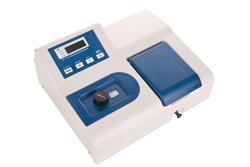

 Send Inquiry


 Send Inquiry





 Send Inquiry
