
Call us now :07971671031
 Send Inquiry
 Send Inquiry
Rheostats
Rheostats Specification
- Automation Grade
- Manual
- Model No
- As Per Requirement
- Temperature Range
- 0C to 40C
- Accuracy
- 5%
- Voltage
- Up to 250V (AC/DC)
- Core Components
- Resistive Wire, Sliding Contact
- Frequency
- 50 Hz / 60 Hz
- Measurement Range
- 0 to Max Rated Value (Model Specific)
- Feature
- High Thermal Stability, Smooth Adjustment
- Type
- Wire Wound Rheostat
- Usage
- Laboratory Testing, Voltage and Current Control
- Dimension (L*W*H)
- Model Dependent (e.g., 220 x 100 x 110 mm)
- Weight
- Varies with model (Approx. 1 kg to 8 kg)
- Mounting Type
- Bench / Table Top
- Contact Type
- Sliding Pointer
- Surface Finish
- Powder Coated / Painted
- Operating Position
- Horizontal or Vertical (Depends on model)
- Resistance Range
- 10, 50, 100, 200 (Options as per Model)
- Current Carrying Capacity
- Up to 5A (Model Dependent)
- Insulation Resistance
- >100 M at 500V DC
About Rheostats
Power Rheostats are made with a variety of resistance & current carrying capacity so as to satisfy every need. They are wound with heavily oxidized eureka resistance wire upon a porcelain tube dia 44 mm aprox. The tube is carrying upon Bakelite rider and the heavy duty sliding contact is of the phosphor bronze with brass rod. 4 mm socket terminals are fitted, allowing for rheostat or potentiometer connection. Total resistance and maximum current capacity is marked on the slider. Total Permanent current loading should not exceed 75% of the marked values. The actual resistance of Wire Wound Rheostats shall be +20% -5% of the rated resistance as per our resistance chart. (as
per ISI specification no. IS : 9051 S. No. 10.3), we are recognized as one of the major Electronic Rheostats Manufacturers and Exporters from India.
Reliable Voltage and Current Control
Engineered for consistent and accurate performance, this wire wound rheostat enables fine-tuned voltage and current regulation in laboratory setups. Its smooth adjustment pointer and robust resistive wire ensure dependable control across a range of scientific or educational experiments.
Versatile Mounting and Model Options
Choose from bench or table-top mounting with models that cater to varying resistance, current, and dimensional requirements. The rheostats adaptable orientationhorizontal or verticalaccommodates different workspace configurations, enhancing user convenience and equipment compatibility.
Durability with Enhanced Safety
With a powder-coated or painted surface finish and an insulation resistance greater than 100 M at 500V DC, this rheostat is built to last. Its high thermal stability grants safe and reliable performance, even during extended laboratory testing or voltage regulation tasks.
FAQs of Rheostats:
Q: How does the sliding pointer contact function in this rheostat?
A: The sliding pointer contact allows users to precisely adjust the resistance by moving it along the resistive wire. This design ensures smooth, accurate changes in resistance, making it easy to control voltage and current levels as required for different laboratory applications.Q: What are the options for resistance and current capacity in these rheostats?
A: Depending on the model, resistance options include 10, 50, 100, and 200, with current carrying capacities of up to 5A. The suitable model can be selected based on specific experimental or operational requirements.Q: Where can these rheostats be mounted and in which positions?
A: These rheostats support bench or table-top mounting and can be operated in either a horizontal or vertical position, depending on the model. This flexibility ensures compatibility with various workspace arrangements.Q: When is it beneficial to use a wire wound rheostat in laboratory testing?
A: A wire wound rheostat is particularly beneficial when variable resistance, voltage, or current control is requiredsuch as in physics experiments, electronics testing, or calibration procedures. Its stable and accurate adjustment helps in achieving precise control during experiments.Q: What safety features does this rheostat offer?
A: It is equipped with high insulation resistance (above 100 M at 500V DC) and superior thermal stability, which enhances safety by preventing electrical leakage and heat buildup during extended usage.Q: How is the rheostats measurement range determined?
A: The measurement range spans from 0 to the maximum rated resistance value specified by the model chosen, enabling users to select an option best suited for their voltage and current regulation needs.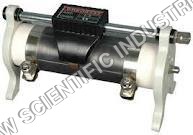
Tell us about your requirement

Price:
Quantity
Select Unit
- 50
- 100
- 200
- 250
- 500
- 1000+
Additional detail
Mobile number
Email

More Products in Physics instruments Category
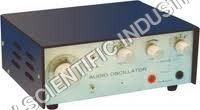
Audio Oscillator
Automation Grade : Manual
Temperature Range : 0C to 50C
Dimension (L*W*H) : 225 mm x 180 mm x 90 mm
Measurement Range : 20 Hz 200 kHz
Accuracy : 2% of Full Scale
Voltage : 230V AC
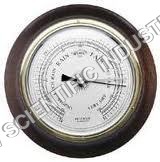
Aneroid Barometer
Automation Grade : Manual
Temperature Range : 10C to +50C
Dimension (L*W*H) : Approx. 130 mm x 40 mm
Measurement Range : 960 to 1060 hPa
Accuracy : 3 hPa
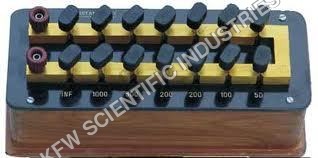
Resistance Box, Plug Type
Automation Grade : Manual
Temperature Range : 0C to 40C (standard operating)
Dimension (L*W*H) : Approx. 250 x 120 x 80 mm (varies with model)
Measurement Range : 1 up to 10,000 (typical depending on box)
Accuracy : 0.1% to 0.5% depending on model
Voltage : Max 250V (for resistance selection only)
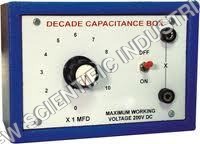
Decade Capacitance Box
Automation Grade : Manual
Temperature Range : 0C to 50C
Dimension (L*W*H) : 270 mm x 170 mm x 110 mm
Measurement Range : 10 pF to 10 F
Accuracy : 2% or better
Voltage : Maximum working voltage: 250 V DC

 Send Inquiry


Our Products
- Slit Lamp Ophthalmic Equipment
- Slit Lamp
- Surgical Equipments
- Laboratories Instruments Equipment
- Microscopes
- Scientific Instruments
- ENT Equipment
- Pharmacy instrument equipment
- Pathological Equipment
- Physics Lab Equipments
- Physics instruments
- Laboratory Glassware
- Digital Polarimeter
- Microprocessor Viscometer
- Double Beam UV-VIS Spectrophotometer
- Single Beam UV-Vis Spectrophotometer
- Kitchen equipments
- Dental Equipment
- Chapati Making Machines
- Water Heating System OR Hamam
- High Performance Liquid Chromatography Systems
- Chemistry
- Equipment Accessories
- Gynecology Equipment


B.O : 5430/3, Anaj Mandi, Science Market, Near Nigar Cinema,
R.O : 102-B Ram Nagar,Ambala Cantt - 133001, Haryana, India

Mr VISHAL KUMAR
(Managing Director)
Mobile :07971671031
 Send Inquiry
Developed and Managed by Infocom Network Private Limited.
