
Call us now :07971671031
 Send Inquiry
 Send Inquiry
Audio Oscillator
Audio Oscillator Specification
- Core Components
- Oscillator Circuit, Frequency Selector, Output Terminals
- Frequency
- 20 Hz to 200 kHz
- Measurement Range
- 20 Hz - 200 kHz
- Accuracy
- 2% of Full Scale
- Feature
- Wide Range, Low Distortion, Stable Output
- Power Source
- AC Mains, 230V 50Hz
- Model No
- AOS-001
- Voltage
- 230V AC
- Temperature Range
- 0C to 50C
- Automation Grade
- Manual
- Equipment Materials
- Metal Body with Plastic Front Panel
- Type
- Laboratory Audio Oscillator
- Usage
- Audio Frequency Testing Equipment
- Display Type
- Analog Meter
- Dimension (L*W*H)
- 225 mm x 180 mm x 90 mm
- Weight
- Approx. 1.5 Kg
- Calibration
- Factory Calibrated
- Accessories Included
- Power Cord, Instruction Manual
- Operating Humidity
- Below 85% RH
- Output Impedance
- 600 Ohms
- Color
- Light Grey Panel with Black Case
- Signal Output
- Banana Plug Terminals
- Distortion
- Less than 1%
- Input Protection
- Fuse Protected
- Output Amplitude
- 0 to 10V (adjustable)
- Output Waveform
- Sine Wave, Square Wave
About Audio Oscillator
Product Specification
| Frequency Range : | 20 Hz to 50 KHz in four switched range plus a fine control Accuracy + 5%. |
| Waves : | Sine & Square |
| Amplitude : | Continuously variable from 0-8 Vpp. max. |
| Power : | Output upto 1 W. |
| Operates on : | 220V A.C. 50 Hz |
Wide Frequency Range and Low Distortion
This laboratory audio oscillator covers an extensive frequency spectrum from 20 Hz to 200 kHz, making it versatile for audio testing in research, development, or educational environments. With output waveform options of both sine and square waves, and less than 1% total harmonic distortion, high-fidelity signal generation is guaranteed for critical analysis and calibration processes.
User-Friendly and Durable Design
Featuring a light grey panel and black metal case, the AOS-001 is engineered to withstand frequent laboratory use. The analog meter provides clear, real-time output readings, while banana plug output terminals enhance connectivity. A plastic front panel ensures safety, and fuse-protected input safeguards against power surges. Comprehensive accessories and straightforward controls mean effortless setup and operation.
FAQ's of Audio Oscillator:
Q: How can I adjust the output amplitude of the AOS-001 audio oscillator?
A: The output amplitude can be easily set between 0 and 10V using the control knob on the front panel, allowing you to match the signal strength to your specific testing requirements.Q: What types of waveforms are available from the output terminals?
A: This oscillator offers both sine wave and square wave outputs, switchable as needed, making it suitable for a variety of audio testing scenarios.Q: When should the oscillator be recalibrated?
A: The AOS-001 is factory calibrated to ensure immediate accuracy. Routine recalibration is not necessary unless the unit is used extensively, subjected to harsh conditions, or required for high-precision measurements after prolonged operation.Q: Where can the audio oscillator be used effectively?
A: It is ideal for use in laboratories, educational institutions, manufacturing quality control, audio equipment repair, and research facilities requiring precise audio frequency testing.Q: What is the process for connecting the signal output to other devices?
A: Connections are made using standard banana plug terminals on the front panel, ensuring secure and reliable links to external equipment like oscilloscopes or amplifiers.Q: What benefits does the AOS-001 offer compared to other oscillators?
A: This model provides a wide frequency range, low distortion, stable output, user-friendly controls, and robust build quality, making it a reliable and cost-efficient solution for audio frequency testing.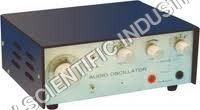
Tell us about your requirement

Price:
Quantity
Select Unit
- 50
- 100
- 200
- 250
- 500
- 1000+
Additional detail
Mobile number
Email

More Products in Physics instruments Category
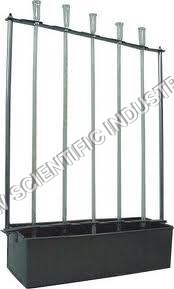
Expansion Of Liquids Apparatus
Dimension (L*W*H) : Approx. 40 15 20 cm
Automation Grade : Manual
Core Components : Glass Bulbs, Graduated Capillary Tubes, Water Bath, Metal Stand
Accuracy : 1 mL or better (depends on thermometer and tube graduation)
Equipment Materials : Glass Bulbs, Metal Stand, Graduated Tubes, Water Bath (Brass/Copper)
Weight : Approx. 25 kg (including water bath and accessories)
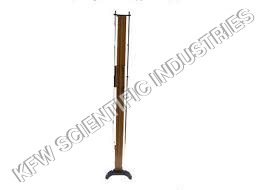
Boy's law apparatus
Dimension (L*W*H) : Approx. 38 cm 16 cm 8 cm
Automation Grade : Manual
Core Components : Graduated glass tube, pressure chamber, scale, mercury/piston, frame support
Accuracy : 1 ml (volume), 2 mm (pressure scale)
Equipment Materials : Borosilicate glass tube, metallic frame, rubber tubing, mercury column, plastic or metal scale
Weight : 0.81.2 kg depending on model
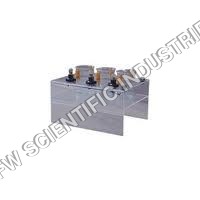
Conductivity Apparatus
Dimension (L*W*H) : Approx. 35 cm x 12 cm x 10 cm
Automation Grade : Manual
Core Components : Metal rods, base, test tube holder, indicator, heating element (depending on model)
Accuracy : Demonstrativeintended for qualitative comparison not quantitative results
Equipment Materials : Stainless steel rods, insulating base, metal strips, test tubes, hardware components, plastic/wooden supports
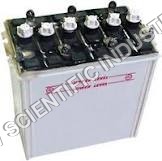
Accumulators
Dimension (L*W*H) : 350 mm x 110 mm x 110 mm
Automation Grade : Manual
Core Components : Shell, Bladder, Seal, Valve
Accuracy : 2%
Weight : 15 kg

 Send Inquiry


Our Products
- Slit Lamp Ophthalmic Equipment
- Slit Lamp
- Surgical Equipments
- Laboratories Instruments Equipment
- Microscopes
- Scientific Instruments
- ENT Equipment
- Pharmacy instrument equipment
- Pathological Equipment
- Physics Lab Equipments
- Physics instruments
- Laboratory Glassware
- Digital Polarimeter
- Microprocessor Viscometer
- Double Beam UV-VIS Spectrophotometer
- Single Beam UV-Vis Spectrophotometer
- Kitchen equipments
- Dental Equipment
- Chapati Making Machines
- Water Heating System OR Hamam
- High Performance Liquid Chromatography Systems
- Chemistry
- Equipment Accessories
- Gynecology Equipment


B.O : 5430/3, Anaj Mandi, Science Market, Near Nigar Cinema,
R.O : 102-B Ram Nagar,Ambala Cantt - 133001, Haryana, India

Mr VISHAL KUMAR
(Managing Director)
Mobile :07971671031
 Send Inquiry
Developed and Managed by Infocom Network Private Limited.
