
Call us now :07971671031
 Send Inquiry
 Send Inquiry
Conductivity Apparatus
Conductivity Apparatus Specification
- Temperature Range
- Ambient
- Measurement Range
- Qualitative demonstration of transfer of heat in metals
- Accuracy
- Demonstrativeintended for qualitative comparison not quantitative results
- Core Components
- Metal rods, base, test tube holder, indicator, heating element (depending on model)
- Model No
- Physics Lab Conductivity Apparatus
- Voltage
- 220 V AC (if provided with heating element)
- Automation Grade
- Manual
- Capacity
- 1 to 2 ml sample volume (approximate)
- Frequency
- 50 Hz
- Feature
- Multiple metal conductors for comparative study, easy for classroom demonstration, sturdy construct
- Equipment Materials
- Stainless steel rods, insulating base, metal strips, test tubes, hardware components, plastic/wooden supports
- Usage
- Demonstration of thermal conductivity of metals in physics laboratory
- Dimension (L*W*H)
- Approx. 35 cm x 12 cm x 10 cm
- Accessories Included
- Spirit lamp/test tubes/wax (as per specific model supplied)
- Finish
- Powder coated base, polished metal rods
- Number of Metals
- Usually 4 or 5 rods of different metals like copper, iron, aluminum, brass, stainless steel
- Application
- School, college, and university physics teaching
- Safety Features
- Insulated handle or base for safe operation
- Heating Source Compatibility
- Usable with spirit lamp, Bunsen burner, or heating coil as per variant
About Conductivity Apparatus
We are a trustworthy manufacturer, exporter and supplier of a huge array of Conductivity Apparatus. Offered apparatus is proficiently manufactured by our adept experts utilizing optimal quality raw material and cutting-edge technology in compliance with set industry norms. The is apparatus is used in numerous industries, clinics, research laboratories, etc. to determine the thermal conductivity of liquids or solutions. Furthermore, we provide this Conductivity Apparatus in diverse technical specifications and at minimal prices.
Features:
-
Maximum efficiency
-
Dimensional accuracy
-
Trouble free operation
-
Minimal maintenance
Compare Thermal Conductivity with Ease
The apparatus enables direct comparison of heat conduction across multiple metals using polished rods and an insulated base for classroom safety. Its user-friendly construction facilitates demonstrations, allowing students to observe variations in heat transfer rates, making abstract thermal properties tangible.
Versatile Configurations & Accessories
Available with a range of heating source options such as spirit lamp, Bunsen burner, or heating coil, this apparatus includes versatile additions like spirit lamps, test tubes, and wax for advanced experiments. Each model is built to accommodate a small sample volume, aligning with standard laboratory practices.
FAQs of Conductivity Apparatus:
Q: How is the Conductivity Apparatus used in a classroom or laboratory setting?
A: To use the Conductivity Apparatus, you uniformly apply heat to one end of the metal rods via a compatible heat sourcespirit lamp, Bunsen burner, or included heating coil. Wax or another indicator is placed on the other end. By observing the melting point or reaction, students can qualitatively compare thermal conductivity among the metals.Q: What are the safety features of this apparatus?
A: The device is designed with safety in mind, including insulated handles or bases to protect users from accidental burns. Its sturdy construction and proper insulation allow for safe operation during classroom demonstrations, even when using open flames or heating elements.Q: When is the Conductivity Apparatus typically used during a teaching curriculum?
A: This apparatus is commonly introduced during lessons on thermal physics or the properties of materials. It helps illustrate thermal conductivity principles in real time, making it ideal for foundational coursework in school, college, and university physics laboratories.Q: Where is the Conductivity Apparatus most suitable for use?
A: This equipment is best suited for educational environments such as school, college, or university physics labs. Its demonstrative nature and manual operation make it perfect for hands-on learning sessions and group demonstrations.Q: What process does the apparatus demonstrate?
A: The Conductivity Apparatus visually demonstrates the qualitative transfer of heat through various metals. By comparing how rapidly heat travels through each rod, students observe the principle that different metals conduct heat at varying rates, supporting theoretical learning with practical insights.Q: How accurate are results from this apparatus?
A: The Conductivity Apparatus is intended for qualitative comparison only. While it successfully highlights differences in heat conduction between materials, it does not provide quantitative or highly precise measurements.Q: What are the key benefits of using this apparatus in physics education?
A: Its core benefit lies in producing clear, observable comparisons of thermal conductivity, making complex scientific principles accessible and engaging. The apparatus also allows for flexible teaching approaches, accommodating varied lessons and student-led experiments.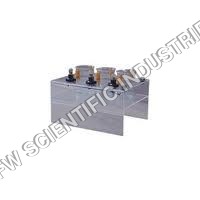
Tell us about your requirement

Price:
Quantity
Select Unit
- 50
- 100
- 200
- 250
- 500
- 1000+
Additional detail
Mobile number
Email

More Products in Physics instruments Category
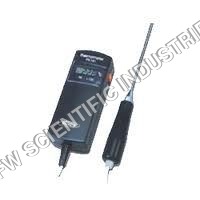
Digital Thermomter
Automation Grade : Manual
Type : Clinical Digital Thermometer
Weight : Approx. 15 g
Dimension (L*W*H) : 140 mm x 20 mm x 9 mm
Temperature Range : 32F to 212F (0C to 100C)
Power Source : Button cell battery (1.5V LR41)
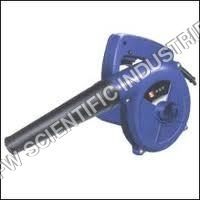
Electric Blower
Automation Grade : Manual
Type : Handheld Electric Blower
Weight : 1.5 kg
Dimension (L*W*H) : 310 mm x 170 mm x 200 mm
Temperature Range : Ambient to 60C
Power Source : Electric (Corded)
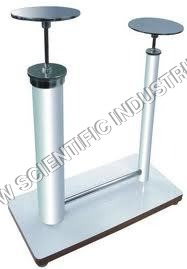
Fluid Pressure Apparatus
Automation Grade : Manual
Type : Fluid Pressure Apparatus
Weight : Approx 15 kg
Dimension (L*W*H) : 450 mm x 300 mm x 600 mm
Temperature Range : Ambient to 100C
Power Source : Manual
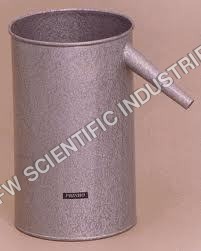
Displacement Vessel
Automation Grade : Manual
Type : Laboratory Displacement Vessel
Weight : Approx. 150 g
Dimension (L*W*H) : Approx. 200 mm x 60 mm x 60 mm
Temperature Range : 0C to 100C
Power Source : None (manual operation)

 Send Inquiry


Our Products
- Slit Lamp Ophthalmic Equipment
- Slit Lamp
- Surgical Equipments
- Laboratories Instruments Equipment
- Microscopes
- Scientific Instruments
- ENT Equipment
- Pharmacy instrument equipment
- Pathological Equipment
- Physics Lab Equipments
- Physics instruments
- Laboratory Glassware
- Digital Polarimeter
- Microprocessor Viscometer
- Double Beam UV-VIS Spectrophotometer
- Single Beam UV-Vis Spectrophotometer
- Kitchen equipments
- Dental Equipment
- Chapati Making Machines
- Water Heating System OR Hamam
- High Performance Liquid Chromatography Systems
- Chemistry
- Equipment Accessories
- Gynecology Equipment


B.O : 5430/3, Anaj Mandi, Science Market, Near Nigar Cinema,
R.O : 102-B Ram Nagar,Ambala Cantt - 133001, Haryana, India

Mr VISHAL KUMAR
(Managing Director)
Mobile :07971671031
 Send Inquiry
Developed and Managed by Infocom Network Private Limited.
