
Call us now :07971671031
 Send Inquiry
 Send Inquiry
Rising Table with Capalary
Rising Table with Capalary Specification
- Core Components
- Rising Table, Capillary Tubes, Adjustable Stand, Reading Scale
- Frequency
- 50 Hz
- Accuracy
- 0.1 mm
- Voltage
- N/A (Manual operation)
- Measurement Range
- 0 to 250 mm
- Model No
- RTC-06
- Temperature Range
- Ambient to 99C
- Power Source
- Not required (Manual device)
- Capacity
- 6 Liters
- Feature
- Corrosion resistant, Precise scale markings, Easy to clean
- Automation Grade
- Manual
- Equipment Materials
- Stainless Steel Body, Borosilicate Capillary Tubes
- Type
- Rising Table with Capalary
- Usage
- Laboratory, Physics Experiment, Capillary Rise Measurement
- Display Type
- Analog
- Dimension (L*W*H)
- 450 x 150 x 350 mm
- Weight
- Approx. 7 Kg
- Movable Table Range
- Up to 150 mm
- Finish
- Polished stainless steel
- Water Reservoir Material
- Stainless steel
- Number of Capillary Tubes Included
- 3
- Height Adjustment
- Yes, via knob mechanism
- Reading Scale Type
- Engraved with clear graduation
- Application
- Capillarity experiments, education and research
- Compliance
- Meets standard lab safety protocols
About Rising Table with Capalary
KFW- Rising table with capalary
Made of heavy cast iron base with adjustable leveling screw.
Height adjustable platform. ( up to 12")
18" chrome plated rod.with capillary tubes.
* Coarse and fine height adjustment are provided, very superior and an ideal apparatus
Superior Material and Design
Built using high-quality stainless steel and borosilicate glass, the Rising Table with Capillary ensures long-term durability and resistance to corrosion. Its polished surface, combined with precise scale markings and a sturdy manual adjustment mechanism, guarantees reliable usage while meeting all major lab safety standards.
Accurate and Versatile Measurement
This apparatus is engineered to deliver highly precise readings with an engraved analog scale and a movable table offering up to 150 mm of adjustment. Suitable for a wide range of capillarity experiments, the devices three included capillary tubes and 0250 mm measurement capacity support various research and educational needs.
Practical Features for Laboratory Use
With a generous 6-liter reservoir and manual operation requiring no external power, the Rising Table is both efficient and easy to maintain. Its robust construction, clear graduations, and effortless mobility make it an indispensable tool for laboratories investigating fluid mechanics and related physics phenomena.
FAQs of Rising Table with Capalary:
Q: How do you adjust the height of the capillary table during experiments?
A: The height of the capillary table is easily adjusted using a manual knob mechanism that enables smooth and controlled vertical movement. This feature allows precise alignment of the capillary tubes within a range of up to 150 mm for accurate measurement.Q: What is the primary application of the Rising Table with Capillary in laboratories?
A: This device is primarily used for conducting capillarity experiments, including measuring capillary rise and exploring fluid dynamics. It is especially valuable in physics education, laboratory research, and settings where precise capillary action measurements are required.Q: When is the Rising Table with Capillary most beneficial in an experimental setting?
A: The apparatus is most beneficial when accurate quantification of capillary rise is crucial, such as in educational demonstrations or research focused on surface tension, fluid properties, and related physics principles.Q: Where can the Rising Table with Capillary be utilized?
A: It is designed for use in school, college, and university laboratories, as well as research facilities needing reliable equipment for capillarity and fluid mechanics experiments. Its compliance with lab safety protocols ensures suitability in professional and academic environments.Q: What is the process for measuring the capillary rise using this equipment?
A: To measure capillary rise, first fill the stainless steel reservoir with water (up to 6 liters). Insert the borosilicate capillary tubes, then adjust the table height as needed. Observe the meniscus and use the engraved scale to record the liquid rise with 0.1 mm accuracy.Q: How is the Rising Table with Capillary maintained and cleaned?
A: The polished stainless steel finish and borosilicate glass tubes make the device easy to clean. After experiments, simply drain the reservoir and wipe all components. The corrosion-resistant materials help maintain longevity with minimal routine maintenance.Q: What are the key benefits of using this manual, non-powered device?
A: Its manual operation means no dependency on external power, ensuring consistent performance and ease of use. The corrosion resistance, precise scale, and robust materials make it a reliable, cost-effective choice for accurate and repeatable capillarity measurements.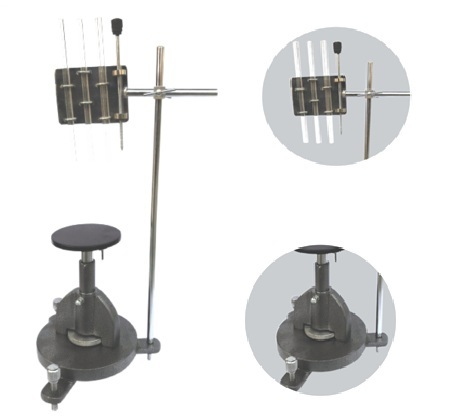
Tell us about your requirement

Price:
Quantity
Select Unit
- 50
- 100
- 200
- 250
- 500
- 1000+
Additional detail
Mobile number
Email

More Products in Physics Lab Equipments Category
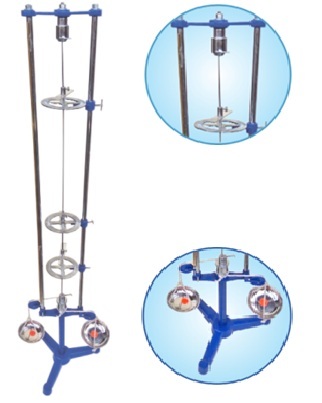
Torsion Apparatus Vertical
Price 2800 INR / Piece
Minimum Order Quantity : 1 Piece
Automation Grade : Manual
Equipment Materials : Mild Steel Stand, Main Shaft: highgrade steel, Jaws: Hardened Steel
Feature : High precision, Rigid construction, Easy to use
Capacity : 050 Nm (customizable)
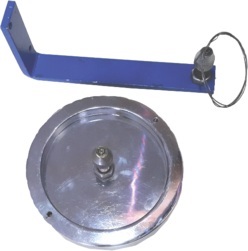
Torsion Pendulum
Price 1200 INR / Piece
Minimum Order Quantity : 1 Piece
Automation Grade : Manual
Equipment Materials : Stainless Steel Rod, Cast Iron Base, Brass Cylinder
Feature : Manual Operation, High Precision, Rust Resistant Parts
Capacity : 500 gcm to 5000 gcm
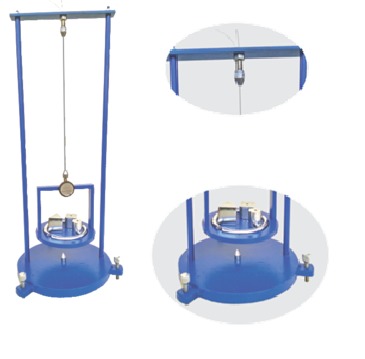
Inertia Table Movement
Automation Grade : Manual
Equipment Materials : Mild Steel with powder coated finish
Feature : Heavy Duty, Stable Base, Locking Mechanism
Capacity : 10 kg
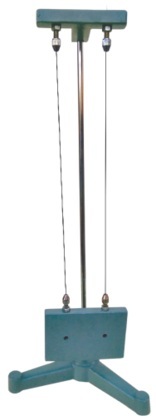
Bifilar Pendulum (Iron)
Automation Grade : Manual operation
Equipment Materials : Iron (main pendulum body), Mild steel (stand), Durable thread
Feature : Robust construction, high accuracy, easy setup
Capacity : Designed to withstand repeated experimental use

 Send Inquiry


Our Products
- Slit Lamp Ophthalmic Equipment
- Slit Lamp
- Surgical Equipments
- Laboratories Instruments Equipment
- Microscopes
- Scientific Instruments
- ENT Equipment
- Pharmacy instrument equipment
- Pathological Equipment
- Physics Lab Equipments
- Physics instruments
- Laboratory Glassware
- Digital Polarimeter
- Microprocessor Viscometer
- Double Beam UV-VIS Spectrophotometer
- Single Beam UV-Vis Spectrophotometer
- Kitchen equipments
- Dental Equipment
- Chapati Making Machines
- Water Heating System OR Hamam
- High Performance Liquid Chromatography Systems
- Chemistry
- Equipment Accessories
- Gynecology Equipment


B.O : 5430/3, Anaj Mandi, Science Market, Near Nigar Cinema,
R.O : 102-B Ram Nagar,Ambala Cantt - 133001, Haryana, India

Mr VISHAL KUMAR
(Managing Director)
Mobile :07971671031
 Send Inquiry
Developed and Managed by Infocom Network Private Limited.
