
Call us now :07971671031
 Send Inquiry
 Send Inquiry
Student Organ Bath (Double Unit)
Student Organ Bath (Double Unit) Specification
- Equipment Type
- Student Organ Bath Double Unit
- Features
- Double bath chambers, constant temperature, water jacket, aeration system, easy mounting for levers or transducers
- Humidity
- Operates in standard laboratory humidity
- Hardness
- Robust mild steel with powder coating
- Mounting Type
- Benchtop
- Display Type
- Manual/analog (no digital display)
- Max Height
- Approx. 280 mm
- Automation Grade
- Manual
- Power Supply
- 220V AC, 50 Hz
- Application
- Physiology and pharmacology experiments, isolated tissue/organ studies
- Interface Type
- Manual controls (no digital interface)
- Port Size
- 6 mm hose connection
- Test Range
- Suitable for isolated tissue/organ experiments
- Resolution
- As per measurement apparatus used
- Number of Specimens
- 2 (double unit)
- Usage
- For student practical demonstrations and laboratory experiments
- Test Speed
- Manual operation
- Test Stroke
- Up to 60 mm
- Control Mode
- Manual control using lever or knob
- Thermal Insulation
- Provided by double-walled construction
- Aeration System
- Supplied with air tube and needle valve
- Heating Element
- Low-voltage immersion heater, safely isolated
- Included Accessories
- Air tubing, mounting rods and tissue holder
- Chamber Cover
- Fitted lids with tubing ports for aeration
- Cleaning & Maintenance
- Removable components for easy cleaning
- Chamber Material
- Borosilicate glass with stainless steel covers
- Transducer Mounting
- Attachment points for isometric or isotonic transducers
- Dimensions
- Approx. 380 mm x 250 mm x 280 mm
- Water Jacket
- Double-walled, stainless steel for thermal insulation
- Isolation
- Separate water jackets for each bath ensure temperature uniformity
About Student Organ Bath (Double Unit)
Student Organ Bath (Double Unit) KFW
A Perspex organ bath with fine thermostatic temperature control, electronic stirrer and complete set of accessories, making it a versatile unit for all research work. Bath 12-9-8, with leak proof dovetailed joints, resting in sturdy metal frame; top of the bath carries a 1-3/8 hick band, for fixing accessories, inside the bath is a metal sheathed heating element (easily replicable) controlled by means of a fine adjustable thermostat with sensitivity ±1°c. The stirrer unit is completely independent and dips in the bath in one corner, fixing on its special stainless steel upright. A M.S. Junction box is fitted to the bath frame and carries all the electrical leads and connections two pilot lamps indicate functioning of the thermostat and stirrer.
Standard components are:
- Double set or glass inner vessels
- Oxygen tubes
- Warming coils
- Two stainless steel capillary levers
- Four stainless steel uprights with boss heads
- X block
Superior Thermal Control for Accurate Experiments
Each organ bath chamber is equipped with a double-walled, stainless steel water jacket that maintains a stable, adjustable temperature (typically at 37C). This design ensures consistent experimental conditions across both chambers, critical for reliable physiological or pharmacological studies. Separate water jackets for each chamber guarantee uniformity and prevent cross-thermal interference.
Robust and Easy-to-Clean Construction
Made from high-grade borosilicate glass with stainless steel covers, the Student Organ Bath Double Unit offers excellent durability and chemical resistance. Removable components and fitted lids with tubing ports simplify cleaning and allow easy maintenance, making the system practical for frequent use in educational and research settings.
Adaptable for Various Experimental Needs
This equipment accommodates both isometric and isotonic transducers, making it suitable for a wide range of tissue and organ studies. Manual controls (levers and knobs) provide flexibility in conducting experiments, while mounting rods, tissue holders, and air tubing included in the package streamline the experimental process for students and researchers alike.
FAQs of Student Organ Bath (Double Unit) :
Q: How can the temperature be adjusted and maintained in the Student Organ Bath Double Unit?
A: Temperature adjustment is achieved using the low-voltage immersion heater, which is safely isolated and integrated within the double-walled water jackets. Each chambers water jacket is independently controlled, allowing precise maintenance of experimental temperatures, typically set at 37C for physiological studies.Q: What types of experiments are suitable for this organ bath system?
A: The Student Organ Bath Double Unit is ideal for isolated tissue or organ research, physiology, and pharmacology experiments. It enables students and researchers to study the effects of drugs or conditions on muscle contractions, using specimens up to 80 mm in length in each chamber.Q: When should the removable components be cleaned, and how is this done?
A: It is recommended to clean the organ baths removable components after each use to prevent contamination and preserve equipment integrity. Cleaning involves detaching the glass chambers, stainless steel covers, and tubing, rinsing them thoroughly with appropriate lab cleaning agents, and ensuring all parts are completely dry before reassembly.Q: Where should the Student Organ Bath Double Unit be installed?
A: This instrument is designed for benchtop use in laboratories, typically in educational institutions, research facilities, or teaching hospitals. It operates efficiently in standard laboratory humidity and conditions, requiring access to a 220V AC, 50 Hz power supply.Q: What process is involved in setting up an experiment using the organ bath?
A: Setting up involves filling each chamber with solution, positioning tissue specimens using included holders, attaching required transducers for measurement, connecting air tubing for aeration, and manually adjusting heating and aeration using the provided controls. The fitted lids and ports facilitate easy sample and gas handling throughout the experiment.Q: How is accuracy ensured during experiments?
A: Accuracy relies on the proper calibration of the attached measuring devices such as isometric or isotonic transducers. Consistent temperature, stable aeration, and reliable mechanical controls provided by the bath contribute to reproducible and precise experimental data.Q: What are the key benefits of using this double unit for student demonstrations and research?
A: Key benefits include dual chambers allowing parallel specimen testing, robust construction for longevity, precise thermal and aeration control, ease of cleaning, and flexible manual operation. These features foster effective learning and reliable experimental outcomes in teaching and laboratory environments.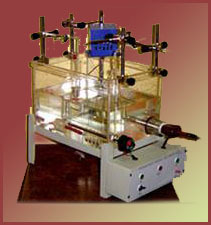
Tell us about your requirement

Price:
Quantity
Select Unit
- 50
- 100
- 200
- 250
- 500
- 1000+
Additional detail
Mobile number
Email

More Products in Laboratory Glassware Category
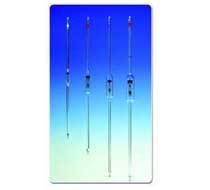
Pipettes
Application : Used for liquid transfer, measurement, analytical, and biological laboratory applications
Usage : Laboratory liquid handling
Resolution : 0.1 L
Number of Specimens : Single or Multichannel versions (8, 12 channels)
Equipment Type : Micropipette / Laboratory Pipette
Features : Autoclavable, UVResistant, Ergonomic Design, Volume Lock (varies by model)
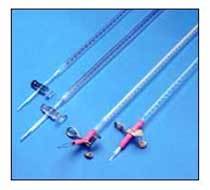
Volumetric Burette
Application : Laboratory Liquid Measurement, Titration
Usage : Quantitative Chemical Analysis
Resolution : 0.1 ml
Number of Specimens : Single
Equipment Type : Volumetric Burette
Features : Clear Calibrations, PTFE Stopcock, Durable Glass Construction, Chemical Resistant
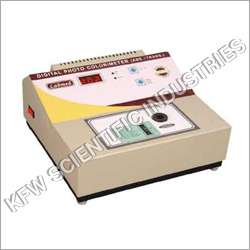
Digital Photo Colorimeter Micro Controller
Resolution : 0.01 OD
Number of Specimens : 1 at a time
Equipment Type : Digital Photo Colorimeter (Micro Controller)
Features : Micro controller based system, highly stable, accurate
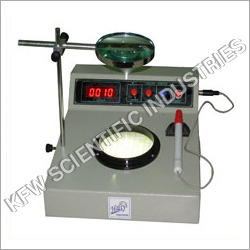
Digital Colony Counter
Application : Microbiological Colony Counting
Usage : Colony counting in laboratories
Resolution : 1 colony
Number of Specimens : 1 at a time
Equipment Type : Digital Colony Counter

 Send Inquiry


Our Products
- Slit Lamp Ophthalmic Equipment
- Slit Lamp
- Surgical Equipments
- Laboratories Instruments Equipment
- Microscopes
- Scientific Instruments
- ENT Equipment
- Pharmacy instrument equipment
- Pathological Equipment
- Physics Lab Equipments
- Physics instruments
- Laboratory Glassware
- Digital Polarimeter
- Microprocessor Viscometer
- Double Beam UV-VIS Spectrophotometer
- Single Beam UV-Vis Spectrophotometer
- Kitchen equipments
- Dental Equipment
- Chapati Making Machines
- Water Heating System OR Hamam
- High Performance Liquid Chromatography Systems
- Chemistry
- Equipment Accessories
- Gynecology Equipment


B.O : 5430/3, Anaj Mandi, Science Market, Near Nigar Cinema,
R.O : 102-B Ram Nagar,Ambala Cantt - 133001, Haryana, India

Mr VISHAL KUMAR
(Managing Director)
Mobile :07971671031
 Send Inquiry
Developed and Managed by Infocom Network Private Limited.
