
Call us now :07971671031
 Send Inquiry
 Send Inquiry
Digital Colony Counter
Digital Colony Counter Specification
- Power Supply
- 230 V AC, 50 Hz
- Humidity
- 10% 80% RH
- Application
- Microbiological Colony Counting
- Test Range
- 0 9999 colonies
- Equipment Type
- Digital Colony Counter
- Max Height
- Approx. 200 mm
- Number of Specimens
- 1 at a time
- Interface Type
- Manual touch with digital display
- Mounting Type
- Table top
- Resolution
- 1 colony
- Usage
- Colony counting in laboratories
- Test Speed
- Manual counting
- Control Mode
- Digital
About Digital Colony Counter
Digital Colony Counter
Digital colony counter is designed for quick and accurate counting of bacterial and mould colonies in petri dishes. Our digital colony counter is a feature packed ft easy to use, tins is an indispensable bench top tool for the busy microbiologist. It is designed for rapid and accurate counting of bacterial and mould colonies.digital colony counter digital colony counter digital colony counter digital colony counter digital colony counter digital colony counter digital colony counter digital colony counter digital colony counter digital colony counter digital colony counte
Technical Specifications
- Display : 4 Digit, 9999 Max. count (Model : LT-37)
- Dish Size : 3 Digit, 999 Max. Count (Model LT-36) 110 mm
- Magnification : x 1.7
- Dimension : L 274 X B 320 X H 167 mm )Approx)
- Weight : 3 Kgs. (Approx)
- Packing : 23cm x 28cm x20cm Corrugated Carton
- Power : 230V 10% AC, 50 Hz, 40W
- Accessories: Marking Pen 1 No.Magnifier Lens 1 No.
Salient Features
- 100 mm Dia Magnifying Glass
- Audible Confirmation of Each Count
- Uniform Glair Free illumination
- Digital Readout from 0-9999
- Auto Marker Pen
- Wolffhuegel Glass Grid with Focusing Facility
- Digital colony counter digital colony counter digital colony counter digital colony counter digital colony counter.
Enhanced Visibility and Precision
This digital colony counter features a white LED ring that illuminates the working area, ensuring clear visibility of colonies. With an adjustable lens magnification up to 3x and a large 75 mm diameter lens, users can closely examine and accurately count colonies, even those that are faint or small.
User-Friendly Digital Controls
Equipped with a pressure sensor touch pen and a digital display, this colony counter simplifies the counting process. Each colony count is instantly registered, with an audible buzzer providing confirmation. The manual touch operation combines user control with the accuracy of digital technology, supporting up to 9999 counts per specimen.
Reliable Performance in Laboratory Settings
Constructed with a robust ABS plastic casing and mounted securely on the tabletop, the device is built for repeated laboratory use. It operates on 230 V AC, 50 Hz, with low power consumption (5 W), and accommodates standard petri dishes up to 90 mm. Its compact size and 2.5 kg weight make it easy to position and relocate as needed.
FAQs of Digital Colony Counter:
Q: How does the pressure sensor touch pen work for colony counting?
A: The pressure sensor touch pen acts as an intuitive counting tool. When gently pressed against a colony on the petri dish, it registers a count that is immediately displayed on the digital screen, accompanied by a buzzer sound for confirmation.Q: What benefits does the white LED ring illumination provide?
A: The white LED ring offers bright, even illumination to the entire petri dish area, significantly improving colony visibility and reducing eye strain, which results in higher counting accuracy and ease of use, especially in low-light conditions.Q: Where is this digital colony counter typically used?
A: This equipment is primarily used in laboratories, including microbiology, pharmaceutical, clinical, and quality control settings, where precise colony counts are essential for microbial analysis and research.Q: What is the process for counting colonies using this device?
A: Place a standard 90 mm petri dish on the unit, adjust the lens for optimal magnification, and use the touch pen to count colonies manually. Each touch registers a digital count, and the buzzer provides audible feedback. The result is displayed instantly.Q: When should calibration or maintenance be performed on the unit?
A: Routine visual inspection and gentle cleaning of the lens and sensor pen are recommended regularly. Calibration checks should be carried out periodically or whenever accuracy is in question to ensure precise counting results.Q: What is the maximum number of colonies this counter can register in one session?
A: The digital counter can accurately register up to 9,999 colonies per petri dish, making it suitable for a wide range of microbial assays.Q: What are the advantages of the devices digital control mode and manual touch interface?
A: The digital control mode combined with the manual touch interface offers users full control over the counting process, minimizing human error and ensuring that each count is both deliberate and accurately recorded.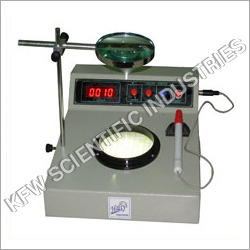
Tell us about your requirement

Price:
Quantity
Select Unit
- 50
- 100
- 200
- 250
- 500
- 1000+
Additional detail
Mobile number
Email

More Products in Laboratory Glassware Category
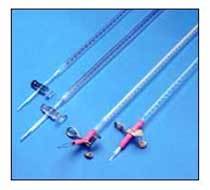
Volumetric Burette
Mounting Type : Clamp Stand Mountable
Features : Clear Calibrations, PTFE Stopcock, Durable Glass Construction, Chemical Resistant
Usage : Quantitative Chemical Analysis
Humidity : Up to 60% RH (Recommended)
Application : Laboratory Liquid Measurement, Titration
Automation Grade : Manual
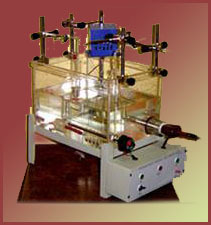
Student Organ Bath (Double Unit)
Mounting Type : Benchtop
Features : Double bath chambers, constant temperature, water jacket, aeration system, easy mounting for levers or transducers
Usage : For student practical demonstrations and laboratory experiments
Humidity : Operates in standard laboratory humidity
Application : Physiology and pharmacology experiments, isolated tissue/organ studies
Automation Grade : Manual
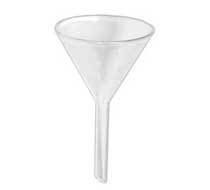
FUNNEL KFW
Mounting Type : Benchtop/laboratory table
Features : Corrosionresistant; easy to clean; standardcompliant design
Usage : Paper and pulp testing laboratories
Humidity : Ambient
Application : Pulp and paper sheet freeness testing; Laboratory analysis
Automation Grade : Manual
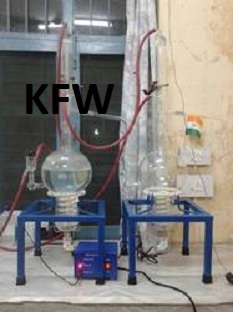
Water Distillation Apprutus
Mounting Type : Table Top
Features : Quartz Heater, Pyrogen Free Distillate, Rust Proof Construction, Energy Efficient
Usage : Distillation of Water
Humidity : Ambient
Application : Laboratory, Medical, Pharmacy, Research
Automation Grade : SemiAutomatic

 Send Inquiry


Our Products
- Slit Lamp Ophthalmic Equipment
- Slit Lamp
- Surgical Equipments
- Laboratories Instruments Equipment
- Microscopes
- Scientific Instruments
- ENT Equipment
- Pharmacy instrument equipment
- Pathological Equipment
- Physics Lab Equipments
- Physics instruments
- Laboratory Glassware
- Digital Polarimeter
- Microprocessor Viscometer
- Double Beam UV-VIS Spectrophotometer
- Single Beam UV-Vis Spectrophotometer
- Kitchen equipments
- Dental Equipment
- Chapati Making Machines
- Water Heating System OR Hamam
- High Performance Liquid Chromatography Systems
- Chemistry
- Equipment Accessories
- Gynecology Equipment


B.O : 5430/3, Anaj Mandi, Science Market, Near Nigar Cinema,
R.O : 102-B Ram Nagar,Ambala Cantt - 133001, Haryana, India

Mr VISHAL KUMAR
(Managing Director)
Mobile :07971671031
 Send Inquiry
Developed and Managed by Infocom Network Private Limited.
