
Call us now :07971671031
 Send Inquiry
 Send Inquiry
Torsion Apparatus Horizontal
Torsion Apparatus Horizontal Specification
- Feature
- Smooth operation, robust design, high accuracy
- Frequency
- 50 Hz
- Automation Grade
- Manual
- Power Source
- Manual
- Capacity
- Up to 5 Nm
- Accuracy
- 1% of full scale
- Measurement Range
- 0 to 360 twist
- Type
- Horizontal Torsion Testing Apparatus
- Dimension (L*W*H)
- 950 mm x 125 mm x 225 mm
- Weight
- Approx. 30 kg
- Application
- Ideal for mechanical properties, modulus of rigidity, and shear studies
- Specimen Type
- Round and square rods supported
- Material Compatibility
- Steel, brass, aluminum specimens
- Attachments
- Includes specimen rods and weights
- Operation
- Hand operated/Manual loading
- Torsion Meter Type
- Graduated circular scale
About Torsion Apparatus Horizontal
For many years, we are involved in manufacturing, exporting and supplying a high quality range of Torsion Apparatus Horizontal. Keeping in mind latest market trends, this apparatus is precisely manufactured using optimum quality components and latest technology in accordance with set industry norms. In addition, offered apparatus is mostly used in laboratories to study of the shear properties of adhesive bonded joints. Further, this Torsion Apparatus Horizontal can be availed in divergent specifications and at affordable prices.
Features:
-
High strength
-
Optimal performance
-
Corrosion resistance
-
Compact design
Precision Testing for Materials Science
Engineered for high accuracy, the Horizontal Torsion Testing Apparatus allows in-depth analysis of shear and rigidity characteristics in metallic specimens. Its user-friendly, manually loaded system facilitates hands-on learning and dependable data collection for both educational institutions and research laboratories.
Robust and Versatile Construction
Constructed for lasting durability, the apparatus accommodates both round and square rods of steel, brass, or aluminum. Its smooth operation and stable support ensure repeatable testing, while the comprehensive range of included attachments enhances experimental flexibility.
Compact Design Suited for Laboratories
Measuring just 950 mm by 125 mm by 225 mm, and weighing around 30 kg, the apparatus is easy to position or store in standard lab spaces. Its manual operation ensures independence from electrical power, making it reliable for diverse settings.
FAQs of Torsion Apparatus Horizontal :
Q: How do you operate the horizontal torsion apparatus manually?
A: Operation is straightforward: secure the specimen rod between the supports, attach the appropriate weights, and apply torque using the hand-operated system. The graduated circular scale allows you to measure the degree of twist applied up to 360, all without using any electrical power.Q: What types of specimens can be tested with this apparatus?
A: The device is compatible with both round and square rods made from steel, brass, or aluminum. It comes equipped with a range of specimen rods, enabling versatile mechanical property investigations across different materials.Q: When should I consider using this apparatus in my testing process?
A: Utilize this apparatus when you need to determine the modulus of rigidity, shear strength, or mechanical properties of metallic materials in research, laboratory, or educational environments.Q: Where can this apparatus be used effectively?
A: Its robust and compact design makes it ideal for academic labs, research centers, and industrial testing facilities where space and portability are considerations and manual operation is preferred.Q: What is the process for performing a test?
A: Mount your prepared specimen between the apparatus supports, select and attach the required weight, then incrementally hand-load the mechanism. Record angle measurements from the circular scale as you apply torque, staying within the 0360 range and up to the 5 Nm capacity.Q: How does the apparatus ensure high accuracy during tests?
A: The graduated circular scale provides precise readings and the apparatus boasts 1% accuracy of full scale, ensuring confidence in your modulus of rigidity and shear test results.Q: What are the main benefits of using this horizontal torsion apparatus?
A: It delivers high-accuracy, repeatable results, is compatible with various metal specimens, and operates independently of electrical sources. Its robust, smooth design supports rigorous academic and professional testing for a comprehensive analysis of material properties.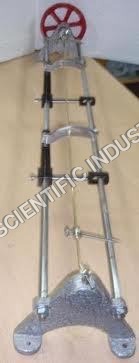
Tell us about your requirement

Price:
Quantity
Select Unit
- 50
- 100
- 200
- 250
- 500
- 1000+
Additional detail
Mobile number
Email

More Products in Physics instruments Category
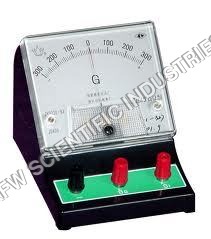
Galvanometer
Accuracy : 2% of Full Scale
Usage : Laboratory, Educational Demonstration Purposes
Core Components : Coil, Magnet, Spring, Pointer, Scale
Type : Moving Coil Galvanometer
Capacity : 30030 microampere
Automation Grade : Manual
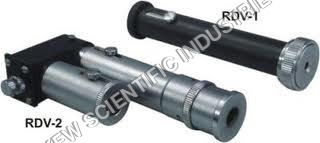
Direct Vision Spectroscope
Accuracy : Spectral lines observed with high clarity
Usage : Spectral analysis, gemstone identification, laboratory teaching
Core Components : Prisms, Lenses, Eyepiece, External body casing
Type : Direct Vision Spectroscope
Capacity : Single observation, no sample requirement
Automation Grade : Manual
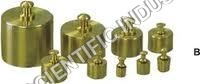
Balance Weights
Accuracy : Class M1 / M2 as per OIML standards
Usage : Calibration, Laboratory, Testing, Industrial Balances
Core Components : Cast Iron Body
Type : Cast Iron Balance Weights
Capacity : 100 g, 200 g, 500 g, 1 kg, 2 kg, 5 kg, 10 kg, 20 kg
Automation Grade : Manual
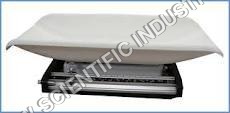
Baby Weighing Balance
Accuracy : 50 g
Usage : Hospital, Clinic, Maternity Homes
Core Components : Main Body, Tray, Dial
Type : Mechanical Baby Weighing Scale
Capacity : 20 kg
Automation Grade : Manual

 Send Inquiry


Our Products
- Slit Lamp Ophthalmic Equipment
- Slit Lamp
- Surgical Equipments
- Laboratories Instruments Equipment
- Microscopes
- Scientific Instruments
- ENT Equipment
- Pharmacy instrument equipment
- Pathological Equipment
- Physics Lab Equipments
- Physics instruments
- Laboratory Glassware
- Digital Polarimeter
- Microprocessor Viscometer
- Double Beam UV-VIS Spectrophotometer
- Single Beam UV-Vis Spectrophotometer
- Kitchen equipments
- Dental Equipment
- Chapati Making Machines
- Water Heating System OR Hamam
- High Performance Liquid Chromatography Systems
- Chemistry
- Equipment Accessories
- Gynecology Equipment


B.O : 5430/3, Anaj Mandi, Science Market, Near Nigar Cinema,
R.O : 102-B Ram Nagar,Ambala Cantt - 133001, Haryana, India

Mr VISHAL KUMAR
(Managing Director)
Mobile :07971671031
 Send Inquiry
Developed and Managed by Infocom Network Private Limited.
