
Call us now :07971671031
 Send Inquiry
 Send Inquiry
Balance Weights
Balance Weights Specification
- Capacity
- 100 g, 200 g, 500 g, 1 kg, 2 kg, 5 kg, 10 kg, 20 kg
- Automation Grade
- Manual
- Model No
- Standard Industrial Balance Weight
- Core Components
- Cast Iron Body
- Accuracy
- Class M1 / M2 as per OIML standards
- Measurement Range
- Up to 20 kg
- Power Source
- Not Required
- Feature
- Corrosion Resistant, Heavy Duty
- Equipment Materials
- Cast Iron, Mild Steel
- Type
- Cast Iron Balance Weights
- Usage
- Calibration, Laboratory, Testing, Industrial Balances
- Dimension (L*W*H)
- Varies with weight capacity
- Weight
- As specified (eg: 100 g, 200 g, 500 g, 1 kg, etc.)
- Storage Condition
- Dry and Clean Place
- Shape
- Rectangular/Slotted
- Packaging Type
- Wooden or Carton Box
- Tolerance
- As per OIML recommendations
- Finish
- Black Paint Coated
About Balance Weights
Polished brass, in hardwood case with hinged lid. Divided compartment with dust cover holds nickel-silver and aluminum fractions. With chrome plated brass forceps.
A Capacity 1 mg to 100gm.
B Capacity 1 mg to 200gm.
C Capacity 1 mg to 500gm.
D Capacity 1 mg to 1000gm.
E Capacity 1 mg to 2000gm.
Precision for Calibration and Testing
Our balance weights are designed to meet rigorous OIML tolerance standards, making them an ideal choice for calibrating analytical, laboratory, and industrial balances. The variety of capacities ensures compatibility with diverse measuring instruments, while the rectangular and slotted shapes allow for flexible usage in professional environments.
Durability and Protection
Engineered with a quality cast iron body and protected by a corrosion-resistant black paint finish, these weights provide dependable service under frequent laboratory or industrial use. Packaged in robust wooden or carton boxes, they are shielded from damage during transport and storage, ensuring long-term accuracy and stability.
FAQs of Balance Weights:
Q: How should the cast iron balance weights be stored to maintain their accuracy?
A: Cast iron balance weights should always be stored in a dry and clean place, ideally within their original wooden or carton box packaging. This prevents moisture-induced corrosion and helps preserve both their integrity and precision as per OIML standards.Q: What is the primary usage of these black paint coated balance weights?
A: These balance weights are primarily used for calibration, laboratory testing, and industrial balances. They serve as an essential reference for verifying the accuracy of scales and weighing systems in scientific and industrial settings.Q: When is it necessary to recalibrate or check the condition of the balance weights?
A: It is important to visually inspect and gauge the weights periodically, especially before critical calibration activities or if they have been handled extensively. Any sign of surface damage, corrosion, or when exact compliance with OIML tolerance is in question, recalibration or replacement may be required.Q: Where can these balance weights be utilized effectively?
A: These weights are highly suitable for use in laboratories, quality control departments, industrial sites, and anywhere precise measurement calibration is required. Their varied capacities and robust design make them adaptable to diverse applications.Q: What benefits do cast iron balance weights with black paint coating offer over other types?
A: The cast iron construction ensures heavy-duty durability, while the black paint coating provides corrosion resistance, extending the lifetime and maintaining the accuracy of the weights. This combination makes them a reliable choice for environments demanding consistent performance.Q: What is the process for using these weights during calibration?
A: Select the appropriate weight based on your calibration requirement, handle it with clean gloves to avoid contamination, and gently place it on the weighing platform. Follow the devices calibration procedure, ensuring that the environment remains dry and dust-free throughout the process.Q: How are the weights packaged and what advantage does this provide?
A: These weights are securely packaged in either wooden or carton boxes. This packaging protects them from external impact, dust, and moisture, ensuring their accuracy and extending their usable lifespan during storage and transportation.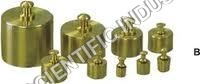
Tell us about your requirement

Price:
Quantity
Select Unit
- 50
- 100
- 200
- 250
- 500
- 1000+
Additional detail
Mobile number
Email

More Products in Physics instruments Category
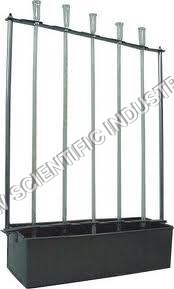
Expansion Of Liquids Apparatus
Dimension (L*W*H) : Approx. 40 15 20 cm
Automation Grade : Manual
Weight : Approx. 25 kg (including water bath and accessories)
Temperature Range : Room temperature to 100C
Accuracy : 1 mL or better (depends on thermometer and tube graduation)
Type : Physics Laboratory Apparatus
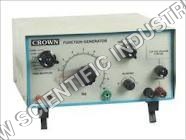
Function Generator
Dimension (L*W*H) : 300 x 220 x 100 mm
Automation Grade : Manual
Weight : Approx. 3 kg
Temperature Range : 0C to 55C
Accuracy : 1%
Type : Function Generator
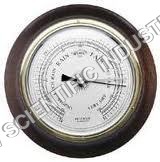
Aneroid Barometer
Dimension (L*W*H) : Approx. 130 mm x 40 mm
Automation Grade : Manual
Weight : Approx. 300 grams
Temperature Range : 10C to +50C
Accuracy : 3 hPa
Type : Aneroid Barometer
Bar Breaking Apparatus
Dimension (L*W*H) : 1000 mm x 250 mm x 250 mm
Automation Grade : Manual
Weight : Approximate 40 kg
Temperature Range : Ambient to 50C
Accuracy : 1% of full scale
Type : Mechanical Strength Testing Apparatus

 Send Inquiry


Our Products
- Slit Lamp Ophthalmic Equipment
- Slit Lamp
- Surgical Equipments
- Laboratories Instruments Equipment
- Microscopes
- Scientific Instruments
- ENT Equipment
- Pharmacy instrument equipment
- Pathological Equipment
- Physics Lab Equipments
- Physics instruments
- Laboratory Glassware
- Digital Polarimeter
- Microprocessor Viscometer
- Double Beam UV-VIS Spectrophotometer
- Single Beam UV-Vis Spectrophotometer
- Kitchen equipments
- Dental Equipment
- Chapati Making Machines
- Water Heating System OR Hamam
- High Performance Liquid Chromatography Systems
- Chemistry
- Equipment Accessories
- Gynecology Equipment


B.O : 5430/3, Anaj Mandi, Science Market, Near Nigar Cinema,
R.O : 102-B Ram Nagar,Ambala Cantt - 133001, Haryana, India

Mr VISHAL KUMAR
(Managing Director)
Mobile :07971671031
 Send Inquiry
Developed and Managed by Infocom Network Private Limited.
