
Call us now :07971671031
 Send Inquiry
 Send Inquiry
Compound Bar Pendulum (Iron)
Compound Bar Pendulum (Iron) Specification
- Temperature Range
- Ambient laboratory conditions
- Feature
- Holes at equal intervals for adjusting axis of suspension, Hardened knife edges, Uniform cross-section
- Power Source
- Not required (Manual/Mechanical operation)
- Core Components
- Iron bar, Two adjustable knife edges, Holes for mounting, Support mechanism
- Frequency
- Manual measurement (Dependent on experimental setup)
- Accuracy
- Depends on experimental setup and measurement precision
- Capacity
- Standard (Not specified, used for educational laboratory purpose)
- Automation Grade
- Manual
- Measurement Range
- Suitable for educational demonstrations over several pivot positions
- Equipment Materials
- Iron (main bar and adjustable knife edges), Steel (knife edges), Hardened steel screws
- Type
- Compound Bar Pendulum (Iron)
- Usage
- Physics laboratory experiments, Determining acceleration due to gravity (g), Moment of inertia calculations
- Display Type
- None (Physical/Mechanical device)
- Dimension (L*W*H)
- Approx. 1000 x 30 x 10 mm (Bar size)
- Weight
- Approx. 1.5 2 kg
- Bar Material and Finish
- Solid iron; black painted or powder coated for corrosion resistance
- Knife Edge Material
- Hardened steel, removable and adjustable
- Purpose
- Determination of g and radius of gyration using bar pendulum method
- Packaging
- Individual sealed pack or polywrap
- Bar Thickness
- Approx. 10 mm
- End Loops/Rings
- Optional-facilitates easy mounting
- Mount Compatibility
- Works with standard laboratory pendulum stand
- Compliance
- Meets standard laboratory equipment specifications for educational use
- Accessories Included
- None; Stand and timer supplied separately
- Number of Suspension Holes
- Usually 7-9, symmetrically spaced
About Compound Bar Pendulum (Iron)
KFW - Compound Bar Pendulum (Iron) C.P
- Consists of a powder coated steel bar.
- Dimension 100 x 3.75 x 0.5 cm with a no. of equidistant holes intervals of 5 cm.
- Complete with wall bracket and two removeable knife edges.
KFW -P88 A Compound Bar Pendulum (Brass)
- Consists of a powder coated steel bar.
- Dimension 100 x 25 x 0.5 cm with a no. of equidistant holes intervals of 5 cm.
- Complete with wall bracket and two removable knife edges
Precision Construction for Reliable Measurements
Crafted from solid iron with uniformly spaced holes, the compound bar pendulum ensures consistent experimental setups. The hardened steel adjustable knife edges, combined with precise bar thickness, enhance accuracy for physics investigations involving gravity and moment of inertia. Its corrosion-resistant finish supports extended laboratory use.
Designed for Versatility in Physics Education
Whether used for gravity determination or inertia calculations, this pendulum adapts easily to various experiments. Symmetrical mounting holes and optional end loops enable versatile suspension, while its compatibility with standard laboratory stands means setup stays straightforward for educators and students alike.
Robust and User-Friendly for Classroom Environments
This manually operated pendulum requires no external power source or digital display, focusing entirely on hands-on learning. The packaging in individual sealed packs or polywrap ensures secure delivery and storage, making it ideal for laboratories, distributors, and suppliers across India.
FAQs of Compound Bar Pendulum (Iron):
Q: How is the Compound Bar Pendulum (Iron) used to determine acceleration due to gravity (g)?
A: The pendulum is mounted on a laboratory stand using one of its suspension holes and adjustable knife edges. By measuring the oscillation period for different pivot points and applying the pendulum formula, users can accurately calculate the acceleration due to gravity.Q: What materials and finishes are used for the bar and knife edges?
A: The main bar is constructed from solid iron with a black painted or powder-coated finish to resist corrosion. Removable and adjustable knife edges are made from hardened steel for durability and measurement precision.Q: When is this device suitable for use in laboratories?
A: The compound bar pendulum is ideal for educational physics experiments conducted under standard ambient laboratory conditions, where manual measurement and hands-on demonstration are required.Q: Where can the Compound Bar Pendulum (Iron) be mounted for experiments?
A: It is compatible with standard laboratory pendulum stands, allowing easy installation using the symmetrically spaced suspension holes and optional end loops for secure mounting.Q: What is the process for adjusting the axis of suspension during an experiment?
A: Users can select from 79 equally spaced holes along the iron bar to change the suspension axis. The hardened steel knife edges can be repositioned as needed to facilitate accurate and repeatable measurements over several pivot positions.Q: What benefits does this pendulum offer compared to simple pendulums?
A: Unlike simple pendulums, the compound bar pendulum allows for determination of both acceleration due to gravity and radius of gyration, supporting advanced demonstrations of moment of inertia and rotational dynamics.Q: Is any additional equipment required for operation, such as a stand or timer?
A: Yes, while the pendulum itself is supplied individually, a standard laboratory stand and timer are necessary for accurate measurement and must be obtained separately.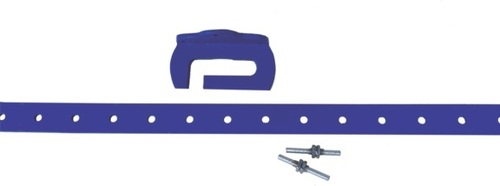
Tell us about your requirement

Price:
Quantity
Select Unit
- 50
- 100
- 200
- 250
- 500
- 1000+
Additional detail
Mobile number
Email

More Products in Physics Lab Equipments Category
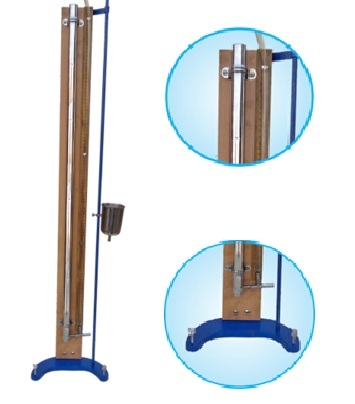
Resonance Apparatus
Price 1200 INR / Piece
Minimum Order Quantity : 1 Piece
Type : Physics laboratory apparatus
Usage : Demonstration and measurement of resonance in air columns
Feature : Sliding water reservoir for resonance length adjustment
Power Source : Manual (tuning fork excitation; no electrical source required)
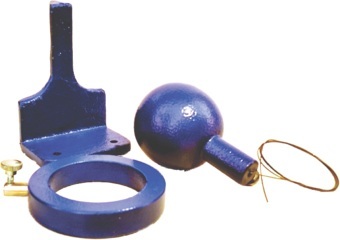
Simple Pendulum
Price 900 INR / Piece
Minimum Order Quantity : 1 Piece
Type : Physics Laboratory Instrument
Usage : Laboratory Demonstration and Educational Purpose
Feature : Durable, Rust Resistant, Easy Assembly
Power Source : Not Required (Manual Operation)
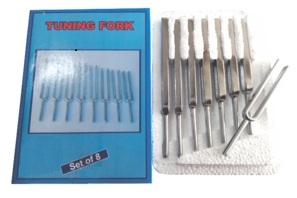
Tuning Fork
Price 300 INR / Set
Minimum Order Quantity : 1 Piece
Type : Tuning Fork
Usage : Laboratory, Medical, Educational, and Sound Testing
Feature : Corrosion Resistant, Durable, Accurately Calibrated
Power Source : Manual
Jaggers Apparatus
Type : Physics Laboratory Apparatus
Usage : Demonstration of electrical discharge, dielectric breakdown of air, and electric field in physics labs
Feature : Adjustable spark gap, sturdy construction for repeated use, visible spark demonstration
Power Source : External high voltage source (not included)

 Send Inquiry


Our Products
- Slit Lamp Ophthalmic Equipment
- Slit Lamp
- Surgical Equipments
- Laboratories Instruments Equipment
- Microscopes
- Scientific Instruments
- ENT Equipment
- Pharmacy instrument equipment
- Pathological Equipment
- Physics Lab Equipments
- Physics instruments
- Laboratory Glassware
- Digital Polarimeter
- Microprocessor Viscometer
- Double Beam UV-VIS Spectrophotometer
- Single Beam UV-Vis Spectrophotometer
- Kitchen equipments
- Dental Equipment
- Chapati Making Machines
- Water Heating System OR Hamam
- High Performance Liquid Chromatography Systems
- Chemistry
- Equipment Accessories
- Gynecology Equipment


B.O : 5430/3, Anaj Mandi, Science Market, Near Nigar Cinema,
R.O : 102-B Ram Nagar,Ambala Cantt - 133001, Haryana, India

Mr VISHAL KUMAR
(Managing Director)
Mobile :07971671031
 Send Inquiry
Developed and Managed by Infocom Network Private Limited.
