
Call us now :07971671031
 Send Inquiry
 Send Inquiry
Crystallising Dishes
Crystallising Dishes Specification
- Core Components
- Dish body (borosilicate glass)
- Temperature Range
- -100C to +400C
- Capacity
- Multiple capacities available
- Feature
- High chemical resistance, thermal stability, clear visibility
- Model No
- Standard: Crystallisation Dish
- Automation Grade
- Manual
- Equipment Materials
- Borosilicate Glass
- Type
- Laboratory Crystallising Dish
- Usage
- Used for crystallisation and evaporation in laboratory applications
- Dimension (L*W*H)
- Varies with capacity, e.g. 6035mm (50 ml) to 12070mm (1000 ml)
- Weight
- Dependent on capacity, approx. 90 g to 350 g
- Resistant to
- Acids, Alkalis, Organic solvents
- Applications
- Laboratory chemical processes, solution evaporation, crystallisation studies
- Reusable
- Yes; autoclavable
- Surface Finish
- Smooth, transparent glass
- Sterilization
- Autoclave, Dry heat
- Compliance
- ISO and ASTM Laboratory Glassware Standards
- Shape
- Flat-bottomed, shallow form with wide open mouth
- Stackability
- Yes; shallow design allows easy stacking
- Color
- Clear
- Packaging Type
- Individual box or carton
About Crystallising Dishes
Crystallising Dishes manufactured at our in-house production unit is provided by us in the national and international markets. These products are stringently tested on several parameters so that a flawless range is dispatched to the customers across the globe. We pack our products using optimum quality material so as to deliver these safely at the client's end. Further, we also strive to deliver the products within the estimated time-duration. Following are the features of our products:
- Chemical and heat resistant
- Durable
- Cost-effective
Superior Durability and Chemical Resistance
Manufactured from high-quality borosilicate glass, this crystallising dish stands out for its exceptional resistance to harsh chemicals, including acids and alkalis. Its robust construction ensures long-lasting use, even in intensive laboratory environments. This makes it an ideal solution for repeated cycles of crystallisation, evaporation, or heating in both educational and professional settings.
Versatile Applications in Laboratory Processes
Engineered for precision, the dish supports a gamut of laboratory tasks such as evaporating solvents, conducting crystallisation studies, and handling chemical samples. Its smooth, transparent surface allows researchers to observe processes directly, while the shallow, stackable design maximizes bench space. Offered in a range of capacities, it suits both small- and large-scale experiments.
FAQs of Crystallising Dishes:
Q: How should I sterilize a borosilicate glass crystallising dish for laboratory use?
A: This crystallising dish can be sterilized using either an autoclave or dry heat, thanks to its robust borosilicate glass construction. Ensure the dish is thoroughly clean before placing it in the sterilization equipment, and follow standard laboratory autoclave protocols for optimal safety.Q: What types of laboratory processes is this crystallising dish designed for?
A: The dish is intended primarily for solution evaporation, crystallisation studies, and other chemical processes that require high visibility and chemical resistance. It is suitable for a wide temperature range and can be used in both educational and industrial laboratories.Q: When is it appropriate to reuse these crystallising dishes?
A: The crystallising dish is designed for repeated use. After each experiment, simply clean and sterilize it, either by autoclave or dry heat, as it is resistant to most laboratory chemicals and can withstand high temperatures without deterioration.Q: Where can I store these dishes in a laboratory setting to maximize efficiency?
A: Due to their shallow design and stackability, these dishes can be efficiently stored by stacking them in individual boxes or within cartons, which reduces storage space and protects them from breakage during handling and transport.Q: What benefits do these ISO and ASTM-compliant dishes offer over non-standard glassware?
A: Compliant with ISO and ASTM laboratory glassware standards, these dishes ensure consistent quality, safety, and performance. This means enhanced reliability during experiments and compatibility with global laboratory protocols.Q: How do I select the appropriate capacity for my crystallising needs?
A: Capacity selection depends on the volume of solution being processed. Multiple sizes are available, ranging from as small as 50 ml (6035mm) up to 1000 ml (12070mm). Choose the size that best matches your experiments scale to avoid overflow and maximize surface area for evaporation.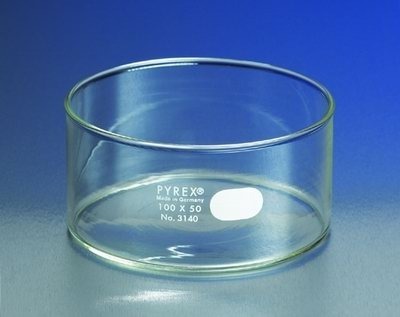
Tell us about your requirement

Price:
Quantity
Select Unit
- 50
- 100
- 200
- 250
- 500
- 1000+
Additional detail
Mobile number
Email

More Products in Scientific Instruments Category
Atomic Absporption Spectrophotometer
Temperature Range : Ambient to 3000C (Atomizer)
Display Type : Digital LCD Display
Weight : Approx. 65 kg
Capacity : 1100 samples/hour (typical)
Frequency : 50/60 Hz
Accuracy : 0.5% (or better)
Auto Karl Fischer Titrimeter
Temperature Range : 10C to 50C
Display Type : Digital LED display
Weight : 10 kg (approx.)
Capacity : Up to 100 ml burette capacity
Frequency : 50 Hz
Accuracy : 0.1% of moisture content
Single Stage Quartz Distillation
Temperature Range : Ambient to 100C
Display Type : Analog
Weight : Approx. 10 kg
Capacity : 110 Liters/hr
Frequency : 50 Hz
Accuracy : Up to 99% Purity
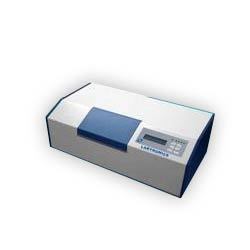
Digital Polarimeter
Temperature Range : 0C to 50C
Display Type : Digital Backlit LCD Display
Weight : Approx. 68 kg
Capacity : 2 ml200 ml (Sample Tube) / 8200 mm (Tube Length)
Frequency : 50 Hz / 60 Hz
Accuracy : 0.01

 Send Inquiry


Our Products
- Slit Lamp Ophthalmic Equipment
- Slit Lamp
- Surgical Equipments
- Laboratories Instruments Equipment
- Microscopes
- Scientific Instruments
- ENT Equipment
- Pharmacy instrument equipment
- Pathological Equipment
- Physics Lab Equipments
- Physics instruments
- Laboratory Glassware
- Digital Polarimeter
- Microprocessor Viscometer
- Double Beam UV-VIS Spectrophotometer
- Single Beam UV-Vis Spectrophotometer
- Kitchen equipments
- Dental Equipment
- Chapati Making Machines
- Water Heating System OR Hamam
- High Performance Liquid Chromatography Systems
- Chemistry
- Equipment Accessories
- Gynecology Equipment


B.O : 5430/3, Anaj Mandi, Science Market, Near Nigar Cinema,
R.O : 102-B Ram Nagar,Ambala Cantt - 133001, Haryana, India

Mr VISHAL KUMAR
(Managing Director)
Mobile :07971671031
 Send Inquiry
Developed and Managed by Infocom Network Private Limited.
