
Call us now :07971671031
 Send Inquiry
 Send Inquiry
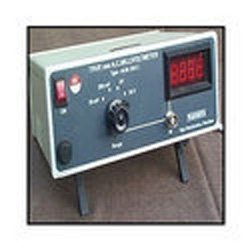
Digital Polarimeter
Digital Polarimeter Specification
- Feature
- Automatic Zero Setting, Digital Readout, User-Friendly Interface
- Automation Grade
- Semi-Automatic
- Frequency
- 50 Hz / 60 Hz
- Core Components
- Light Source, Detector, Display, Sample Tube
- Model No
- DP-20
- Capacity
- 2 ml—200 ml (Sample Tube) / 8-200 mm (Tube Length)
- Accuracy
- ±0.01°
- Voltage
- 220 V/110 V
- Power Source
- AC Electric
- Temperature Range
- 0°C to 50°C
- Measurement Range
- -180° to +180°
- Equipment Materials
- Stainless Steel, Glass, ABS Plastic
- Type
- Digital Polarimeter
- Usage
- Measurement of Optical Rotation / Laboratory Analysis
- Display Type
- Digital Backlit LCD Display
- Dimension (L*W*H)
- 500 x 135 x 220 mm
- Weight
- Approx. 6-8 kg
- Wavelength
- 589 nm (Sodium Lamp)
- Data Output
- Yes / Digital
- Light Source
- LED / Sodium Lamp
- Calibration
- Automatic Zero Calibration
- Sample Chamber Diameter
- 18 mm
- Observation Method
- Visual and Digital
- Resolution
- 0.01
- Interface
- RS-232 / USB (Optional)
- Sample Tube Material
- Borosilicate Glass
- Ambient Humidity
- 85% RH
About Digital Polarimeter
We offer wide range of Digital Automatic Polarimeterswith following specifications.
Specifications:
- Measurement Range : -45° - +45°, -120 °Z + 120 °Z
- Minimum Reading : 0.001 °Z and 0.01 °Z
Accuracy :
- +(0.01 °Z + Measurement value 0.05 %)
- +(0.03 °Z+ Measurement value 0.05 %)
- Repeatability (Standard Deviation) : < 0.00
- Minimum sample transmittance 1 %
Salient Features:
- Highly Stable & Accurate
- Domestic Advanced digital circuit and microcomputer control.
- LCD Display
- Storage of three times results for Re-M (Repetition measurement) and calculation of average value.
- RS 232 interface.
User-Friendly Operation & Digital Readout
Enjoy effortless measurements with the DP-20s digital backlit LCD display and intuitive user interface. Automatic zero calibration streamlines your workflow, minimizing manual adjustments and expediting the analysis process for consistent, accurate results.
Reliable Measurement and Versatile Sample Handling
With a resolution of 0.01, the DP-20 can measure optical rotation in a range from -180 to +180. The sample chamber accommodates various tube capacities and lengths, up to 200 ml and 200 mm respectively, ensuring adaptability for a wide spectrum of laboratory samples.
Robust Construction for Laboratory Use
Crafted from stainless steel, borosilicate glass, and ABS plastic, this polarimeter offers both durability and chemical resistance. Operating on AC power at 50/60 Hz (220V/110V), it suits diverse laboratory settings and ensures dependable performance.
FAQs of Digital Polarimeter:
Q: How does the automatic zero calibration feature work in the DP-20 digital polarimeter?
A: The automatic zero calibration function electronically adjusts the baseline for optical rotation measurements before sample analysis. This procedure ensures each reading starts from a standardized zero position, reducing error and simplifying the setup process.Q: What kind of samples can be analyzed with the DP-20 polarimeter?
A: The unit is designed to handle liquid samples within borosilicate glass tubes ranging from 2 ml to 200 ml in volume and up to 200 mm in length, making it suitable for various laboratory or research applications involving optical activity.Q: When is it recommended to use this polarimeters visual and digital observation methods?
A: The digital observation method is preferred for precise, documented measurements, while the visual method can be used for quick, qualitative assessments or when a manual cross-check is required, enhancing analytical flexibility.Q: Where can data from the DP-20 be exported or integrated?
A: Measured data can be digitally output via RS-232 or optional USB interface, allowing integration with laboratory information systems, computers, or printers for efficient record-keeping and further analysis.Q: What is the process for measurement using the DP-20 polarimeter?
A: Insert the sample tube filled with the solution, power on the unit, and initiate the automatic zero calibration. Subsequently, select the desired lamp source, adjust settings via the backlit LCD display, and begin measurement. Data is then available for export.Q: How does using a sodium lamp at 589 nm benefit optical rotation analysis in this device?
A: The 589 nm wavelength, generated by the sodium lamp, is a standard for optical rotation measurements. It provides high accuracy and comparability of results across experiments and industries, supporting reliable scientific analysis.Q: What advantages does the DP-20 provide for laboratory analysis?
A: Its semi-automatic operation, high accuracy (0.01), broad measurement range, automatic zero setting, durable materials, and flexible sample handling ensure efficient and dependable performance for various optical rotation measurement applications.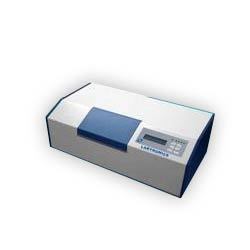
Tell us about your requirement

Price: Â
Quantity
Select Unit
- 50
- 100
- 200
- 250
- 500
- 1000+
Additional detail
Mobile number
Email

More Products in Scientific Instruments Category
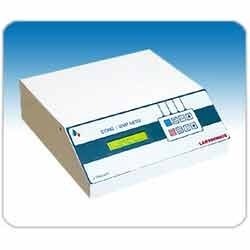
Microprocessor Based PH / Temperature / MV Meter
Usage : Laboratory, Industrial Use
Display Type : Digital LCD Display
Weight : 2.5 Kg
Temperature Range : 0°C to 100°C
Dimension (L*W*H) : 280 mm x 230 mm x 110 mm
Type : PH/Temperature/MV Meter
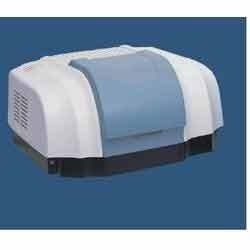
FTIR Spectrometer
Usage : Laboratory, Research, Chemical Analysis
Display Type : Digital
Weight : Approx 8 Kg
Temperature Range : Ambient
Dimension (L*W*H) : 450 mm à 380 mm à 170 mm
Type : FTIR Spectrometer
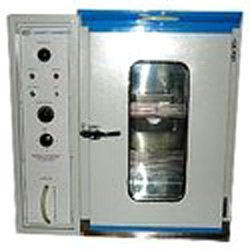
Humidity Chamber
Usage : Industrial, Laboratory Testing
Display Type : Digital Display
Weight : 45 kg
Temperature Range : 5C to 60C
Dimension (L*W*H) : 60 x 60 x 90 cm
Type : Humidity Chamber
Voltmeter
Usage : Electrical Measurement
Display Type : Analog Display
Weight : Approx. 250 grams
Temperature Range : 0C to 50C
Dimension (L*W*H) : 90 x 90 x 50 mm
Type : Analog Voltmeter

 Send Inquiry


Our Products
- Slit Lamp Ophthalmic Equipment
- Slit Lamp
- Surgical Equipments
- Laboratories Instruments Equipment
- Microscopes
- Scientific Instruments
- ENT Equipment
- Pharmacy instrument equipment
- Pathological Equipment
- Physics Lab Equipments
- Physics instruments
- Laboratory Glassware
- Digital Polarimeter
- Microprocessor Viscometer
- Double Beam UV-VIS Spectrophotometer
- Single Beam UV-Vis Spectrophotometer
- Kitchen equipments
- Dental Equipment
- Chapati Making Machines
- Water Heating System OR Hamam
- High Performance Liquid Chromatography Systems
- Chemistry
- Equipment Accessories
- Gynecology Equipment


B.O : 5430/3, Anaj Mandi, Science Market, Near Nigar Cinema,
R.O : 102-B Ram Nagar,Ambala Cantt - 133001, Haryana, India

Mr VISHAL KUMAR
(Managing Director)
Mobile :07971671031
 Send Inquiry
Developed and Managed by Infocom Network Private Limited.
