About Digital Conductivity Meters
We offer a huge variety of
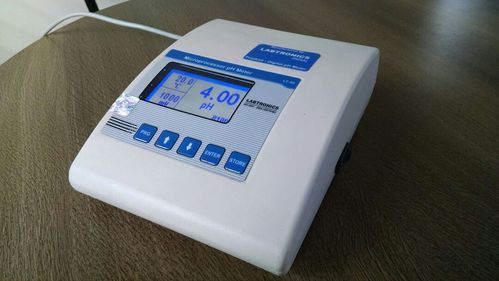
Digital Conductivity/TDS Meters to our customers. Highly accurate and stable, these are offered in field and lab models. These meters help to measure frequency and have adjustment facility in cell constant. We offer these meters in 5 ranges with model conductivity features. Our product has a weight of 2 kg with the dimension of 85 x 28 x 165 mm. In this, our range includes conductivity/TDS meters, photo colori meters, digital Ph meters, spectrophotometers and turbidity meters.
Salient Features
Model | Conductivity
LT16 Table Model | Conductivity
LT17 Portable Model |
Display | 3 1/2 Digit LED | 3 1/2 Digit LCD |
Range | 5 Ranges
0 - 1000 Mohs/cm | 2 Ranges
2 & 20 Mohs/cm |
Temperature Compensation | Manual 0-50oC | - |
Cell Constrant Adjustment | Adjustable | Pre Adjustable |
Conductivity Cell | Platinum DIP | Platinum DIP |
Measuring Frequency | 1000 Hz | 1000 Hz |
Accuracy | +1% FSI | +1% FSI |
Power | 230v + 10% | 1 x 9V Battery |
Dimensions | 76 x 275 x 175 mm | 85 x 28 x 165 mm |
Weight | 2 kg. (Approx.) | 0.8 kg. (Approx.) |
Accessories | Conductivity Cell,Operation Manual, Dust Cover |
These conductivity meters offer a broad measurement range from 0 to 200 mS/cm, making them suitable for applications in laboratories, industry, or educational settings. They measure the electrical conductivity of solutions, providing crucial information for quality control, research, and routine testing. With both bench-top and portable models available, users can select the ideal configuration for their needs.
User-Friendly Operation and CalibrationFeaturing either manual or automatic calibration (model specific), these meters ensure high-accuracy measurements while maintaining ease of use. The included platinum black-coated electrodes and calibration solutions streamline setup and maintenance, while digital displays with up to four digits facilitate clear result interpretation.
Built for Durability and ComplianceConstructed from ABS plastic and corrosion-resistant materials, these meters are IS/ISO certified and fuse-protected for safe operation. Designed to perform reliably within 5C to 45C and RH up to 85%, they are well-suited for diverse environments. Optional RS232/USB connectivity supports data management needs in modern laboratories.
FAQs of Digital Conductivity Meters:
Q: How do I calibrate the digital conductivity meter?
A: Calibration can be performed either manually or automatically, depending on the specific model. Follow the provided instruction manual using the included calibration solution and adjust the meter until the display matches the standard value. Automatic calibration models streamline this process for faster setup.
Q: What solutions and sample volumes are required for accurate measurement?
A: The meter requires the solution to be tested and an appropriate calibration solution. Sample volumes typically range from 10 to 50 ml, depending on the cell type. Make sure your sample matches the recommended volume for optimal accuracy.
Q: When should the conductivity cell or electrode be replaced?
A: Replace the conductivity cell or electrode if you notice unstable readings, a significant decrease in accuracy, or after frequent use in harsh chemical environments. Platinum black-coated electrodes are durable but can wear over time.
Q: Where can digital conductivity meters be used?
A: These meters are suitable for laboratories, industrial facilities, and educational institutions across India and globally. Their wide measurement range and robust design make them adaptable to various applications.
Q: What benefits does auto temperature compensation provide?
A: Auto temperature compensation ensures the accuracy of conductivity readings by automatically adjusting measurements for temperature variations. This feature is especially valuable when analyzing samples at different temperatures.
Q: How do I retrieve or export measurement data from the meter?
A: Models with optional RS232 or USB interfaces allow you to connect the meter to a computer for digital data transfer and further processing. This function enhances record-keeping, analysis, and reporting capabilities.

 Send Inquiry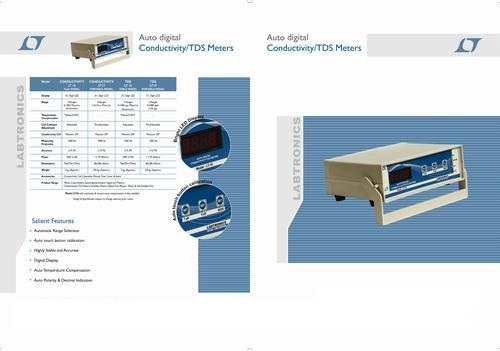

 Send Inquiry


 Send Inquiry





 Send Inquiry
