
Call us now :07971671031
 Send Inquiry
 Send Inquiry
Humidity Cabinet Complete With Fully Digital Contr
Humidity Cabinet Complete With Fully Digital Contr Specification
- Humidity
- 40% 95% RH
- Mounting Type
- Bench-top / Floor
- Test Range
- Settable via digital controller
- Automation Grade
- Fully Automatic
- Operating Voltage
- 230V AC
- Features
- Microprocessor control, Alarm system, Digital calibration
- Number of Specimens
- Up to 6
- Application
- Laboratory humidity control, material testing
- Interface Type
- Digital
- Equipment Type
- Humidity Cabinet
- Gas Pressure
- Atmospheric
- Response Time
- <5 seconds
- Port Size
- Standard 1/4 NPT
- Temperature
- 10C to 60C
- Frequency
- 50 Hz
- Resolution
- 0.1% RH / 0.1C
- Measuring Range
- 0% 100% RH
- Power Supply
- 230V AC, 50Hz
- Accuracy
- 2% RH, 1C
- Specimen Size
- 150 x 150 mm or custom
- Display Type
- Digital LCD
- Max Height
- 750 mm
- Usage
- Humidity and temperature testing
- Capacity
- 60 liters
- Machine Weight
- Approx. 55 Kg
- Test Speed
- Variable
- Test Width
- 450 mm
- Test Stroke
- 300 mm
- Control Mode
- Fully Digital Controller
- Mobility
- Caster wheels for easy movement
- Lighting
- Interior illumination with energy efficient LED
- Insulation
- Polyurethane foam, 75 mm thick
- Door Type
- Double walled, gasket sealed, viewing window
- Material of Construction
- Stainless Steel (Inner chamber), Powder coated MS (Outer chamber)
- Accessories Included
- Tray for specimens, Drainage system, Power cord
- Water Supply Mode
- Automatic water reservoir with low water alarm
- Safety Features
- Over-temperature protection, Auto cut-off, Audio thermostat alarm
- Shelves
- Removable, adjustable stainless steel shelves
About Humidity Cabinet Complete With Fully Digital Contr
Humidity Cabinet Complete With Fully Digital Controller And Automatic Tilting - Kfw
Machine specification
General specification as made out of stainless steel. The temperature can be controlled from 5 C to 50 C 2C and humidity from 30% to 95% 5% RH Temperature below ambient is controlled by hermetically sealed compressor complete with accessories provided below the unit. Two stainless steel water reservoirs heated by immersion heaters are provided to create humidity. Complete with all accessories. Control panel provided with control switches and indicators.
The manual of Digital Temp. Controller is enclosed with this manual but you shouldnt try to pre set the program for maintaining accuracy of temperature.
The Digital Temp. controlled the temperature before 15 to 20 as the set temperature and temperature will be increase or decrease slowly and maintain it on highest point as your requirement.
The Humidity controlled the humidity before 20 to 30 as the set humidity and humidity will be increase slowly and maintain it on highest point as your requirement.
CALIBRATION
The Automatic Control System incorporated into the Model 99 QW Controlled Environmental Chamber is calibrated prior to leaving the factory. However, as with all humidity and temperature measuring instruments, it should be recalibrated periodically to maintain its specified performance. Calibration of the System should be checked at least once or twice a year depending on the operating conditions and the required measurement accuracy. Complete calibration of the System is performed in two parts. The first part requires calibration of the Humidity and Temperature Control Units. The second part requires calibration of the humidity and temperature sensors in conjunction with the Control Units. Both the Control System and the sensors are easily removed from the Chamber by the following procedure: Open the large front door and loosen the hex cap on the bulkhead fitting holding the humidity (bottom) and the temperature (top) sensors in place. Push the sensors in towards the electronics section. Loosen the four captive fasteners securing the Control System to the Chamber. This system is a completely self-contained unit. Remove the System from the Chamber. Pull the sensors out of the bulkhead fittings and place them outside the Chamber. Remove the four captive fasteners securing the Control System to the Chamber. This system is a completely self-contained unit. Remove the System from the Chamber. Pull the sensors out of the bulkhead fittings and place them outside the Chamber. Remove the top and bottom covers from the Control Unit. The System is now ready for calibration. A calibrated digital voltmeter (DVM) with a 0.1 millivolt resolution and a variable 1 Volt (min) DC power source are required. For calibration of humidity, a calibrated humidity measuring instrument is required.
Precision Digital Control and Safety Features
Equipped with a fully digital controller, this humidity cabinet ensures accurate monitoring and adjustments of temperature and humidity. Advanced safety mechanisms such as over-temperature protection, auto cut-off, and audio thermostat alarm protect both the operator and samples, guaranteeing reliable and safe usage even for extended testing periods.
Adaptability and Convenience in Laboratory Settings
Designed for versatility, the cabinet features removable stainless steel shelves and accommodates various specimen sizes. With automatic water supply, drainage, energy-efficient LED lighting, and caster wheels, it simplifies laboratory workflow. It easily integrates into both bench-top and floor setups, providing user-friendly access and mobility for researchers and quality control technicians.
FAQs of Humidity Cabinet Complete With Fully Digital Contr:
Q: How does the humidity cabinet maintain precise humidity and temperature levels?
A: The cabinet uses a microprocessor-based digital controller, supported by a digital LCD display, to set and maintain humidity (40%95% RH) and temperature (10C to 60C) within tight accuracy tolerances (2% RH, 1C). An automatic water reservoir and rapid response time help achieve and sustain the desired environment efficiently.Q: What are the primary applications for this humidity cabinet?
A: This cabinet is ideal for laboratory humidity control, material and product testing, quality assurance, and research in scientific, industrial, and academic settings. It enables simulation of various environmental conditions, supporting processes such as stability testing, accelerated aging, and material evaluation.Q: When should the water reservoir be refilled or checked?
A: The water supply is automated; however, users are alerted with a low water alarm if refilling is required. Its advisable to monitor the audio and visual alarms during operation to ensure stable humidity control and prevent interruption of tests.Q: Where can the humidity cabinet be installed for optimal use?
A: It can be mounted on a bench-top or placed on the floor, offering flexibility in laboratory layout. Caster wheels allow easy movement, enabling the user to position it according to workflow needs, available space, or testing requirements.Q: What safety features protect both users and specimens during operation?
A: The cabinet offers over-temperature protection, automated cut-off, and an audio alarm thermostat. These safeguards prevent overheating, mechanical failures, and accidental sample loss, enhancing operator safety and preserving test integrity.Q: How are samples loaded and monitored inside the cabinet?
A: Specimens are placed on removable and adjustable stainless steel shelves. The double-walled, gasket-sealed door, along with a viewing window and interior LED lighting, allows users to monitor samples closely without disturbing the controlled environment.Q: What benefits does the digital interface and automation provide?
A: The digital controller, alarm system, and automated water supply streamline the operation, minimize manual intervention, and provide real-time information through the LCD display. This results in improved accuracy, data reliability, and overall efficiency for testing and research tasks.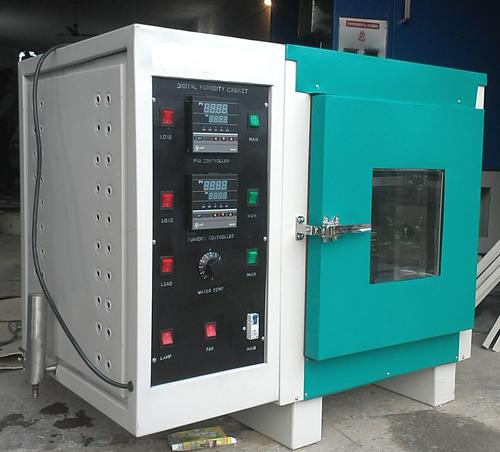
Tell us about your requirement

Price:
Quantity
Select Unit
- 50
- 100
- 200
- 250
- 500
- 1000+
Additional detail
Mobile number
Email

More Products in Testing & Measuring Equipment Category
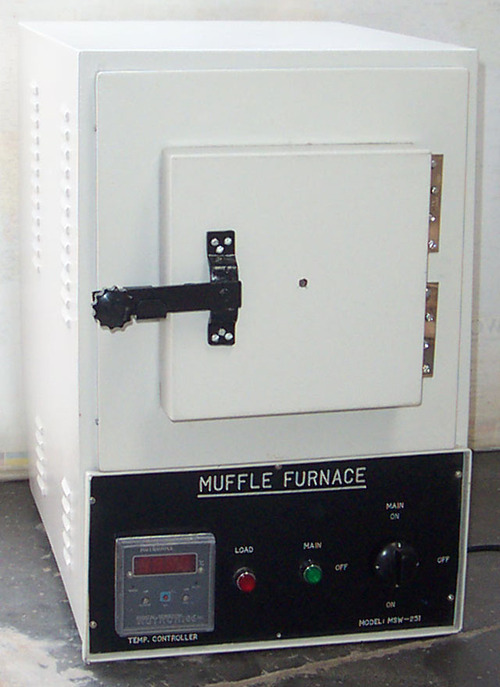
Rectangular Muffle Furnace Lab Science Lab Equipment
Mounting Type : Benchtop
Application : Ashing, Annealing, Sintering, Heat Treatment, Material Testing
Usage : Laboratory, research, industrial testing
Humidity : Ambient (not applicable)
Automation Grade : SemiAutomatic
Features : Highquality ceramic fiber insulation, long life heating elements, overtemperature protection, energy efficient
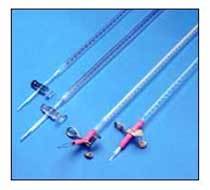
Volumetric Burette
Mounting Type : Clamp Stand Mountable
Application : Laboratory Liquid Measurement, Titration
Usage : Quantitative Chemical Analysis
Humidity : Up to 60% RH (Recommended)
Automation Grade : Manual
Features : Clear Calibrations, PTFE Stopcock, Durable Glass Construction, Chemical Resistant
Digital pH Meter
Mounting Type : Handheld
Application : Laboratory, water testing, aquariums, pools
Usage : pH Measurement
Humidity : 85% RH
Automation Grade : Manual
Features : Auto calibration, Portable, Lightweight
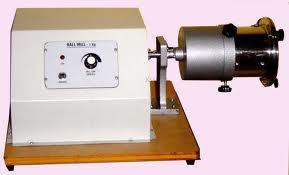
Ball Mill 1 Kg Healthcare,Lab&Life Sciencemedical
Mounting Type : Tabletop / Benchtop
Application : Laboratory, Healthcare, Pharmaceuticals, Science Research, Mixing and Grinding
Usage : Powder Mixing, Grinding, Sample Preparation
Humidity : Up to 90% RH (noncondensing)
Automation Grade : Manual
Features : Compact, Portable, Uniform Mixing & Grinding, Stainless Steel Drum

 Send Inquiry


Our Products
- Slit Lamp Ophthalmic Equipment
- Slit Lamp
- Surgical Equipments
- Laboratories Instruments Equipment
- Microscopes
- Scientific Instruments
- ENT Equipment
- Pharmacy instrument equipment
- Pathological Equipment
- Physics Lab Equipments
- Physics instruments
- Laboratory Glassware
- Digital Polarimeter
- Microprocessor Viscometer
- Double Beam UV-VIS Spectrophotometer
- Single Beam UV-Vis Spectrophotometer
- Kitchen equipments
- Dental Equipment
- Chapati Making Machines
- Water Heating System OR Hamam
- High Performance Liquid Chromatography Systems
- Chemistry
- Equipment Accessories
- Gynecology Equipment


B.O : 5430/3, Anaj Mandi, Science Market, Near Nigar Cinema,
R.O : 102-B Ram Nagar,Ambala Cantt - 133001, Haryana, India

Mr VISHAL KUMAR
(Managing Director)
Mobile :07971671031
 Send Inquiry
Developed and Managed by Infocom Network Private Limited.
