
Call us now :07971671031
 Send Inquiry
 Send Inquiry
Linear Expansion Horizontal
Linear Expansion Horizontal Specification
- Temperature Range
- Ambient to 100C
- Capacity
- 20 mm
- Accuracy
- 0.02 mm
- Feature
- Interchangeable Rods, High Accuracy, Durable
- Power Source
- None (Manual)
- Core Components
- Rod, Frame, Scale, Screw, Indicator
- Frequency
- Manual Operation (Non-electric)
- Automation Grade
- Manual
- Measurement Range
- 0-20 mm
- Model No
- LEH-100
- Equipment Materials
- Brass, Steel, Copper
- Type
- Linear Expansion Apparatus
- Usage
- Physics Laboratory Experiment
- Display Type
- Scale Graduation
- Dimension (L*W*H)
- 500 x 50 x 80 mm
- Weight
- Approx. 2 kg
- Application
- Physics, Material Science Experiments
- Apparatus Mounting
- Horizontal
- Operating Environment
- Laboratory, indoor
- Rod Material Options
- Brass, Steel, Copper (included in set)
- Thermal Application
- Measurement of coefficient of linear expansion
- Scale Type
- Vernier
- Scale Graduation
- 0.1 mm
About Linear Expansion Horizontal
KFW - Linear Expansion Horizontal
· Brass Pipe, meter. Brass pipe 50cm. dia 2.5cm., fitted with spherometer
· Two outlet nozzle for steam.
· Supplied complete with 3 nozzle test rodHigh-Accuracy Linear Expansion Measurement
This apparatus delivers highly accurate readings of material expansion during thermal application. The integrated vernier scale provides graduations of 0.1 mm, allowing detailed observation of linear changes as samples are subjected to controlled heating. Its 0.02 mm accuracy ensures trustworthy experimental results suitable for teaching and research.
Interchangeable Material Rods for Versatility
Included in the set are brass, steel, and copper rods, allowing comparative analysis across different materials. The apparatus features easy interchangeability of rods, empowering users to study varying expansion properties and draw insights into real-world material behavior under thermal stress.
Durable and User-Friendly Laboratory Solution
Built for frequent laboratory use, this robust apparatus is constructed from quality materials and designed for stability. Manual operations mean there are no electrical requirements, while the compact dimensions ensure it fits well on laboratory benches. Its an ideal choice for physics practicals and material science demonstrations.
FAQs of Linear Expansion Horizontal:
Q: How is the coefficient of linear expansion measured using this apparatus?
A: The set operates by heating the chosen metal rod (brass, steel, or copper) within the temperature range of ambient to 100C while it is mounted horizontally. The expansion is measured through the vernier scale, displaying rod elongation with a graduation of 0.1 mm. This change in length, along with the initial length and temperature variation, is used to calculate the materials coefficient of linear expansion.Q: What materials can be tested with the apparatus and can rods be replaced?
A: The apparatus comes equipped with rods made of brass, steel, and copper. These rods are easily interchangeable, allowing users to test and compare how different materials respond to thermal expansion, making the device suitable for a variety of experiments in material science and physics.Q: When should this linear expansion apparatus be used?
A: This equipment is designed for use in laboratory and indoor environments. It is suitable during physics or material science practical sessions, especially when the goal is to measure or compare the linear expansion properties of metals under controlled heating from ambient up to 100C.Q: Where is the apparatus best utilized within a laboratory setting?
A: The linear expansion apparatus is designed with dimensions of 500 x 50 x 80 mm, making it compact and easy to mount horizontally on standard laboratory benches. It requires no electrical power, making it adaptable to a variety of lab configurations.Q: What is the process for operating this apparatus?
A: Operation involves mounting the chosen rod horizontally, setting the initial position on the vernier scale, and gradually applying heat while observing the scale. As the rod expands, the displacement is read directly from the scale, allowing the calculation of the coefficient based on length changes and temperature increase.Q: What benefits does this apparatus provide over other measurement techniques?
A: This manual, non-electric apparatus provides direct, accurate readings with high durability. The vernier scales fine graduations and interchangeable rods add to its versatility, while its robust construction ensures longevity, making it a reliable choice for repeated laboratory use.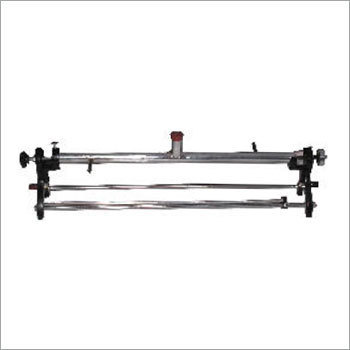
Tell us about your requirement

Price:
Quantity
Select Unit
- 50
- 100
- 200
- 250
- 500
- 1000+
Additional detail
Mobile number
Email

More Products in Physics Lab Equipments Category
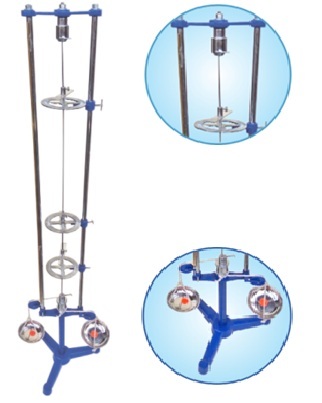
Torsion Apparatus Vertical
Type : Vertical Torsion Testing Apparatus
Model No : TAV3256
Automation Grade : Manual
Core Components : Scale, Torsion Rod, Weights, Jaws, Base Stand
Dimension (L*W*H) : 600 mm x 250 mm x 700 mm
Feature : High precision, Rigid construction, Easy to use
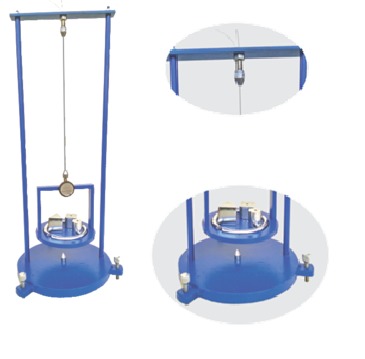
Inertia Table Movement
Type : Table Top Movement Apparatus
Model No : ITM3252
Automation Grade : Manual
Core Components : Disc, Support Stand, Scale, Movable Table
Dimension (L*W*H) : 600 mm x 330 mm x 900 mm
Feature : Heavy Duty, Stable Base, Locking Mechanism
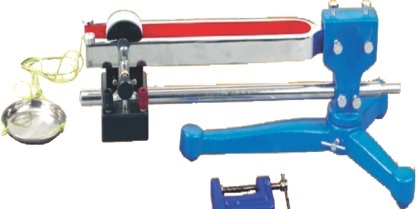
Melde's Apparatus ( OSAW Pattern)
Type : Meldes Apparatus (OSAW Pattern)
Model No : OSAW Standard Pattern
Automation Grade : Manual
Core Components : Heavy cast iron base, vertical metal rod, pulley with clamp, scale, string, pan, tuning fork holder
Dimension (L*W*H) : Base size approx. 40 x 7 x 4 cm
Feature : Stable base, smooth pulley, easy mounting for tuning fork, scale for length measurement
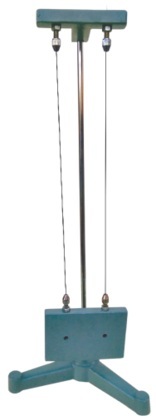
Bifilar Pendulum (Iron)
Type : Physics Laboratory Apparatus
Model No : BPIRON3255
Automation Grade : Manual operation
Core Components : Iron Bar, supporting frame, bifilar suspension threads
Dimension (L*W*H) : Approx. 30 cm x 10 cm x 12 cm
Feature : Robust construction, high accuracy, easy setup

 Send Inquiry


Our Products
- Slit Lamp Ophthalmic Equipment
- Slit Lamp
- Surgical Equipments
- Laboratories Instruments Equipment
- Microscopes
- Scientific Instruments
- ENT Equipment
- Pharmacy instrument equipment
- Pathological Equipment
- Physics Lab Equipments
- Physics instruments
- Laboratory Glassware
- Digital Polarimeter
- Microprocessor Viscometer
- Double Beam UV-VIS Spectrophotometer
- Single Beam UV-Vis Spectrophotometer
- Kitchen equipments
- Dental Equipment
- Chapati Making Machines
- Water Heating System OR Hamam
- High Performance Liquid Chromatography Systems
- Chemistry
- Equipment Accessories
- Gynecology Equipment


B.O : 5430/3, Anaj Mandi, Science Market, Near Nigar Cinema,
R.O : 102-B Ram Nagar,Ambala Cantt - 133001, Haryana, India

Mr VISHAL KUMAR
(Managing Director)
Mobile :07971671031
 Send Inquiry
Developed and Managed by Infocom Network Private Limited.
