
Call us now :07971671031
 Send Inquiry
 Send Inquiry
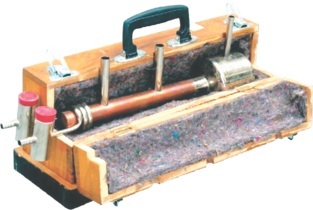
Linear Expansion Vertical
Linear Expansion Vertical Specification
- Core Components
- Dial Gauge, Expansion Rods, Water bath, Heating Element
- Capacity
- 6 mm to 10 mm linear expansion measurement
- Power Source
- Electric
- Temperature Range
- Room temperature to 100C
- Voltage
- 220 V
- Feature
- High precision measurement, Easy to operate
- Frequency
- 50 Hz
- Measurement Range
- 0 to 10 mm expansion
- Model No
- LEVA-2024
- Automation Grade
- Manual
- Accuracy
- 0.01 mm
- Equipment Materials
- Brass rod, Stainless steel frame, Glass tube, Heating coil
- Type
- Vertical Linear Expansion Apparatus
- Usage
- Measurement of linear expansion in solids for laboratory experiment
- Display Type
- Graduated Scale with Vernier
- Dimension (L*W*H)
- Approx. 400 mm x 150 mm x 350 mm
- Weight
- Approx. 2.5 kg
- Heating Element Power
- 250 W
- Application
- Physics Laboratory, Educational Institutions
- Surface Finish
- Powder coated
- Operation Mode
- Bench-top
- Rod Diameter
- 8 mm
- Safety Feature
- Thermal cut-off switch
- Packaging
- Foam box with user manual included
- Number of Rods
- 3 (Brass, Copper, Steel)
- Calibration
- Factory calibrated
About Linear Expansion Vertical
KFW - Linear Expansion Vertical: ½ meter.
KFW-A Linear Expansion Vertical: 1 meter.
- Consist of a chrome plated brass pipe fitted on a superior quality spherometer.
- Inlet & Outlet steam tubes.
- Complete with 3 test rod
Precision and Versatility for Laboratory Studies
With a measurement range of 0 to 10 mm and high accuracy of 0.01 mm, this apparatus is ideal for demonstrating and measuring linear expansion in solids during physics experiments. Its three rodsbrass, copper, and steelallow students to compare material properties under controlled heating, essential for comprehensive educational applications.
User-Friendly and Safe Operation
The unit is designed for easy, manual operation on a standard laboratory bench. Featuring a 250 W heating element, its built-in thermal cut-off switch ensures safety during use. Calibration is completed at the factory, so the device is ready for immediate deployment, supported by clear instructions in the supplied user manual.
FAQs of Linear Expansion Vertical:
Q: How does the Vertical Linear Expansion Apparatus operate in the laboratory?
A: The apparatus functions by heating one of its interchangeable rods (brass, copper, or steel) with a 250 W electric element. As the rod expands, its movement is measured on a graduated vernier scale, allowing precise determination of linear expansion between 0 and 10 mm.Q: What materials are included for linear expansion experiments and why?
A: Three rods made of brass, copper, and steel are included to facilitate comparative analysis of how different metals expand with heat. These materials have distinct coefficients of expansion, enriching physics experiments and student learning.Q: When should the apparatus be calibrated before use?
A: Factory calibration is performed before shipment, ensuring ready-to-use accuracy (0.01 mm). Recalibration is not necessary before initial use; however, periodic verification is recommended according to your institutions maintenance schedule.Q: Where is the best setting to utilize this apparatus?
A: It is best operated on a stable laboratory bench in educational institutions, physics labs, or research facilities. The compact dimensions make it convenient for bench-top setups where precise mechanical measurement is required.Q: What is the process of measuring linear expansion with this device?
A: To measure expansion, select the desired rod, set the initial reading on the graduated scale, then turn on the electric heating element. As the rod heats and expands, the movement is tracked on the vernier scale, allowing accurate measurement of the change in length.Q: How does the thermal cut-off switch enhance user safety during operation?
A: The integrated thermal cut-off switch automatically interrupts power to the heating element if it overheats, preventing damage to the device and reducing the risk of accidents, thus ensuring safe laboratory operation.Q: What benefits does this apparatus offer for educational institutions?
A: The Vertical Linear Expansion Apparatus facilitates clear demonstration of thermal expansion concepts, provides high accuracy measurements, and is easy to operate. Its robust construction and foam box packaging ensure long service life, making it ideal for repeated use in educational environments.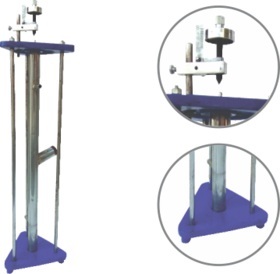
Tell us about your requirement

Price:
Quantity
Select Unit
- 50
- 100
- 200
- 250
- 500
- 1000+
Additional detail
Mobile number
Email

More Products in Physics Lab Equipments Category
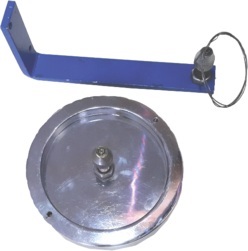
Torsion Pendulum
Usage : Educational, Laboratory, Demonstration Purpose
Automation Grade : Manual
Accuracy : High (up to 0.01 gcm)
Display Type : Analog
Equipment Materials : Stainless Steel Rod, Cast Iron Base, Brass Cylinder
Core Components : Torsion wire, Cylinder, Stand, Scale, Pointer
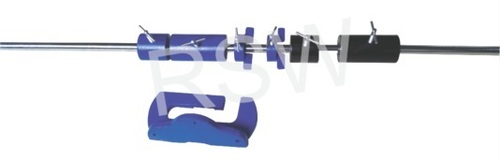
Katers Pendulum
Usage : Measurement of gravitational acceleration; educational and laboratory experiments
Automation Grade : Manual
Accuracy : Up to 0.001 s timing precision, 0.1 cm length adjustment
Display Type : Not applicable (manual/physical measurement)
Equipment Materials : Brass and steel (pendulum rod and knife edges); cast iron (stand)
Core Components : Metallic pendulum rod, adjustable knife edges, weights, rigid stand
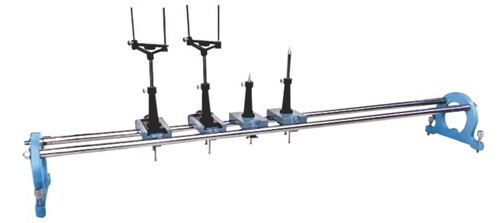
Optical Bench
Usage : Physics Laboratory Experiments, Demonstration of Optical Principles
Automation Grade : Manual
Accuracy : Graduated scale to 1 mm
Display Type : N/A (Manual / Nondigital)
Equipment Materials : Stainless Steel Scale with heavy cast iron base, metallic component holders
Core Components : Bench scale, optical rider supports, component holders, leveling screws
Searle's Apparatus
Usage : Determination of thermal conductivity of metals
Automation Grade : Manual
Accuracy : High, dependent on user and instrument calibration
Display Type : Analog (measurement by scale and vernier)
Equipment Materials : Brass and Copper rods, wooden supports, metal stands
Core Components : Metal rod specimen, thermometer, heating arrangement, stands

 Send Inquiry


Our Products
- Slit Lamp Ophthalmic Equipment
- Slit Lamp
- Surgical Equipments
- Laboratories Instruments Equipment
- Microscopes
- Scientific Instruments
- ENT Equipment
- Pharmacy instrument equipment
- Pathological Equipment
- Physics Lab Equipments
- Physics instruments
- Laboratory Glassware
- Digital Polarimeter
- Microprocessor Viscometer
- Double Beam UV-VIS Spectrophotometer
- Single Beam UV-Vis Spectrophotometer
- Kitchen equipments
- Dental Equipment
- Chapati Making Machines
- Water Heating System OR Hamam
- High Performance Liquid Chromatography Systems
- Chemistry
- Equipment Accessories
- Gynecology Equipment


B.O : 5430/3, Anaj Mandi, Science Market, Near Nigar Cinema,
R.O : 102-B Ram Nagar,Ambala Cantt - 133001, Haryana, India

Mr VISHAL KUMAR
(Managing Director)
Mobile :07971671031
 Send Inquiry
Developed and Managed by Infocom Network Private Limited.
