
Call us now :07971671031
 Send Inquiry
 Send Inquiry
Liquid Chromatography System
Liquid Chromatography System Specification
- Temperature Range
- Room Temperature to 60°C
- Model No
- LCS-500
- Capacity
- 2 ml to 500 ml (fraction collector/sample loop dependent)
- Voltage
- 220V AC
- Frequency
- 50/60 Hz
- Core Components
- Pump, Detector, Sample Injector, Column, Fraction Collector, Control Unit
- Measurement Range
- 0.01 mL/min to 10 mL/min
- Power Source
- AC 220V
- Feature
- High precision flow control, auto-sampler, touch panel operation, programmable gradient elution
- Accuracy
- ±1% (Flow rate setting accuracy)
- Automation Grade
- Fully Automatic
- Equipment Materials
- Corrosion-resistant stainless steel and chemically resistant polymers
- Type
- Automated Liquid Chromatography System
- Usage
- Laboratory analysis of liquid samples, purification, and separation
- Display Type
- Digital LCD Display with keypad interface
- Dimension (L*W*H)
- 550 mm x 450 mm x 370 mm
- Weight
- Approx 25 kg
- Detector Type
- UV/VIS Detector (190-700 nm)
- Noise Level
- <60 dB
- Pump Type
- Dual Piston High-Pressure Pump
- Maximum Pressure
- 40 MPa (400 bar)
- Eluent Management
- Quaternary gradient mixing
- Sample Capacity
- Up to 120 samples with auto-sampler
- Software Compatibility
- Compatible with Windows-based chromatography software
- Column Compatibility
- Compatible with all standard analytical and preparative columns
- Flow Rate Range
- 0.01 mL/min to 10 mL/min
- Safety Features
- Over-pressure and leakage protection, auto shutdown
- Data Output Interface
- USB, RS232, LAN
About Liquid Chromatography System
Feature:-| LT-3200 | HPLC - Isocrated System | High Pressure Solvent Delivery Pump Multi Wavelength UV-Detector Sample Inject Valve - (Rheodyne 7725 I) Lc Column (Usa) - {C18(4.6 X 250)mm} Workstation Software |
Superior Analytical Performance
Built for laboratory professionals, the LCS-500 delivers highly accurate and reliable separation and purification of liquid samples. Its quaternary gradient mixing feature and broad flow rate range make it adaptable to a variety of analytical workflows, supporting complex elution profiles and diverse sample types.
User-Friendly Automation
Designed for seamless operation, this model integrates an auto-sampler with a capacity for 120 samples and a programmable touch panel for intuitive management. Automated safety features, including over-pressure and leakage protection with auto shutdown, promote secure and efficient laboratory practices.
Versatile Connectivity & Compatibility
Data integration is effortless with the LCS-500, thanks to its multiple output interfaces: USB, RS232, and LAN. It supports all standard analytical and preparative columns, while the systems software compatibility ensures streamlined control with Windows-based chromatography programs.
FAQs of Liquid Chromatography System:
Q: How does the LCS-500 Liquid Chromatography System ensure accurate sample separation?
A: The LCS-500 employs a dual piston high-pressure pump with precise flow rate settings (1% accuracy), quaternary gradient mixing, and a broad flow range (0.0110 mL/min). These features, combined with advanced UV/VIS detection, allow for highly accurate sample separation and purification.Q: What is the maximum sample capacity of the auto-sampler, and how is it beneficial for large laboratories?
A: The automated auto-sampler can handle up to 120 samples, significantly increasing throughput for high-volume laboratories and reducing manual intervention, which enhances efficiency and reproducibility in workflows.Q: When should the safety features like over-pressure protection be activated during operation?
A: Safety features such as over-pressure and leakage protection, along with auto shutdown, are automatically triggered by the system whenever anomalous pressure or leakage is detected, thus preventing equipment damage and ensuring user safety.Q: Where can data from the LCS-500 be exported or monitored?
A: Data output is supported via USB, RS232, and LAN interfaces, enabling easy export to laboratory computers and monitoring systems. The system is fully compatible with Windows-based chromatography software for real-time data management.Q: What types of columns are compatible with this chromatography system?
A: The LCS-500 is designed for full compatibility with all standard analytical and preparative columns, allowing flexible application across various laboratory protocols and sample types.Q: How does the temperature control improve analytical outcomes in liquid chromatography?
A: The built-in temperature range (room temperature to 60C) allows for optimized separations, as certain analyses benefit from thermal control, improving resolution, and reproducibility for specific compounds.Q: What materials are used in the construction of the LCS-500, and why is this important for laboratory applications?
A: The system is constructed from corrosion-resistant stainless steel and chemically resistant polymers, ensuring longevity, robustness, and resistance to harsh solvents or reagents commonly used in chromatographic analyses.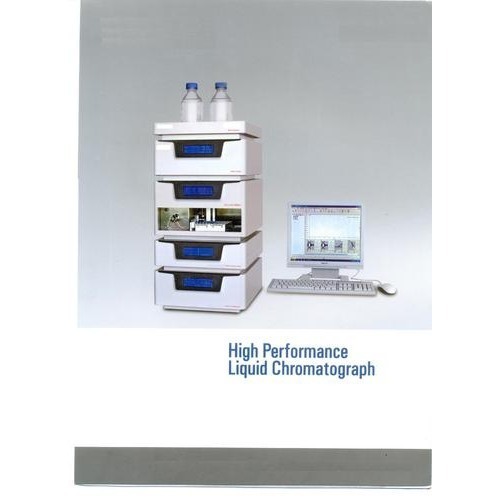
Tell us about your requirement

Price:
Quantity
Select Unit
- 50
- 100
- 200
- 250
- 500
- 1000+
Additional detail
Mobile number
Email

More Products in Scientific Instruments Category
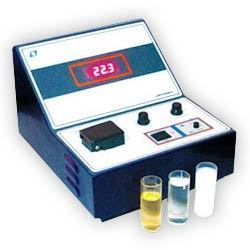
Digital Turbidity Meters
Model No : Turbid100
Temperature Range : 5C to 50C
Capacity : Up to 1000 NTU
Weight : Approx. 2.5 kg
Display Type : Digital LED
Feature : Auto Calibration, High Accuracy, Low Maintenance
Atomic Absporption Spectrophotometer
Model No : AAS2404
Temperature Range : Ambient to 1000°C (Burner)
Capacity : Single or Double Element Measurement
Weight : 4560 kg (Depends on Model)
Display Type : Digital LCD Display
Feature : High Sensitivity, Automated Motorized Flame, Safety Interlock, Background Correction
Physics Lab Experiment Kits
Model No : PHEX2024
Temperature Range : 10°C to 110°C
Capacity : Various (set includes multiple experiment modules with different capacities)
Weight : Approx. 4.5 kg (complete kit)
Display Type : Analog and Digital scales depending on experiment
Feature : Modular kit, easy to assemble, suitable for STEM education
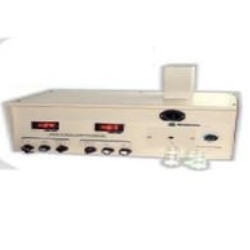
Digital Flame Photometers
Model No : DFP1
Temperature Range : Ambient to 900°C
Capacity : 4 channels (Na, K, Ca, Li)
Weight : Approx. 6 kg
Display Type : Digital LED display
Feature : Auto ignition; auto shutoff; high precision; stable flame

 Send Inquiry


Our Products
- Slit Lamp Ophthalmic Equipment
- Slit Lamp
- Surgical Equipments
- Laboratories Instruments Equipment
- Microscopes
- Scientific Instruments
- ENT Equipment
- Pharmacy instrument equipment
- Pathological Equipment
- Physics Lab Equipments
- Physics instruments
- Laboratory Glassware
- Digital Polarimeter
- Microprocessor Viscometer
- Double Beam UV-VIS Spectrophotometer
- Single Beam UV-Vis Spectrophotometer
- Kitchen equipments
- Dental Equipment
- Chapati Making Machines
- Water Heating System OR Hamam
- High Performance Liquid Chromatography Systems
- Chemistry
- Equipment Accessories
- Gynecology Equipment


B.O : 5430/3, Anaj Mandi, Science Market, Near Nigar Cinema,
R.O : 102-B Ram Nagar,Ambala Cantt - 133001, Haryana, India

Mr VISHAL KUMAR
(Managing Director)
Mobile :07971671031
 Send Inquiry
Developed and Managed by Infocom Network Private Limited.
