
Call us now :07971671031
 Send Inquiry
 Send Inquiry
Nessler Cylinder
Nessler Cylinder Specification
- Measurement Range
- Up to maximum cylinder capacity
- Automation Grade
- Manual
- Accuracy
- Graduated up to 1 ml (for 100 ml size)
- Feature
- Clear Graduation, High Chemical Resistance, Leak-proof
- Core Components
- Glass Cylinder with Graduations
- Model No
- Customized / Standard (as per supplier)
- Temperature Range
- Ambient to 100C (approx.)
- Capacity
- 50 ml / 100 ml / 250 ml (commonly available)
- Equipment Materials
- Borosilicate Glass
- Type
- Nessler Cylinder, Flat Bottom / Round Bottom
- Usage
- Colorimetric Analysis, Laboratory Chemical Testing
- Display Type
- Transparent Graduated Markings
- Dimension (L*W*H)
- Varies by capacity (e.g. 21 x 150 mm for 100 ml)
- Weight
- Approx. 50-150 grams (varies by capacity)
- Color
- Clear Transparent
- Compliance
- Conforms to relevant laboratory quality standards
- Surface Finish
- Smooth, Polished
- Application
- Water Analysis, Ammonia Test, Laboratory Use
- Reusable
- Yes, autoclavable
- Packaging
- Individually wrapped or bulk packed
- Shape
- Round or Flat Bottom
- Graduation Interval
- 1 ml or 2 ml (depends on size)
- Sterility
- Non-Sterile
- Chemically Resistant
- Yes
About Nessler Cylinder
Our organization is involved in offering optimum quality Nessler Cylinders. These are manufactured using superior-quality material and machines that run on advanced technologies. Moreover, the products we offer are designed as per the highest national and international standards. Clients can avail these at market-leading rates via various payment options. Owing to the following properties, we have been able to expand our client base:
- Accurate
- Efficient
- Reliable performance
Optimal Design for Precision Water Analysis
Nessler Cylinders are expertly constructed from chemically resistant borosilicate glass, ensuring durability and resistance against most laboratory chemicals. The clear, transparent surfaces and polished finish allow for unobstructed viewing during colorimetric analysis, vital for tests such as ammonia estimation in water samples. Each cylinder features accurate, easy-to-read graduated markings to facilitate reliable volume measurements.
Versatile Use in Laboratory Settings
These cylinders support a broad temperature range from ambient conditions to approximately 100C, making them ideal for various water analysis and chemical testing applications. Available in both flat and round bottom designs, the Nessler Cylinder adapts seamlessly to different experimental setups. Their manual operation and robust construction enable repeated autoclaving for safe reuse.
FAQ's of Nessler Cylinder:
Q: How is a Nessler Cylinder used in water analysis or ammonia tests?
A: A Nessler Cylinder is filled with a water sample and used to visually assess color changes following the addition of reagents, such as Nessler's reagent for ammonia testing. The transparent, graduated glass enables precise measurement of sample and reagent volumes, allowing for accurate colorimetric determination.Q: What are the benefits of using borosilicate glass Nessler Cylinders?
A: Borosilicate glass Nessler Cylinders offer high chemical resistance, excellent thermal stability, and durability under repeated use and autoclaving. Their smooth, polished surfaces ensure clarity and reduce contamination, making them ideal for laboratory environments.Q: When should I choose a flat or round bottom Nessler Cylinder?
A: Choose a flat bottom Nessler Cylinder for stability during analysis on flat surfaces and ease of handling. A round bottom variant may be preferred for certain types of stirring or cleaning requirements. Selection depends on specific laboratory protocols and user preference.Q: Where are Nessler Cylinders commonly applied?
A: Nessler Cylinders are commonly used in laboratories for water quality testing, chemical analysis, and colorimetric experiments, especially where precise volume measurement and color comparison are required, such as in environmental monitoring or research labs.Q: What makes the graduated markings on Nessler Cylinders beneficial for laboratory use?
A: The accurate, transparent graduated markings (in 1 or 2 ml intervals) ensure precise volume measurement, which is crucial for repeatable colorimetric analysis and chemical testing. This feature directly contributes to the reliability and consistency of analytical results.Q: How should Nessler Cylinders be cleaned and maintained for reuse?
A: After each use, wash the cylinder with suitable laboratory glassware detergent and rinse thoroughly with distilled water. For sterilization, the cylinder can be autoclaved, ensuring it is completely dry before reuse to maintain accuracy and longevity.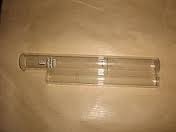
Tell us about your requirement

Price:
Quantity
Select Unit
- 50
- 100
- 200
- 250
- 500
- 1000+
Additional detail
Mobile number
Email

More Products in Scientific Instruments Category
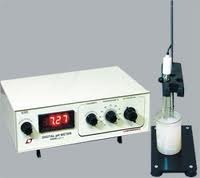
Digital PH, Conductivity & Temperature Meter
Usage : Laboratory, Water Treatment, Industrial
Automation Grade : Automatic
Dimension (L*W*H) : 200 x 175 x 75 mm
Weight : Approx. 2.5 kg
Equipment Materials : ABS Plastic Casing
Capacity : 1 Piece/Day
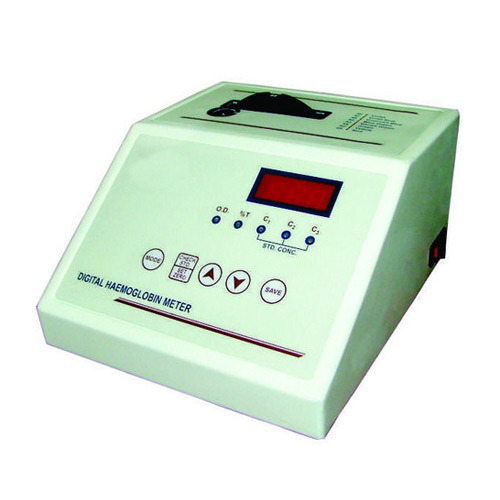
Digital Hemoglobin Meter
Usage : Laboratory, Clinical, Hospital
Automation Grade : SemiAutomatic
Dimension (L*W*H) : 180 x 125 x 45 mm
Weight : Approx. 500g
Equipment Materials : ABS Plastic Body
Capacity : 0100% (Measurement range)
Digital Polarimeter
Usage : Measurement of Optical Rotation / Laboratory Analysis
Automation Grade : SemiAutomatic
Dimension (L*W*H) : 500 x 135 x 220 mm
Weight : Approx. 68 kg
Equipment Materials : Stainless Steel, Glass, ABS Plastic
Capacity : 2 ml—200 ml (Sample Tube) / 8200 mm (Tube Length)
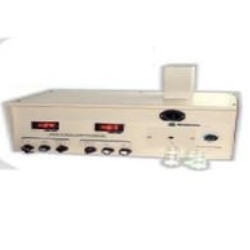
Digital Flame Photometers
Usage : Laboratory chemical analysis of Na, K, Li, Ca
Automation Grade : Semiautomatic
Dimension (L*W*H) : 330 x 260 x 280 mm
Weight : Approx. 6 kg
Equipment Materials : MS Powder Coated & SS Parts
Capacity : 4 channels (Na, K, Ca, Li)

 Send Inquiry


Our Products
- Slit Lamp Ophthalmic Equipment
- Slit Lamp
- Surgical Equipments
- Laboratories Instruments Equipment
- Microscopes
- Scientific Instruments
- ENT Equipment
- Pharmacy instrument equipment
- Pathological Equipment
- Physics Lab Equipments
- Physics instruments
- Laboratory Glassware
- Digital Polarimeter
- Microprocessor Viscometer
- Double Beam UV-VIS Spectrophotometer
- Single Beam UV-Vis Spectrophotometer
- Kitchen equipments
- Dental Equipment
- Chapati Making Machines
- Water Heating System OR Hamam
- High Performance Liquid Chromatography Systems
- Chemistry
- Equipment Accessories
- Gynecology Equipment


B.O : 5430/3, Anaj Mandi, Science Market, Near Nigar Cinema,
R.O : 102-B Ram Nagar,Ambala Cantt - 133001, Haryana, India

Mr VISHAL KUMAR
(Managing Director)
Mobile :07971671031
 Send Inquiry
Developed and Managed by Infocom Network Private Limited.
