
Call us now :07971671031
 Send Inquiry
 Send Inquiry
Microprocessor Conductivity TDS Meter
Microprocessor Conductivity TDS Meter Specification
- Capacity
- 0 to 199.9 S, 200 to 1999 S, 2.00 to 19.99 mS, 20.0 to 199.9 mS (auto/manual range selection)
- Frequency
- 50 Hz
- Automation Grade
- Automatic
- Power Source
- 230V 10% AC, 50 Hz
- Temperature Range
- 0C to 100C (Auto/Manual Compensation)
- Model No
- MICROCON-2
- Measurement Range
- Conductivity: 0 to 199.9 mS/cm; TDS: 0 to 199.9 g/l
- Feature
- Automatic Cell Constant Correction, Auto Range Selection, TDS Measurement, Temperature Compensation
- Core Components
- Microprocessor, Conductivity Cell, Power Supply Unit
- Accuracy
- 1% of F.S. 1 Digit
- Voltage
- 230V
- Equipment Materials
- ABS Housing / Stainless Steel Electrodes
- Type
- Table-Top Microprocessor Based
- Usage
- Laboratory/Industrial Conductivity & TDS Measurement
- Display Type
- 6 Digit LED Digital Display
- Dimension (L*W*H)
- 314 x 222 x 110 mm
- Weight
- 3.5 kg approx.
- Cell Constant
- Factory set, Auto/manual adjustable 0.1, 1.0, 10.0
- Operating Temperature
- 5C to 45C
- Data Output
- RS232C (Optional)
- Resolution
- 0.1 S/cm, 1 S/cm, 0.01 mS/cm, 0.1 mS/cm
- TDS Factor
- Adjustable, typically 0.47 - 1.00
- Sensor Probe
- Platinum Conductivity Cell (Included)
- Input Impedance
- >1012 Ohm
- Calibration
- Automatic / Manual
- Storage Humidity
- <80% RH non-condensing
About Microprocessor Conductivity TDS Meter
We offer wide range of Microprocessor Conductivity TDS Meter.
Specifications:
Conductivity:
Range:
- 0 to 1000 milli mho in5ranges
Range Selection Automatic:
- 0 to 20 micro mho
- 20 to 200 micro mho
- 200 to 2 milli mho
- 2 to 20 milli mho
- 20 to 200 milli mho
- 200 to 1000 milli mho
- Resolution 0.1 micro mho
- Cell Constant Adjustable
- Temperature co-eff. Adjustable between 0 to 4%
- Temperature Comp. Automatic for entire range
- Accuracy +0.5% of range + 1 digit
TDS:
- Range 0 to 200 ppt in 5 ranges
- Range Selection Automatic
- Resolution 0.1 ppm
- TDS Factor 0.5 and adjustable manually
Salinity:
- Range 0 to 50 ppt
- Resolution 0.1 ppt
- Accuracy +0.5% of range + 1 digit
- Temperature Comp. Automatic
- Salinity Factor .75 and Adjustable Manually
Temperature:
- Range -200 TO +200 ºC
- Resolution 0.1 ºC
- Accuracy + 0.2 %
- Input Type Pt 100
- Calibration MANUAL
- Display : 16 Character * 2 Lines Alphanumeric Lcd.
- Display Format : Temp & Cond Or Temp & Tds , Temp& Sal Simultaneously
- Setting : By Soft Touch Keys
- Storage : 1000 Samples With Date &Time
- Interface : Rs-232, Centronics & Computer
- Real Time Display : 24 Hour Mode With Date
- Error Indication : T- Error, Cal Error
- Power Supply : 230 V ±10% Ac 50 Hz
- Digital Output : ASerial Rs-232
- Print Format : AAll Data
Precision Measurement for Laboratories and Industry
The MICROCON-2 delivers reliable and accurate conductivity and TDS readings, making it essential in laboratories and diverse industrial settings. Its flexibility in cell constant adjustment and TDS factor ensures suitability for various water and solution analyses, while automatic temperature compensation allows precise results across a wide thermal range.
Efficient Calibration and Easy Operation
With both automatic and manual calibration modes, the meter simplifies routine maintenance and ensures ongoing measurement integrity. The clear 6-digit LED display enables effortless reading, and the intuitive controls support efficient range selection and adjustment for different testing requirements.
Versatility Supported by Robust Design
Equipped with a platinum conductivity cell and sturdy ABS housing, this meter endures frequent use and harsh conditions. Its auto cell constant correction, wide measurement range, and TDS measurement features meet the rigorous demands of professional laboratories and industrial quality control.
FAQs of Microprocessor Conductivity TDS Meter:
Q: How do I calibrate the Microprocessor Conductivity TDS Meter?
A: The meter offers both automatic and manual calibration modes. For automatic calibration, follow the units prompts using standard calibration solutions. For manual calibration, adjust cell constants and TDS factors as needed to match reference values. Calibration ensures ongoing measurement accuracy.Q: What types of solutions can be measured with this TDS meter?
A: This meter is suitable for laboratory and industrial water analysis, including purified water, industrial effluent, and other aqueous solutions. Its wide conductivity and TDS measurement ranges accommodate diverse testing needs.Q: When should I perform calibration or maintenance?
A: Calibration is recommended before first use, after sensor replacement, or when readings appear inaccurate. Regular calibration (monthly or as dictated by lab protocols) helps maintain precise measurements.Q: Where can the meter be used and stored safely?
A: It is designed for bench-top use in laboratory or industrial environments. Operate the unit between 5C and 45C, and store it in areas with humidity below 80% RH (non-condensing) to ensure optimal performance and durability.Q: What is the benefit of automatic cell constant correction?
A: Automatic cell constant correction streamlines calibration and minimizes user intervention, ensuring consistently accurate readings across different conductivity cells and testing conditions.Q: How does the meter compensate for temperature variations?
A: The instrument features automatic and manual temperature compensation. It detects or permits input of sample temperatures between 0C and 100C, adjusting measurements for thermal effects to deliver precise results.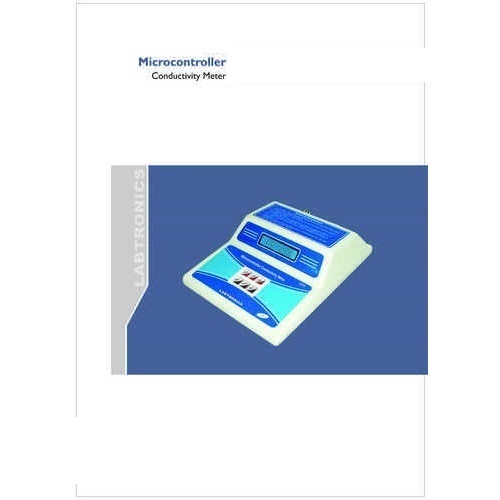
Tell us about your requirement

Price:
Quantity
Select Unit
- 50
- 100
- 200
- 250
- 500
- 1000+
Additional detail
Mobile number
Email

More Products in Scientific Instruments Category
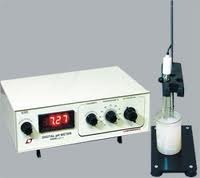
Digital PH, Conductivity & Temperature Meter
Automation Grade : Automatic
Frequency : 50 Hz
Equipment Materials : ABS Plastic Casing
Capacity : 1 Piece/Day
Usage : Laboratory, Water Treatment, Industrial
Measurement Range : pH: 014, Conductivity: 0199.9 mS, Temperature: 0100C
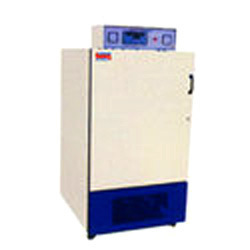
Bod Incubator
Automation Grade : SemiAutomatic
Frequency : 50 Hz
Equipment Materials : Powder Coated Mild Steel / Stainless Steel
Capacity : 112 L
Usage : BOD Testing, Laboratory Applications
Measurement Range : 060C
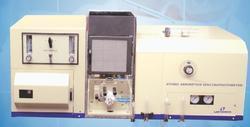
Atomic Absporption Spectrophotometer
Automation Grade : SemiAutomatic
Frequency : 50/60 Hz
Equipment Materials : Corrosion Resistant Metal Alloy Body
Capacity : Single or Double Element Measurement
Usage : Laboratory Metal/Element Analysis
Measurement Range : 0.01 ppm to 100 ppm
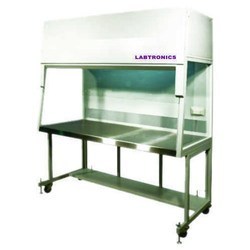
Laminar Air Flow
Automation Grade : Semiautomatic
Frequency : 50 Hz
Equipment Materials : Outer body made of mild steel, powder coated; Inner chamber stainless steel
Capacity : Horizontal 90 CFM, Vertical 70 CFM
Usage : Laboratory, Research Institutes, Pharmaceutical
Measurement Range : Airflow velocity: 0.30.5 m/s

 Send Inquiry


Our Products
- Slit Lamp Ophthalmic Equipment
- Slit Lamp
- Surgical Equipments
- Laboratories Instruments Equipment
- Microscopes
- Scientific Instruments
- ENT Equipment
- Pharmacy instrument equipment
- Pathological Equipment
- Physics Lab Equipments
- Physics instruments
- Laboratory Glassware
- Digital Polarimeter
- Microprocessor Viscometer
- Double Beam UV-VIS Spectrophotometer
- Single Beam UV-Vis Spectrophotometer
- Kitchen equipments
- Dental Equipment
- Chapati Making Machines
- Water Heating System OR Hamam
- High Performance Liquid Chromatography Systems
- Chemistry
- Equipment Accessories
- Gynecology Equipment


B.O : 5430/3, Anaj Mandi, Science Market, Near Nigar Cinema,
R.O : 102-B Ram Nagar,Ambala Cantt - 133001, Haryana, India

Mr VISHAL KUMAR
(Managing Director)
Mobile :07971671031
 Send Inquiry
Developed and Managed by Infocom Network Private Limited.
