
Call us now :07971671031
 Send Inquiry
 Send Inquiry
Camera Lucida (Mirror Type)
Camera Lucida (Mirror Type) Specification
- Features
- Portable, easy to mount, precise optical alignment, enables simultaneous viewing of subject and drawing surface.
- Spare Parts
- Mirror module, prism, mounting sleeve, screws.
- View Head
- Single viewing arrangement through optical system.
- Focus System
- Manual via microscope focusing system.
- Theory
- Camera Lucida (Mirror Type) is an optical drawing device that enables the user to view both the subject and the drawing surface simultaneously by means of a prism and mirrors, aiding in accurate rendering and tracing.
- Drawtube
- Compatible with standard 23mm or 30mm inner diameter microscope drawtubes.
- Sensor
- Not applicable (Optical device, no electronic sensor).
- Resolution
- Determined by users drawing skill and optical quality, not a digital resolution.
- Interface
- Mechanical attachment onto microscope or stand; no electronic interface.
- Frame Rate
- Not applicable (optical, not digital).
- Magnification
- Dependent on microscope or lens used, supports a range from 2x to 1000x.
- Eyepieces
- Fits standard microscope eyepiece sizes (typically 10x or 15x).
- Eyepiece Tube
- Compatible with standard monocular and binocular tubes.
- Illumination
- External light source recommended; device itself does not provide illumination.
- Coarse Adjustment Range
- Determined by attached microscope.
- Fine Adjustment Range
- Determined by attached microscope.
- Still Image Capture Resolution
- Not applicable.
- Video Capture Resolution
- Not applicable.
- Image Format
- Optical projection for manual drawing, not digital.
- Objective Achromatic
- Supports standard achromatic objectives.
- Condenser
- Dependent on microscope; not part of Camera Lucida.
- Light Source
- Ambient or external illumination.
- Mounting Compatibility
- Can be installed on most laboratory microscopes, as well as directly on drawing tables or stands.
- Materials
- Made of durable metal alloy body and high-quality prism/mirror glass.
- Prism Size
- Standard optical-grade prism, 20mm edge length.
- Maintenance
- Clean optics with microfiber cloth and store in protective case when not in use.
- Mirror Type
- Front-surface optical glass mirror for clear image blending.
- Field of View
- Wide optical field, covers standard microscope viewing area.
- Color
- Silver anodized finish or powder-coated for corrosion resistance.
- Operating Temperature
- 5°C to 35°C, non-condensing.
- Weight
- Approximately 120 grams.
About Camera Lucida (Mirror Type)
This unit it is possible to draw the image seen in the microscope. The mirror reflects the pencil point image into an abbe prism clamped over the eyepiece and superimposes it up on the. specimen image. The prism box is hinged for quick change of eye-piece for normal observation complete in velvet box
Innovative Drawing Aid for Precise Renderings
Experience seamless image blending and enhanced drawing accuracy with the Camera Lucida (Mirror Type). Its optical-grade prism and front-surface mirror provide clear, undistorted views of both subject and drawing surface. Designed for compatibility with laboratory microscopes and direct table mounting, its ideal for researchers, educators, and artists alike. The device is lightweight, portable, and corrosion-resistant for dependable use in varied environments.
Material Quality and Optical Performance
Engineered with a robust metal alloy body and premium prism and mirror glass, the Camera Lucida offers reliability and clarity. The standard 20mm prism size and wide field of view allow users to cover the typical microscope viewing area with precision. Its silver anodized or powder-coated finish ensures longevity and resistance to daily wear, making it suitable for frequent use in laboratory and studio settings.
FAQs of Camera Lucida (Mirror Type):
Q: How does the Camera Lucida (Mirror Type) assist in accurate rendering and drawing?
A: The Camera Lucida utilizes an optical-grade prism and a front-surface mirror to project both the subject and the drawing surface into the users field of view simultaneously. This enables the user to trace and render images with greater accuracy, as they can seamlessly overlay the subject onto their paper or drawing board.Q: What materials are used in the construction of the Camera Lucida (Mirror Type)?
A: The device is made from durable metal alloy for its body and features high-quality optical glass for both the prism and mirror. These materials ensure a long lifespan, precise optical alignment, and resistance to corrosion through anodized or powder-coated finishes.Q: Where can the Camera Lucida be mounted for use?
A: This Camera Lucida model can be installed on most laboratory microscopes, as well as directly on drawing tables or stands. Its mechanical attachment system fits common drawtube diameters (23mm and 30mm) and standard microscope or table setups.Q: What is the recommended process for cleaning and maintaining the Camera Lucida?
A: To preserve the devices optical quality, gently clean the prism and mirror surfaces with a microfiber cloth. Store the Camera Lucida in its protective case when not in use, and avoid exposure to temperatures outside the operating range of 5C to 35C.Q: What benefits does the Camera Lucida offer over digital imaging devices?
A: Unlike digital devices, the Camera Lucida is a purely optical instrument requiring no electronic sensors. It provides immediate visual blending for manual drawing, supporting the artistic process while eliminating concerns about digital resolution or battery life. Its operation is easy to understand and reliable in diverse environments.Q: Who typically uses the Camera Lucida and for what applications?
A: Researchers, educators, and artists commonly use the Camera Lucida for microscope-based studies, scientific illustration, and art tracing. It is especially valuable for detailed biological drawings and technical renderings where visual accuracy and simultaneous viewing are crucial.Q: When is external illumination needed for optimal performance?
A: The Camera Lucida does not supply its own light source. For best results, users should ensure adequate ambient or external illumination is available to clearly observe both the specimen and the drawing surface through the devices optical system.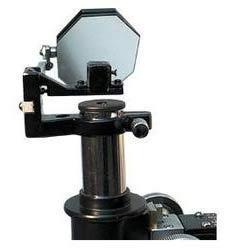
Tell us about your requirement

Price:
Quantity
Select Unit
- 50
- 100
- 200
- 250
- 500
- 1000+
Additional detail
Mobile number
Email

More Products in Microscopes Category
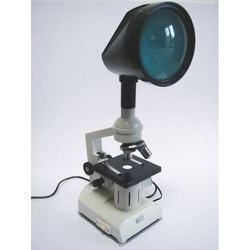
Projection Microscope
Price 4200 INR / Piece
Minimum Order Quantity : 1 Piece
Features : Frosted glass projection screen, antivibration base, adjustable illumination, mechanical stage.
Theory : Other, Projection microscope used to display magnified images of specimen on a screen for group observations and demonstrations.
Drawtube : Other, Monocular, fixed vertical projection tube.
Eyepiece Tube : Vertical, monocular projection tube.
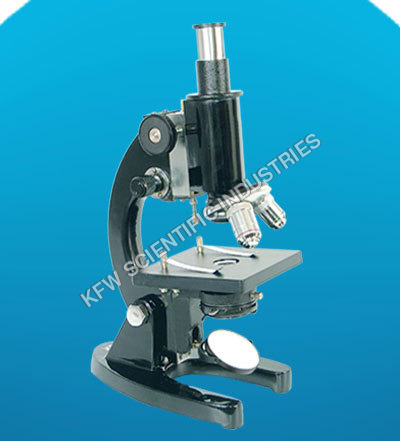
Student Microscope
Features : Sturdy metal base, easy for student use, antirust components, lightweight & portable
Theory : Other, Optical microscopy for educational purposes
Drawtube : Monocular
Eyepiece Tube : Monocular, 45 inclined
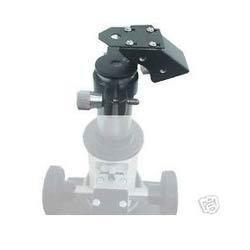
Camera Lucida Prism Type
Features : Clear and sharp image projection, lightweight aluminum body, easy installation and adjustment, suited for educational and research drawings.
Theory : Other, Based on principle of reflecting a virtual image of the object onto the drawing paper allowing precise tracing.
Drawtube : Other, Fits standard 23.2 mm or 30 mm eyepiece tubes, compatible with most monocular and binocular microscopes.
Eyepiece Tube : Accepts standard tube diameters (typically 23.2 mm/30 mm).
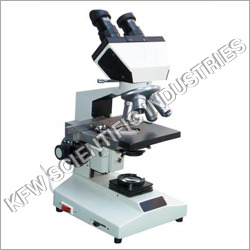
Binocular Microscopes
Features : Rigid Metal Stand, Antifungal Optics
Theory : Other, Compound Optical System
Drawtube : Other, Binocular, 360 Rotatable
Eyepiece Tube : Binocular, 45 inclined

 Send Inquiry


Our Products
- Slit Lamp Ophthalmic Equipment
- Slit Lamp
- Surgical Equipments
- Laboratories Instruments Equipment
- Microscopes
- Scientific Instruments
- ENT Equipment
- Pharmacy instrument equipment
- Pathological Equipment
- Physics Lab Equipments
- Physics instruments
- Laboratory Glassware
- Digital Polarimeter
- Microprocessor Viscometer
- Double Beam UV-VIS Spectrophotometer
- Single Beam UV-Vis Spectrophotometer
- Kitchen equipments
- Dental Equipment
- Chapati Making Machines
- Water Heating System OR Hamam
- High Performance Liquid Chromatography Systems
- Chemistry
- Equipment Accessories
- Gynecology Equipment


B.O : 5430/3, Anaj Mandi, Science Market, Near Nigar Cinema,
R.O : 102-B Ram Nagar,Ambala Cantt - 133001, Haryana, India

Mr VISHAL KUMAR
(Managing Director)
Mobile :07971671031
 Send Inquiry
Developed and Managed by Infocom Network Private Limited.
