
Call us now :07971671031
 Send Inquiry
 Send Inquiry
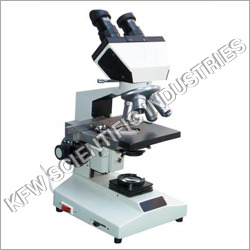
Dissecting Microscope (Bull Type)
Price 1000.0 INR/ Piece
MOQ : 10 Pieces
Dissecting Microscope (Bull Type) Specification
- Material
- MS
- Features
- Good Quality
- Operate Method
- Manual
- Product Type
- Laboratory Autoclave
- Color
- Black
- Usage
- Industrial
- Theory
- Dissecting Microscope
- Drawtube
- Trinocular
Dissecting Microscope (Bull Type) Trade Information
- Minimum Order Quantity
- 10 Pieces
- Supply Ability
- 10 Pieces Per Day
- Delivery Time
- 5 Days
- Main Export Market(s)
- Asia, Australia, Central America, North America, South America, Eastern Europe, Western Europe, Middle East, Africa
About Dissecting Microscope (Bull Type)
Disseting Microscope (Bull Type)KFW
A special lens dia. 75mm to increase field of view.
The bulls lens carrier is replaceable with normal eyepiece carrier complete with normal eyepieces 10x & 20x and a bulls lens carrier. Packed in Thermacol Box.
Precision Visual Analysis with Trinocular Drawtube
Experience clear and detailed observations with the Bull Type Dissecting Microscope, equipped with a trinocular drawtube. This feature allows for simultaneous viewing and image capture, making it ideal for industrial inspection and documentation purposes. Built with sturdy MS material and a sleek black finish, the microscope ensures reliability and consistent performance in demanding environments.
Engineered for Industrial Applications
Designed specifically for varied industrial uses, this microscope excels in quality control, sample analysis, and component inspection. Its manual operation gives users tactile precision and control, making it a favored choice for laboratories and workshops requiring dependable magnification solutions.
FAQs of Dissecting Microscope (Bull Type):
Q: How is the Bull Type Dissecting Microscope used in industrial settings?
A: The Bull Type Dissecting Microscope is primarily used in industrial environments for tasks such as quality control, surface examination, and detailed assembly inspection. Its manual operation allows precise adjustments during thorough sample analysis.Q: What distinguishes the trinocular drawtube feature in this microscope?
A: The trinocular drawtube enables users to simultaneously observe specimens and attach a camera or other imaging device, allowing for easy documentation and collaborative analysis of samples.Q: When should I choose a dissecting microscope over a compound microscope?
A: A dissecting microscope is ideal when working with larger, opaque samples that require moderate magnification, such as in industrial inspection. For highly detailed cellular studies, a compound microscope is preferable.Q: Where is this microscope best deployed within industrial operations?
A: This microscope is best utilized in quality assurance labs, manufacturing floors, and research facilities where close-up visual inspection and documentation of materials and components are essential.Q: What is the typical process for operating this manual microscope?
A: To operate, place the specimen on the stage, adjust the focus and magnification manually, and, if needed, use the trinocular tube for camera attachment or collaborative viewing. Its robust manual controls offer reliable precision during analysis.Q: What benefits come from using a high-quality MS (Mild Steel) microscope?
A: Microscopes made from MS material provide excellent durability, rigidity, and stability, which are crucial for maintaining consistent alignment during frequent and prolonged use.Q: How does the black finish enhance the microscopes functionality?
A: The black finish reduces light reflections and glare, providing better visibility and contrast during observation, which enhances the clarity of specimen details.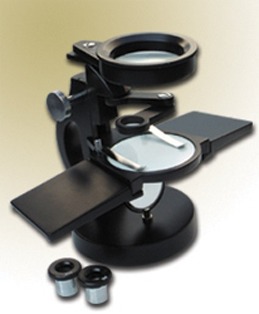
Tell us about your requirement

Price:
Quantity
Select Unit
- 50
- 100
- 200
- 250
- 500
- 1000+
Additional detail
Mobile number
Email

More Products in Microscopes Category
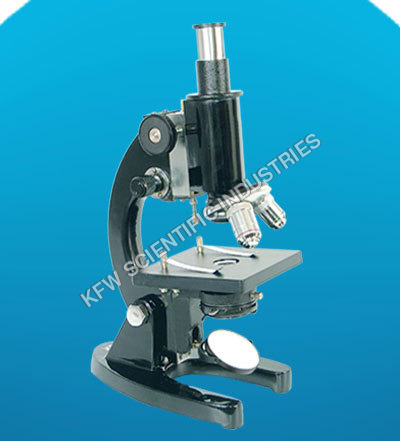
Student Microscope
Theory : Other, Optical microscopy for educational purposes
Image Format : Optical (no digital capture)
Fine Adjustment Range : Precision micro focus range
Focus System : Coarse and fine focusing knobs
Light Source : Plane & Concave Mirror for light reflection
View Head : Monocular, 45 inclined
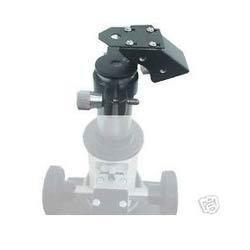
Camera Lucida Prism Type
Theory : Other, Based on principle of reflecting a virtual image of the object onto the drawing paper allowing precise tracing.
Image Format : Handdrawn output on paper as viewed through device.
Fine Adjustment Range : Adjusted via microscopes fine focus control.
Focus System : Manual via microscope.
Light Source : External/room light or microscope light source.
View Head : Singleeye viewing through microscope with attached device.
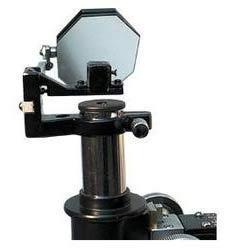
Camera Lucida (Mirror Type)
Theory : Other, Camera Lucida (Mirror Type) is an optical drawing device that enables the user to view both the subject and the drawing surface simultaneously by means of a prism and mirrors, aiding in accurate rendering and tracing.
Image Format : Optical projection for manual drawing, not digital.
Fine Adjustment Range : Determined by attached microscope.
Focus System : Manual via microscope focusing system.
Light Source : Ambient or external illumination.
View Head : Single viewing arrangement through optical system.
Binocular Microscopes
Theory : Other, Compound Optical System
Image Format : Visual Observation
Fine Adjustment Range : 0.2mm
Focus System : Coaxial Coarse & Fine Focus
Light Source : Halogen Lamp, adjustable intensity
View Head : Binocular, 360 Rotatable

 Send Inquiry


Our Products
- Slit Lamp Ophthalmic Equipment
- Slit Lamp
- Surgical Equipments
- Laboratories Instruments Equipment
- Microscopes
- Scientific Instruments
- ENT Equipment
- Pharmacy instrument equipment
- Pathological Equipment
- Physics Lab Equipments
- Physics instruments
- Laboratory Glassware
- Digital Polarimeter
- Microprocessor Viscometer
- Double Beam UV-VIS Spectrophotometer
- Single Beam UV-Vis Spectrophotometer
- Kitchen equipments
- Dental Equipment
- Chapati Making Machines
- Water Heating System OR Hamam
- High Performance Liquid Chromatography Systems
- Chemistry
- Equipment Accessories
- Gynecology Equipment


B.O : 5430/3, Anaj Mandi, Science Market, Near Nigar Cinema,
R.O : 102-B Ram Nagar,Ambala Cantt - 133001, Haryana, India

Mr VISHAL KUMAR
(Managing Director)
Mobile :07971671031
 Send Inquiry
Developed and Managed by Infocom Network Private Limited.
